Your child brushes every morning. You remind them every night without fail. The sugary snacks are mostly gone. Then the six-month checkup rolls around, and there it is. A cavity. Sitting right in one of the back teeth.
Nobody did anything wrong. Those teeth are just built that way.
The grooves on back teeth run deep. A toothbrush bristle gets partway in and stops. Food sits at the bottom of those grooves all day. Bacteria move in. Decay goes undetected until a dentist catches it on an X-ray weeks or months later.
A dental tooth sealant goes over those grooves and seals them shut before that whole cycle starts. Red House Dental in Richmond Hill does this regularly for children and adults. Here is what parents need to know before walking through the door.
What Are Dental Sealants?
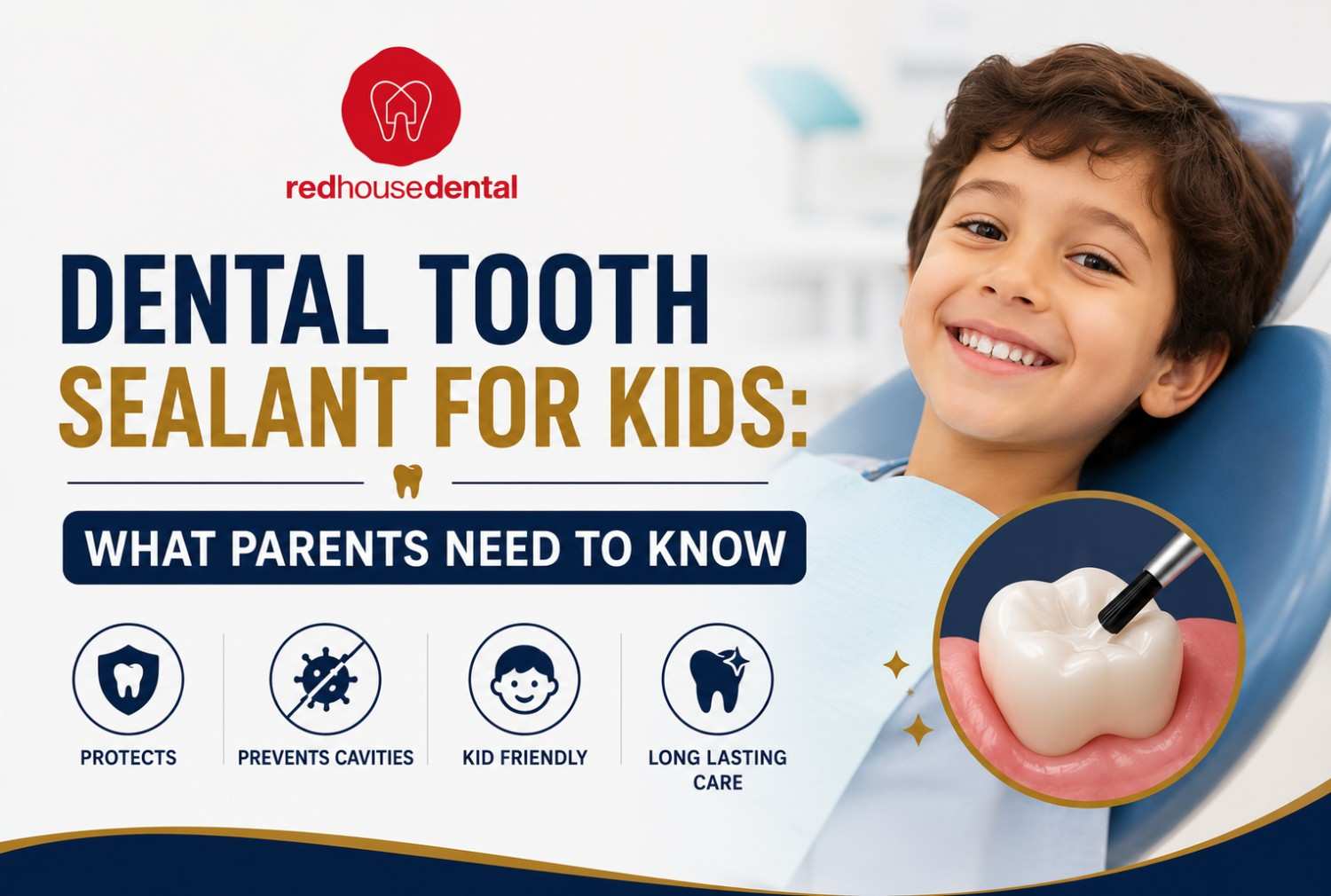
What are dental sealants when you strip away the dental language? Thin liquid coating. Gets painted straight onto the chewing surface of the back teeth. Runs down into every groove and pit. Bonds to the tooth. Hardens into a smooth layer covering the entire surface.
Bacteria and food land on top of it now instead of packing into grooves. They get brushed away. Simple as that.
A few things to have clear from the start:
- Dental sealants are applied only to healthy teeth.
- They stop decay from starting, not fix what is already there.
- They cover the chewing surface, not the sides or the gaps between the teeth.
Why Back Teeth Get Into Trouble
Back teeth take on most of the chewing, and the grooves on them go deeper than anywhere else in the mouth. Even properly brushing twice a day still leaves the bottom of those pits untouched. That is just the reality of how those teeth are shaped.
Reasons dental sealants for kids get pushed so consistently by dentists:
- Back teeth are where the bulk of childhood cavities turn up.
- Deep grooves hold onto food and bacteria that brushing cannot shift.
- Kids are still getting their brushing habits sorted out during the years when those teeth are most at risk.
- A dental tooth sealant can reduce the risk of cavities in those areas by around 80 percent.
- Putting protection on early gives those teeth a genuinely better run long-term.
When Is the Right Time?
Two Ages Worth Circling
- First permanent molars push through around age six.
- Second permanent molars come in around age twelve.
- The best window for a dental tooth sealant is right after those teeth fully come through.
Get it on early, and the tooth is protected before decay has a chance to set in. Leave it, and there is a real chance a cavity quietly gets going in the groove before a sealant ever touches it. The dentist at Red House Dental checks whether the teeth are ready at a routine visit and gives a straight answer on timing.
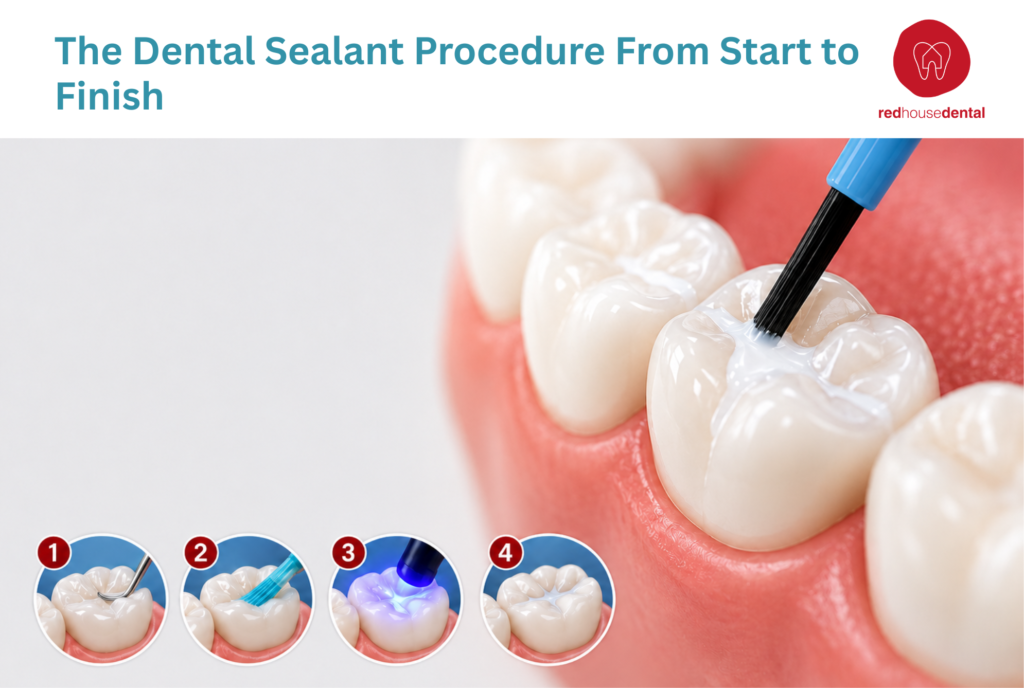
The Dental Sealant Procedure From Start to Finish
Mention procedures to most parents, and they picture drills, needles, and a child in tears. The dental sealant procedure has none of that. Nothing goes into the tooth. Nothing gets cut. Most kids sit through the whole thing without making a single complaint.
Clean the Tooth First
The chewing surface is properly cleaned before anything goes on it. Plaque and debris in the grooves are completely cleared out. Anything left under the dental sealant affects how well it sticks and how long it lasts.
Keep It Dry
Cotton rolls or small absorbent pads go around the tooth. Saliva is the problem here. Even a small amount of contact with the surface during application prevents the dental tooth sealant from bonding as it should.
Acid Gel Step
Mild acid gel sits on the surface for about half a minute. Does nothing the child can feel. What it does at a microscopic level is roughen the surface slightly, so the sealant grips rather than sitting on a smooth surface.
Rinse, Then Dry Again
Gel gets rinsed off. The tooth is completely dried before the next step.
Sealant Goes On
Dental tooth sealant liquid gets painted directly onto the chewing surface. Runs into every groove and pit by itself. Sits flat against the surrounding tooth once it sets. Clear or faintly tooth-coloured, so nobody notices it sitting there.
Curing Light Locks It In
Small blue light over the tooth for a few seconds. Hardens the sealant fast. Bonds it firmly in place. Job done.
Several teeth take around 30 minutes total. One tooth takes just a few minutes. Kids walk out and eat normally shortly after.
How Long Does It Hold?
- Dental sealants typically last between five and ten years.
- Checked at every routine dental visit as a matter of course
- Any section that chips or lifts gets touched up quickly without any drama.
- Hard lollipops and very sticky foods chip them faster, so cutting back helps.
Is It Safe?
Dental sealants have been around in dentistry for a long time. When applied correctly by someone trained to do so, they are considered safe for children.
- Materials are specifically approved for use in the mouth.
- Years of research show no harmful effects from correct application
- The dental sealant procedure is completely non-invasive from start to finish.
- No anesthetic needed at any point, and no recovery time afterward
Myths That Keep Circulating
Myth: Dental sealants for kids are only for children who already have bad teeth
Dental sealants for kids work best on healthy teeth before any decay starts. Every child with deep grooves in their back teeth stands to benefit regardless of cavity history.
Myth: Sealants mean the child does not need to brush as well.
Brushing twice a day and flossing still matter just as much after a dental sealant is applied. The sealant sits on the chewing surface only. Most of the tooth is still exposed and needs to be looked after.
Myth: Not worth the cost
A dental sealant costs a fraction of what a cavity filling costs. Many insurance plans cover sealants for children, and the Canadian Dental Care Plan may also apply to eligible patients.
What About Dental Sealants for Adults?
Worth raising because many people genuinely do not know this is an option.
If back teeth have no fillings and no decay sitting in them right now, dental sealants for adults go on just as well as they do on a child’s tooth. Worth asking your dentist about if:
- Cavities keep turning up despite solid brushing and flossing habits.
- Back teeth have noticeably deep grooves.
- Taking a more proactive approach to protecting teeth sounds worthwhile.
Red House Dental in Richmond Hill
Red House Dental sits at 38 Arnold Crescent, a dental clinic in Richmond Hill, ON. Dental sealants are part of the regular preventive care offered here for kids and adults alike.
Every step of the dental sealant procedure is walked through with parents and children before anything starts. No surprises once the appointment is underway.
If a dental sealant is not the right call for a child’s teeth at that time, the team at Red House Dental says so directly. No filling appointment slots with things that are not genuinely needed.
Frequently Asked Questions (FAQs)
Does the dental sealant procedure hurt at all?
No needles, no drilling, nothing that causes discomfort. Most children barely register what is happening, and parents are usually caught off guard by how quick and uneventful the whole thing turns out to be.
What are dental sealants made from?
Plastic resin that bonds to the tooth and sets hard under a curing light. Some versions use glass ionomer, which slowly releases small amounts of fluoride into the surrounding tooth.
Can my child eat straight after?
Pretty much right away. No recovery period. Steering clear of very hard or sticky things for the first day is a reasonable precaution, but nothing strict beyond that.
How does the dentist know if my child is ready for dental sealants?
Checked at a routine visit. Permanent back teeth need to have fully erupted, and the surfaces need to be clean and decay-free before anything goes on. Red House Dental gives you a clear answer on timing at that appointment.
Are dental sealants for kids covered under insurance in Canada?
Plenty of plans do cover sealants for children. The Canadian Dental Care Plan may also help eligible patients. Red House Dental checks your specific coverage before your appointment, so the cost is settled before any treatment begins.