Ever caught yourself smiling with your lips pressed together in photos? Or noticed your jaw makes a small clicking sound whenever you bite into something? Maybe there’s a tooth that’s always sat slightly off from the rest, and you’ve just gotten used to it over the years.
These small things often get brushed aside as just part of how your smile looks. But more often than not, they’re actually signals worth paying attention to. Braces of teeth exist precisely to fix issues like this, and the earlier they get addressed, the easier and faster treatment usually is.
Red House Dental, a dental clinic in Richmond Hill, sees patients of every age walk in with concerns like these. Here are seven signs worth keeping an eye on.
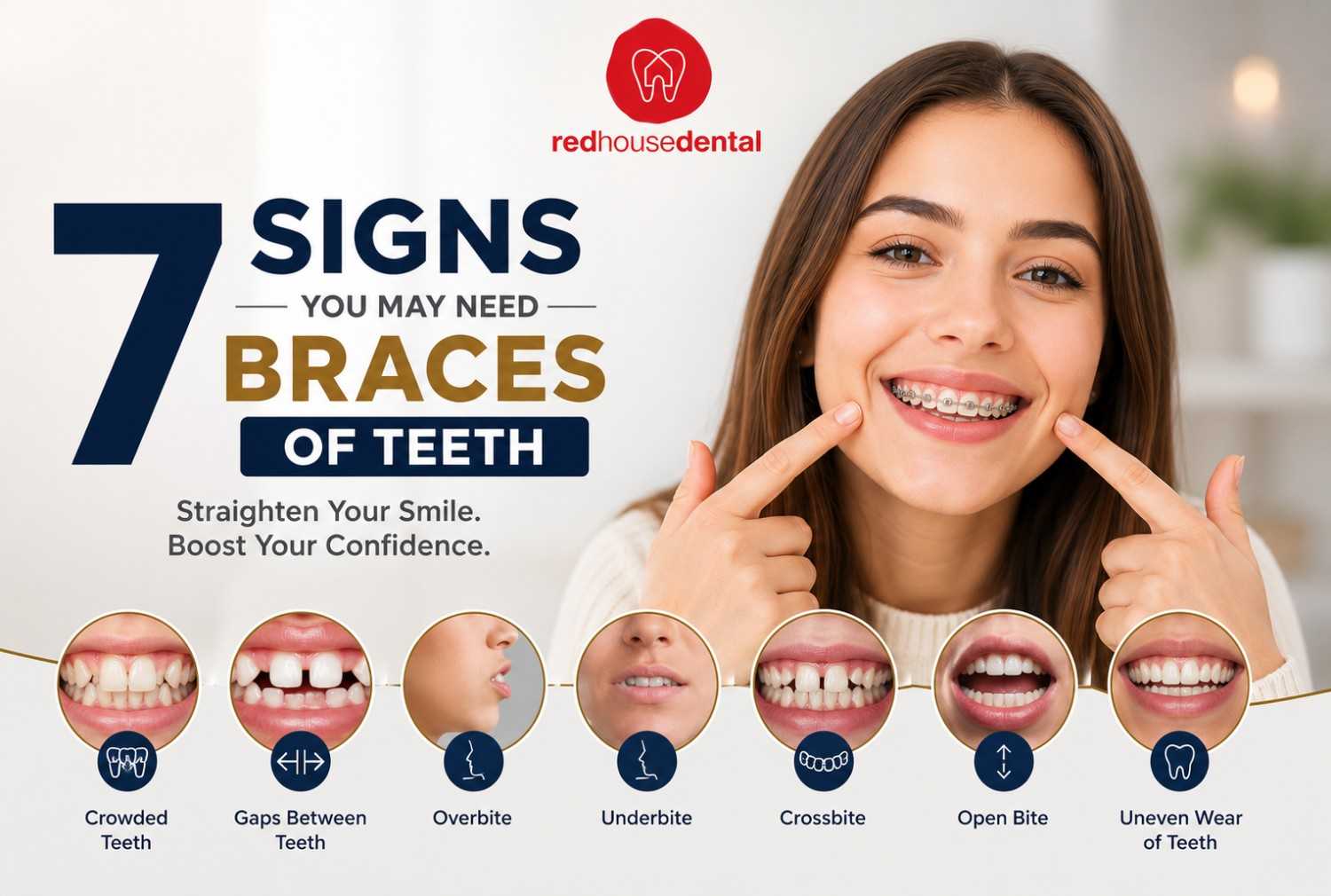
1. Overcrowded or Crooked Teeth
Probably the easiest one to spot just by looking in the mirror for a minute.
Take a proper look at your teeth. Does one overlap the one sitting beside it? Does anything look like it’s angled sideways or pushed back behind the rest somehow, even just slightly?
A few things worth checking for:
- Teeth that overlap their neighbours
- A tooth that sticks out noticeably more than the others around it
- Teeth are angled oddly instead of sitting flat against the gum line
Basically, overcrowding happens when the jaw doesn’t have enough room for every tooth to sit the way it’s supposed to. Braces gradually shift teeth until there’s enough space for everything to line up properly.
2. Overbite
When biting down normally, your upper and lower teeth should meet evenly, or the top row should sit just slightly ahead of the bottom row.
An overbite means the upper teeth extend past the lower teeth by more than usual. A small overbite is pretty common, honestly; nothing especially unusual about it on its own. Once it gets more pronounced, though, it starts messing with chewing and speech, and sometimes even causes jaw discomfort over time, which tends to be around the time braces of teeth become part of the conversation with your dentist.
3. Underbite
An underbite, or edge-to-edge bite as some people call it, is the reverse situation compared to an overbite.
Rather than the upper teeth overlapping the lower ones by a couple of millimetres as usual, the lower front teeth end up meeting the top ones directly, edge to edge. Over time, that puts unusual stress on both the jaw and the front teeth themselves.
This one tends to be a fairly clear sign that braces treatment is genuinely needed, since an underbite rarely resolves on its own without some intervention.
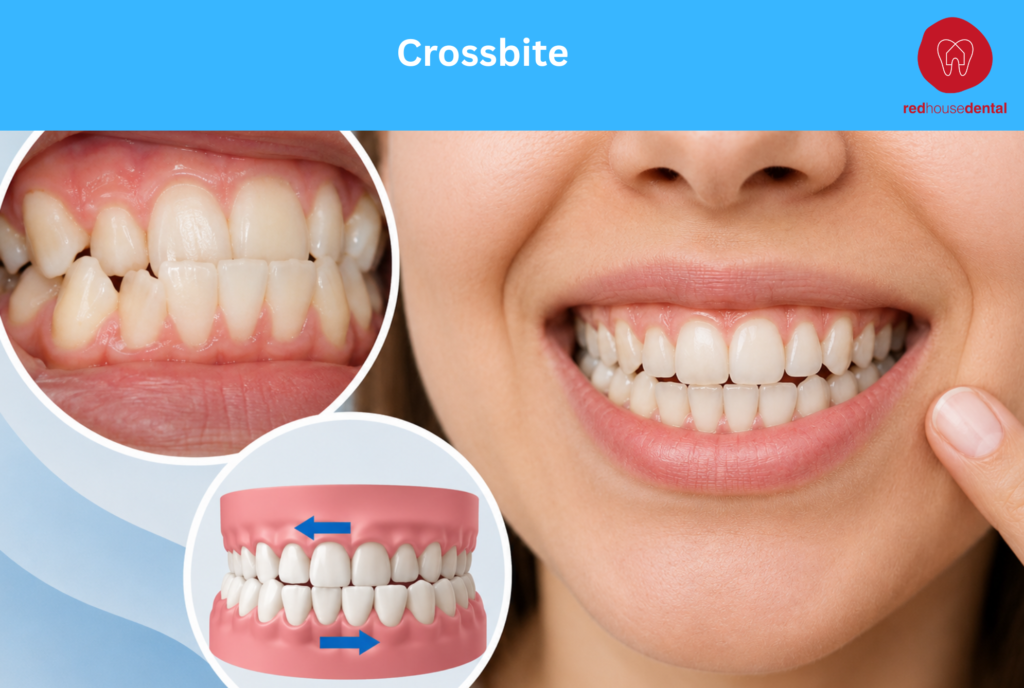
4. Crossbite
A crossbite is really more of a side-to-side problem rather than the typical front-to-back issue people think of.
Instead of the upper teeth sitting just outside the lower row, as they normally should, one or more teeth end up mispositioned, either too far in or too far out compared to whatever they’re meeting on the opposite side. Sometimes it’s just one side of the mouth affected, sometimes it’s several teeth all at once.
Leave it long enough, and a crossbite can cause uneven wear on specific teeth over time, and for some people, it’s also tied to ongoing jaw discomfort that just won’t go away.
5. Open Bite
An open bite is when the upper and lower teeth don’t touch at all when the jaw is fully closed, leaving a visible gap.
A few common causes worth mentioning:
- Thumb or pacifier sucking that went on a bit longer than usual during childhood
- Tongue-thrusting habits that develop over time
- TMD, short for Temporomandibular Joint disorder
Brackets teeth braces are used fairly commonly to gradually close this kind of gap and bring everything back into proper alignment.
6. Diastema
Diastema is just the proper name for a noticeable gap between teeth, and it’s actually a separate issue from overcrowding, even though both can affect the bite in fairly similar ways.
A midline diastema is a gap between the two front teeth, and it’s one of the more common things people notice on themselves without anyone pointing it out. A small gap usually isn’t anything to worry too much about, but a larger one can genuinely affect how the bite functions and how the surrounding teeth wear down as time goes on.
Braces remain one of the more dependable ways to gradually close gaps like this and improve the alignment of the surrounding teeth.
7. Frequent Jaw Pain
Jaw pain that keeps recurring, particularly near the joint by your ear, can actually be traced back to how your teeth line up.
Misaligned jaws create uneven tension across the temporomandibular joints, which can lead to soreness, clicking, or pain that just won’t quit in that area. A lot of people don’t immediately connect this to their teeth, mainly because the pain itself occurs in the jaw rather than directly in the mouth.
It’s worth getting your bite properly checked if jaw pain keeps recurring and nothing else around it seems to really explain why.
How to Take Care of Braces Once You Have Them
Once braces treatment actually gets underway, looking after them properly day to day makes a genuinely noticeable difference in how smoothly everything ends up going.
Some basics worth knowing on how to take care of braces:
- Brush after every meal so food doesn’t get stuck around the brackets and start causing problems
- Floss daily using a floss threader or a proper orthodontic flosser
- Steer clear of sticky, hard, or particularly chewy foods that can damage brackets or wires
- Wear a mouthguard during sports to protect both your teeth and the brackets themselves
- Keep up with all your adjustment appointments so the whole treatment stays on track and on schedule
Knowing how to care for braces properly also helps avoid unnecessarily stretching out the overall treatment time, since damaged brackets or wires usually mean booking extra appointments just to fix whatever broke.
Why Red House Dental for Braces of Teeth in Richmond Hill
Red House Dental sits at 38 Arnold Crescent, Richmond Hill, ON. The team here helps determine whether braces of teeth are the right move for a particular patient, based on a thorough, objective assessment of the bite and jaw rather than just guessing from outward appearances alone.
Whether it’s something straightforward, like crowding, or a bit more involved, like a crossbite or open bite, the team walks through exactly what’s going on and what orthodontic braces for teeth would realistically entail before anything actually gets started.
Red House Dental accepts the Canadian Dental Care Plan for eligible patients.
Frequently Asked Questions (FAQs)
How can someone tell if they actually need braces?
Overcrowding, an overbite, an underbite, a crossbite, an open bite, visible gaps between teeth, or jaw pain that just won’t let up are all genuinely worth mentioning to a dentist sooner rather than later.
What exactly are brackets teeth braces usually made from?
Most often, a metal or ceramic crown is bonded directly to each tooth and connected by a wire that slowly shifts everything into a better position over time.
How long does braces treatment generally take?
Varies quite a bit depending on what’s actually being corrected, though most people end up somewhere between one and three years total.
What’s actually the best way to take care of braces day to day?
Brush after meals, floss every single day, skip the hard and sticky foods entirely, and definitely don’t miss adjustment appointments.
Do adults actually get orthodontic braces for teeth, too, or is it mostly kids?
Definitely adults too. Braces of teeth aren’t reserved just for kids or teenagers anymore. Plenty of adults go through treatment later in life for issues that never got properly addressed earlier.