Parents say it all the time. They are just baby teeth. They fall out anyway.
And then they end up in a dental chair with a seven-year-old who has four cavities, chronic pain, and a genuine fear of dentists that is going to follow them around for years.
Baby teeth matter more than most people realize. Not just for chewing. For everything.
Why Baby Teeth Actually Matter
- Space holding: This one alone changes how people think about it. The permanent tooth forming underneath needs somewhere to go when it is ready. Understanding the Types of Teeth and their functions can help explain why baby teeth play such an important role in holding that space.
- Jaw development: Growing jaw and facial bones need stability. Baby teeth provide that stability as everything develops. Without it, things can go off in directions that are not obvious until much later.
- Speech: Try making a “th” sound without front teeth. Or an “f” sound. Kids learn these sounds during early childhood, and they need teeth in the right places to do it properly.
- Eating: A child with painful or missing baby teeth cannot chew a proper range of foods. That matters during years when nutrition actually shapes development.
- Untreated decay: This is the one that hits hardest. Baby tooth enamel is thin, so decay spreads quickly. A small cavity that looks harmless can reach the nerve within months.
When Baby Teeth Come In
Every child is on their own schedule. These are rough averages.
- Bottom front teeth first, around 6 to 10 months
- Top front teeth, around 8 to 12 months
- Side teeth top and bottom, around 9 to 16 months
- First molars, around 13 to 19 months
- Canines, around 16 to 23 months
- Second molars, around 23 to 33 months
A full set of 20 baby teeth usually done by around age three.
Arriving a bit early or a bit late is usually nothing. Very early or very late is worth mentioning at a dental visit, not panicking about, just mentioning.
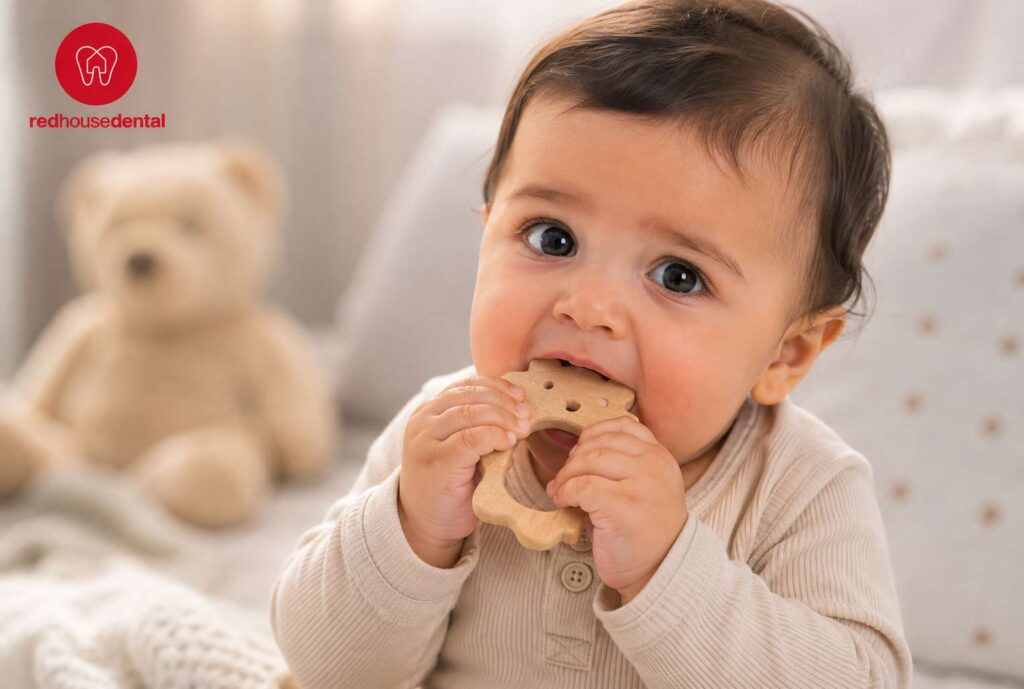
Teething
Some babies sail through it. Most make their feelings about it very clear.
What it looks like:
- Gums that look puffy or swollen
- Drooling constantly
- Chewing on fingers, toys, whatever is in reach
- Crankier than usual, hard to settle
- Sleep going sideways
- Low-grade fever sometimes
What actually helps:
- Cold teething ring from the fridge. Not the freezer, fridge.
- Clean a finger or cold, damp cloth and rub the gums gently.
- Cold-soft foods for babies who have started solids. Yogurt, mashed sweet potato, that kind of thing.
What to stay away from:
- Numbing gels with benzocaine. Not safe for babies. Serious complications possible.
- Random teething tablets from a shelf. Check with your pediatrician before using anything.
Gums can look quite swollen before a tooth breaks through. A small cyst even forms sometimes. Normal in most cases. Call your dentist if there is pus, significant bleeding, or a fever that will not come down.
Do Baby Teeth Have Roots?
Yes. Do baby teeth have roots that catch parents off guard fairly often?
Full roots. Just like adult teeth. Those roots sit in the jawbone and anchor each tooth while the child is eating and talking throughout childhood. Without roots, baby teeth would not be stable enough to function.
When it is time for baby teeth to fall out, the roots dissolve. That process is called resorption. The permanent tooth underneath pushing upward is what triggers it. Roots dissolve, teeth loosen, and come out on their own.
Do baby teeth have roots that matter for space management? Yes. Early loss from decay or trauma disrupts the whole schedule. That root was doing a specific job in a specific location. Remove it early, and neighbouring teeth will start moving into that space almost immediately.
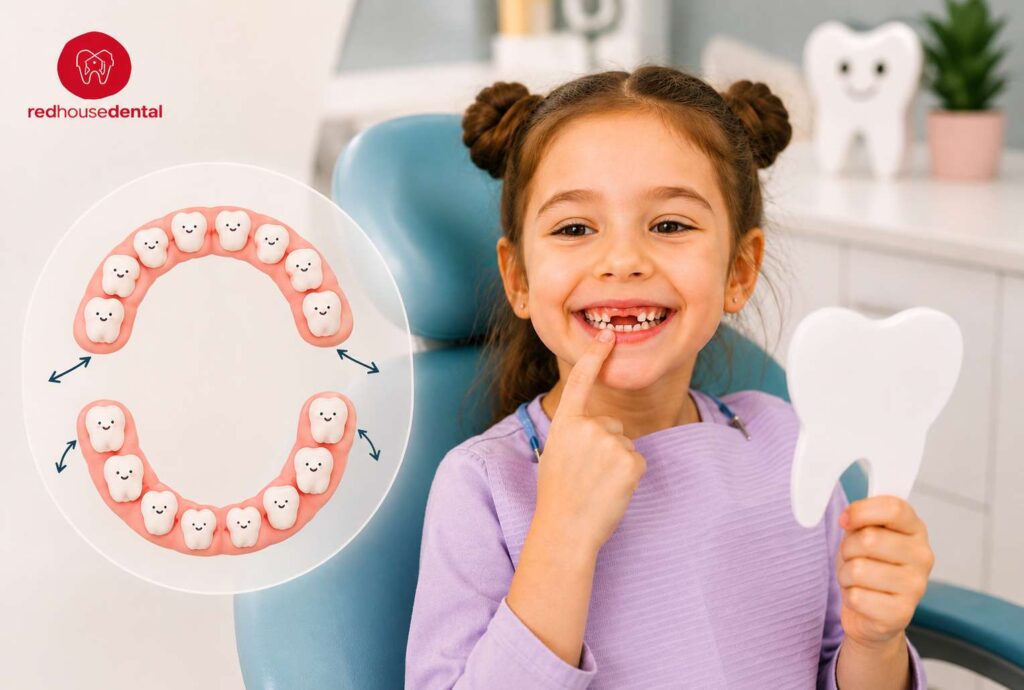
When Do Baby Teeth Fall Out?
When do baby teeth fall out? is one of the first questions parents ask once kids get near school age.
Rough timing:
- Front teeth top and bottom: around 6 to 7 years
- Side teeth: around 7 to 8 years
- Canines: around 9 to 12 years
- First molars: around 9 to 11 years
- Second molars: around 10 to 12 years
Most kids have no baby teeth left somewhere between 10 and 12.
One thing that surprises parents: first permanent molars arrive around age 6 behind the existing baby teeth. Child gets four permanent teeth before ever losing a baby tooth. Completely normal.
The baby tooth comes out and no permanent tooth appears after six months. That needs a dental visit to sort out.
Baby Bottle Tooth Decay
Put a baby to bed with a bottle of milk or formula, and the sugar pools around those teeth all night. Bacteria have hours to work. The decay that results, called baby bottle tooth decay, spreads fast and can affect multiple teeth before anyone realizes what is happening.
A bottle at bedtime for comfort is fine. Water only. Try to move away from nighttime milk or formula feedings around twelve months.
Toddler Stage
Baby teeth keep arriving through these years. Brushing keeps being important. And toddlers keep being toddlers about it.
Things that genuinely reduce the fighting:
- Same time, same routine every single day. Predictability reduces resistance more than almost anything else.
- Let them pick something. Toothbrush colour. Flavour of toothpaste. Kids who had a choice cooperate better.
- Breaks mid-brush. A few teeth, pause, continue. Less overwhelming.
- Silliness when it works. Looking for food monsters. Checking if broccoli is hiding. Whatever lands with your kid.
Electric toothbrushes for children from around age three work better than manual ones, and most kids find them more interesting.
Knowing the Types of Teeth helps you understand why flossing becomes important once two teeth are touching. Food traps in those contact points and causes decay in exactly those spots.
Pea-sized toothpaste from age three.
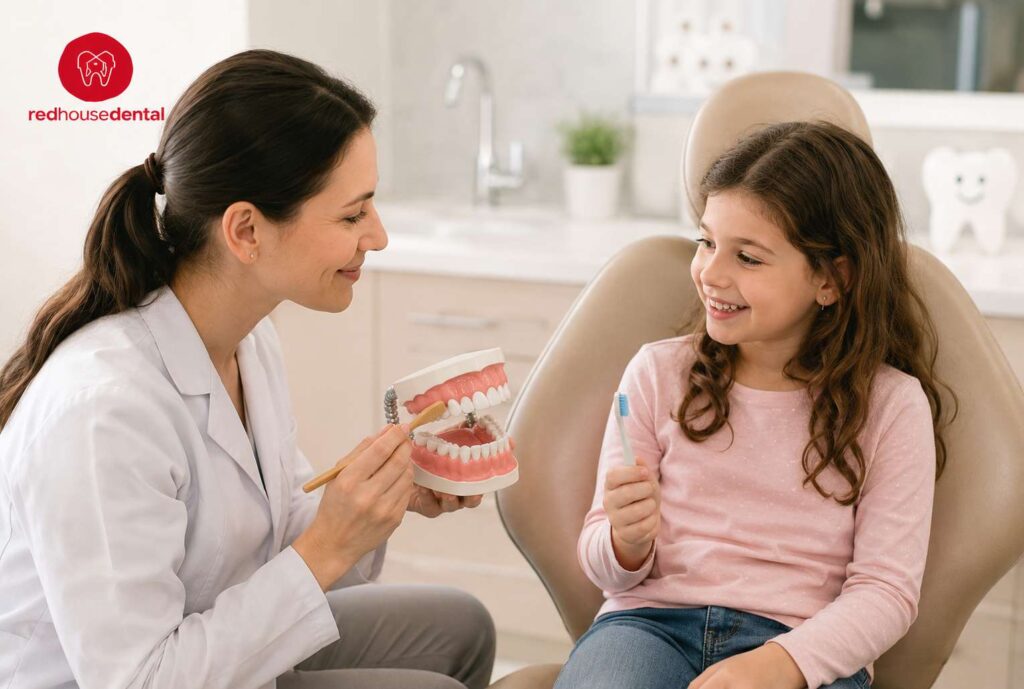
Ages 6 to 12
Baby teeth fall out. Permanent teeth come in. Parents back off on brushing supervision because kids seem old enough.
Beyond that, they affect tooth positioning and palate development. If stopping is genuinely difficult, talk to your dentist. If tooth positioning becomes a concern as your child grows, the Braces Cost Guide may help you understand the potential treatment options and costs.
Too soon. Children generally do not have reliable fine motor control for proper independent brushing until around age 8 to 10. Keep helping. Check their work. Do a proper brush before bed, even on nights they already brushed themselves.
Things to watch:
- Loose teeth should come out naturally. Wiggling is fine. Yanking one that is not ready causes pain and sometimes damages the incoming permanent tooth.
- A permanent tooth sometimes appears behind a baby tooth that has not come out yet. Alarming looking. Usually resolves once the baby tooth finally loosens. If the permanent tooth has fully come through and the baby tooth is still solid after several weeks, mention it at the next appointment.
- Chewing pencils and ice. Sports drinks constantly. Sugary snacks all day. These years are when habits that cause long-term damage tend to start.
Thumb sucking and pacifiers are ideally gone by age three. Beyond that, they affect tooth positioning and palate development. If stopping is genuinely difficult, talk to your dentist. There are strategies that work.
Diet and Baby Teeth
Sugar is the issue. Bacteria eat sugar and produce acid that goes after enamel. Baby tooth enamel is thinner than adult enamel. It loses that battle faster.
Practical:
- Water and milk for everyday drinking, not juice or flavoured drinks
- Sugary food at meals rather than all-day grazing
- No juice in bottles or sippy cups for extended use
- Sports drinks are high sugar and high acid. Not a good regular drink for children.
Fruit juice gets treated as healthy for kids. It is high in sugar and acid. Not what baby teeth need daily.
First Dental Visit
Revised Paragraph
First tooth or first birthday, whichever comes first. Most pediatric dental guidelines recommend scheduling a visit with a Pediatric Dentist around that time.
What early visits do:
- Check development is on track
- Give parents advice specific to their child rather than generic
- Let the child build comfort with a dental environment before anything is wrong.
- Catch early decay before it has spread
A child who has been coming since infancy is a completely different patient from one who walks in at age five with a toothache and no idea what a dentist is.
Frequently Asked Questions (FAQs)
When do baby teeth fall out?
Around age 6 most kids start. Finished somewhere between 10 and 12. Bottom front goes first. Back molars last.
Do baby teeth have roots?
Yes. “Do baby teeth have roots?” is a common question, and the answer is yes. Full roots anchoring each tooth in the jaw. Those roots dissolve when the permanent tooth underneath pushes up.
When should a child first see a dentist?
When the first tooth comes in. By the first birthday at the latest. Early is always better.
What is baby bottle tooth decay?
Rapid, aggressive decay from milk or formula sitting on teeth during sleep. Use water only in bedtime bottles.
How much toothpaste for a child?
Grain of rice until age three. Pea-sized from three onward. Small amounts swallowed at young ages cause no harm.