You go to bed early and try to do everything right, but you still wake up feeling like you barely slept. There are a great many people in Canada who live years like this. And when they mention it, they are told to improve their sleep patterns. But it’s not always caused by sleep habits. Other times, it is sleep apnea – even though you do not realize you are doing this.
This is something that presents during regular visits at Red House Dental in Richmond Hill. Someone mentions snoring. Another person reports having jaw tension or waking up with a dry mouth. Then we begin putting the pieces together. It is more prevalent than you would think, and that is the last thing on most individuals’ minds: that a dental clinic is the place you want to see.
What Exactly Is Sleep Apnea?
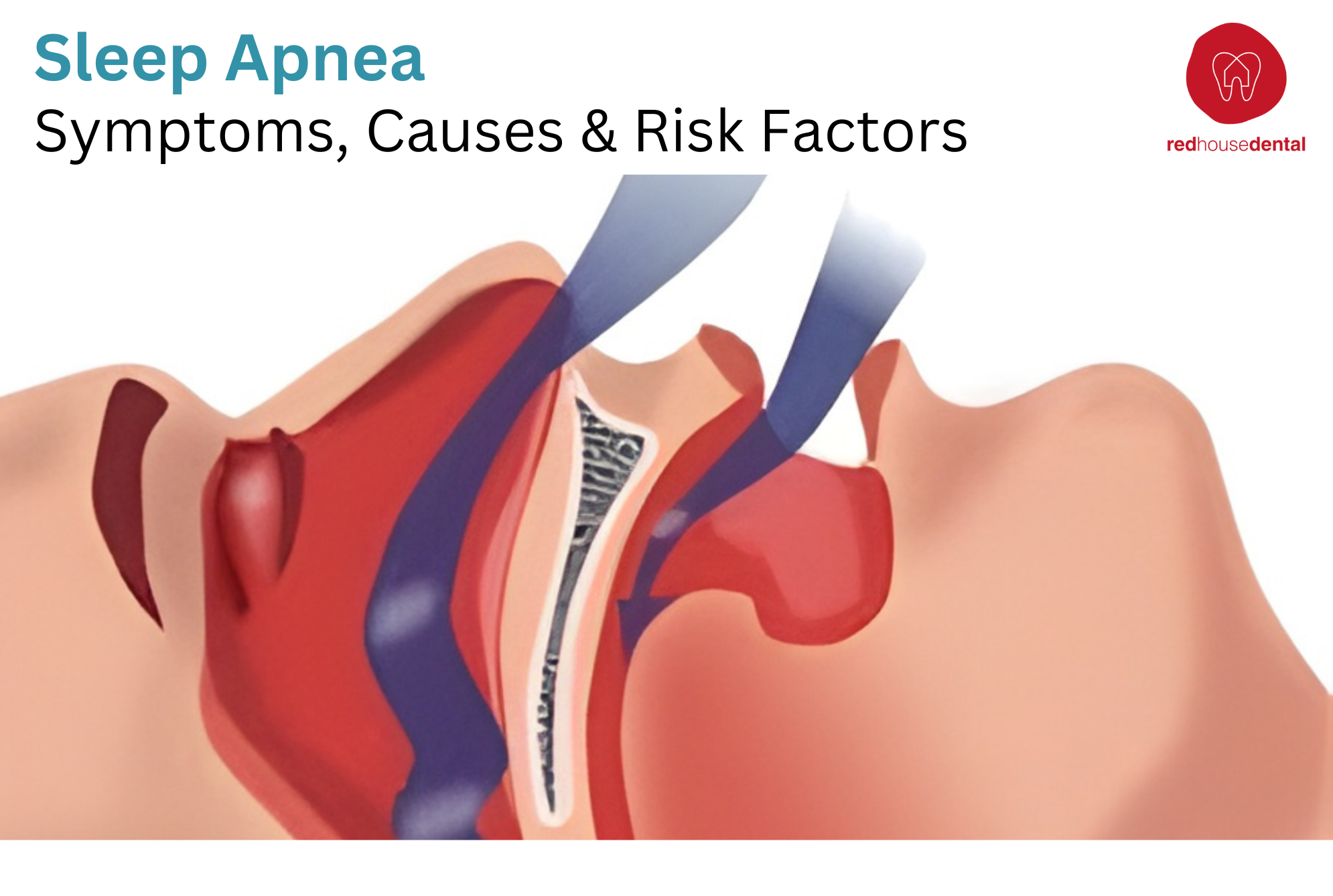
The simplest way to put it: your breathing keeps pausing while you sleep.
Sometimes for just a second or two. Sometimes longer. You don’t usually wake up fully, but your body does this mini “panic” moment where it rushes to restart your breathing. It’s exhausting without you knowing why.
You may believe that you got seven or eight hours of sleep, but you did not get the deep sleep that the body required.
The Different Types of Sleep Apnea
There are three kinds, but they are not as scary as they sound because of their names. Break them down the normal-people way:
1. Obstructive Sleep Apnea
- This is the type almost everyone has.
- The throat or tongue relaxes too much and blocks airflow.
- Usually comes with snoring… sometimes very loud snoring.
Many people who visit our sleep apnea clinic in Richmond Hill fall into this group.
2. Central Sleep Apnea
- This one starts in the brain.
- Basically, the brain forgets to send the “breathe now” message.
- It’s less about blockage and more about communication.
3. Mixed Sleep Apnea
- A bit of both.
- Nothing fancy about the name—just two problems happening at once.
That’s really it. You don’t need to diagnose yourself; you just need to know these exist so things make more sense.
How Sleep Apnea Shows Up
The list of signs isn’t always obvious. Some people don’t snore at all. Others swear they sleep fine until someone else says,
“Hey… You stopped breathing for a second last night.”
Common things people notice include:
- snoring (anywhere from light rumbling to “shake-the-walls” loud)
- waking up with a headache
- a dry throat
- moving around a lot in bed
- feeling sleepy midday
- trouble focusing, even on simple things
- irritability (and no, you’re not imagining it)
- waking up gasping
One of the most common sentences we hear at Red House Dental is
“I just thought I was getting older.”
But constant fatigue is not a normal part of aging. It’s a sign.
Why Does Sleep Apnea Happen?
There’s no single reason. Usually, it’s a mix of small things:
Your airway might just be narrow
Some people simply have less space at the back of their throat or a smaller jaw. It’s not something you caused—it’s just how you’re built.
The tongue relaxes backward during sleep
This happens more when sleeping on your back.
Throat muscles relax too much
This is natural, and in certain individuals it brings about a breakdown.
Narcoleptic stuffiness or allergies
Breathing via the nose is more difficult to achieve, and as a result, the mouth remains open, and the airway may easily be closed.
In central sleep apnea, the brain fails to get the breathing signal
There is no reason to be ashamed of it—it is a hiccup of the brain.
People tend to find a dramatic explanation for the symptoms and causes of sleep apnea when they search. However, more than frequently, it is something small that happens night after night.
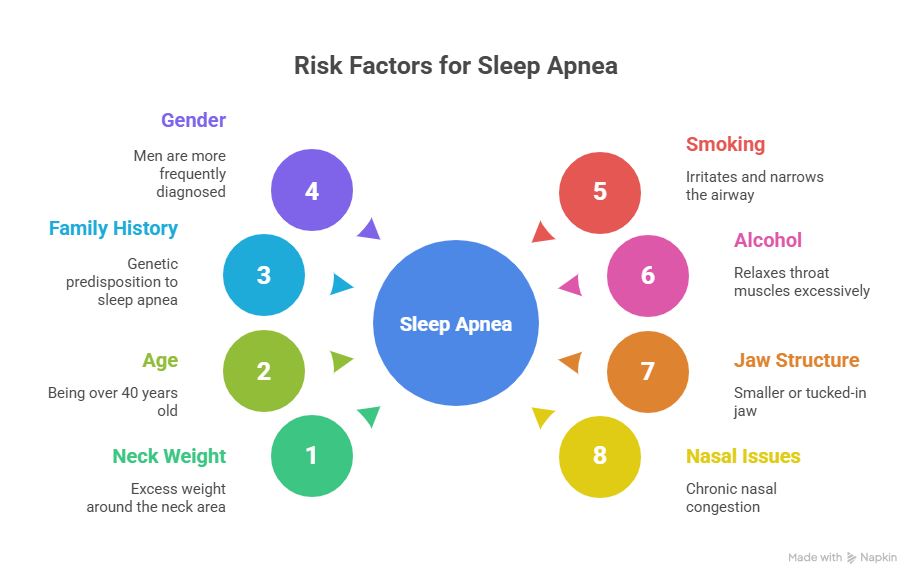
Risk Factors of Sleep Apnea
Anyone can get sleep apnea, but certain things increase the chance of it showing up:
- extra weight around the neck area
- being over 40 (though younger people can experience it too)
- family history
- men are diagnosed more… until women hit menopause, then it evens out
- Smoking irritates and narrows the airway.
- Alcohol relaxes the throat muscles too much.
- jaw structure (a smaller or tucked-in jaw makes the airway tighter)
- chronic nasal issues
It’s never about blame. It’s about awareness.
How a Dental Clinic Gets Involved in Sleep Apnea Care
When sleep apnea is mentioned during a dental visit, people look shocked. However, the mouth and jaw constitute much of the airway. Such factors as the position of the jaw, the position of the tongue, the shape of the bite, and even the development of the palate can affect night breathing.
We at Red House Dental are keen on such minute details. It is not that we are attempting to diagnose anything immediately, but we just think that dental care is about more than teeth and more than just teeth.
There are three things that our clinic has based its philosophy on:
- Honesty—if we see something, we tell you plainly
- Comfort—we want every visit to feel easy, not stressful.
- Quality—we don’t cut corners, ever.
Why Dealing With Sleep Apnea Matters More Than People Realize
Sleep apnea doesn’t just make you tired. It strains the body.
Over time, untreated sleep apnea can lead to:
- high blood pressure
- heart problems
- mood changes
- memory issues
- increased risk of diabetes
- reduced concentration
- morning he
- \adaches
- relationship stress due to snoring
The positive part?
When people finally treat it, things often improve quickly. They get up sharper, more tolerant, and more vigorous. It may be dramatic to say, but it is true that good sleep influences everything.
How Red House Dental Treats Sleep Apnea: Safe, Certified Oral Appliance Therapy
Red House Dental offers evidence-based oral appliance therapy (OAT) in the treatment of obstructive sleep apnea (OSA), which is an acceptable alternative to patients unable to tolerate CPAP, or mild to moderate OSA. Our dentist is a member of the American Academy of Dental Sleep Medicine (AADSM), which means we are treated according to stringent international standards.
Untreated OSA is linked to serious health risks: nearly 40% of patients have high blood pressure, the risk of stroke doubles, and up to 80% of people with diabetes also have sleep apnea. It can also cause heart disease, mood disorders, memory issues, and severe fatigue.
We offer screening, custom appliance design, installation, and long-term follow-ups to ensure safer breathing and deeper sleep.
FAQs
1. What is sleep apnea dentistry?
Sleep apnea dentistry is a branch of dentistry that involves treating obstructive sleep apnea (OSA) with a tailor-made oral device to keep the airway unblocked during sleep. Sleep physicians are specifically trained to treat sleep disorders, using specially trained dentists.
2. How does a dentist diagnose sleep apnea?
A dentist cannot diagnose sleep apnea, but can determine such signs as grinding of teeth, worn teeth, narrow airway, a scalloped tongue, or a history of snoring. The diagnosis is established by the sleep study done by a sleep physician.
3. Is sleep apnea dangerous?
It can cause severe health problems if it is not addressed over a long period. The sooner it is dealt with, the better.
4. Is it necessarily the use of a machine in treatment?
No. Others are using oral devices or lifestyle modifications, whereas some are on CPAP.
5. Is sleep apnea a self-limiting condition?
Sleep apnea does not usually resolve without treatment and lifestyle modifications. Not everyone can sleep comfortably and safely without proper support, such as an oral appliance or medical attention, but some people can notice a difference when they lose a little weight or change their practices.