A dental crown is a common solution when a tooth needs extra protection or repair. Many people wonder about the different types of dental crowns and cost. This guide will help you understand your options in simple terms.
What Is a Crown in Dentistry?
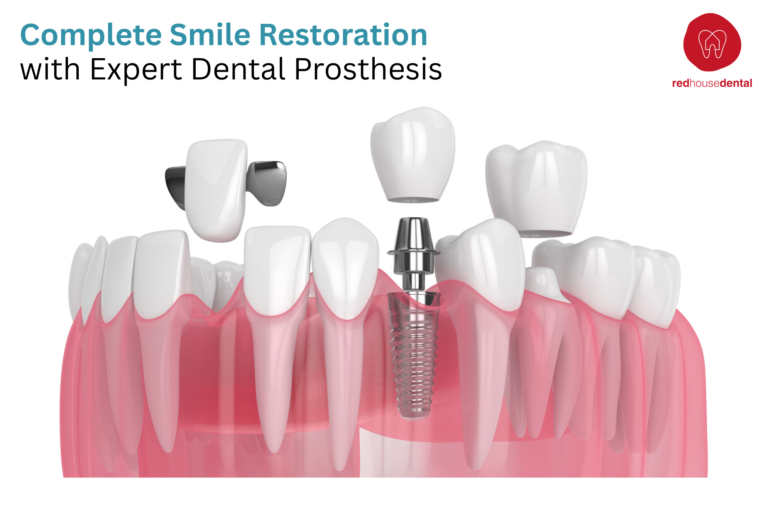
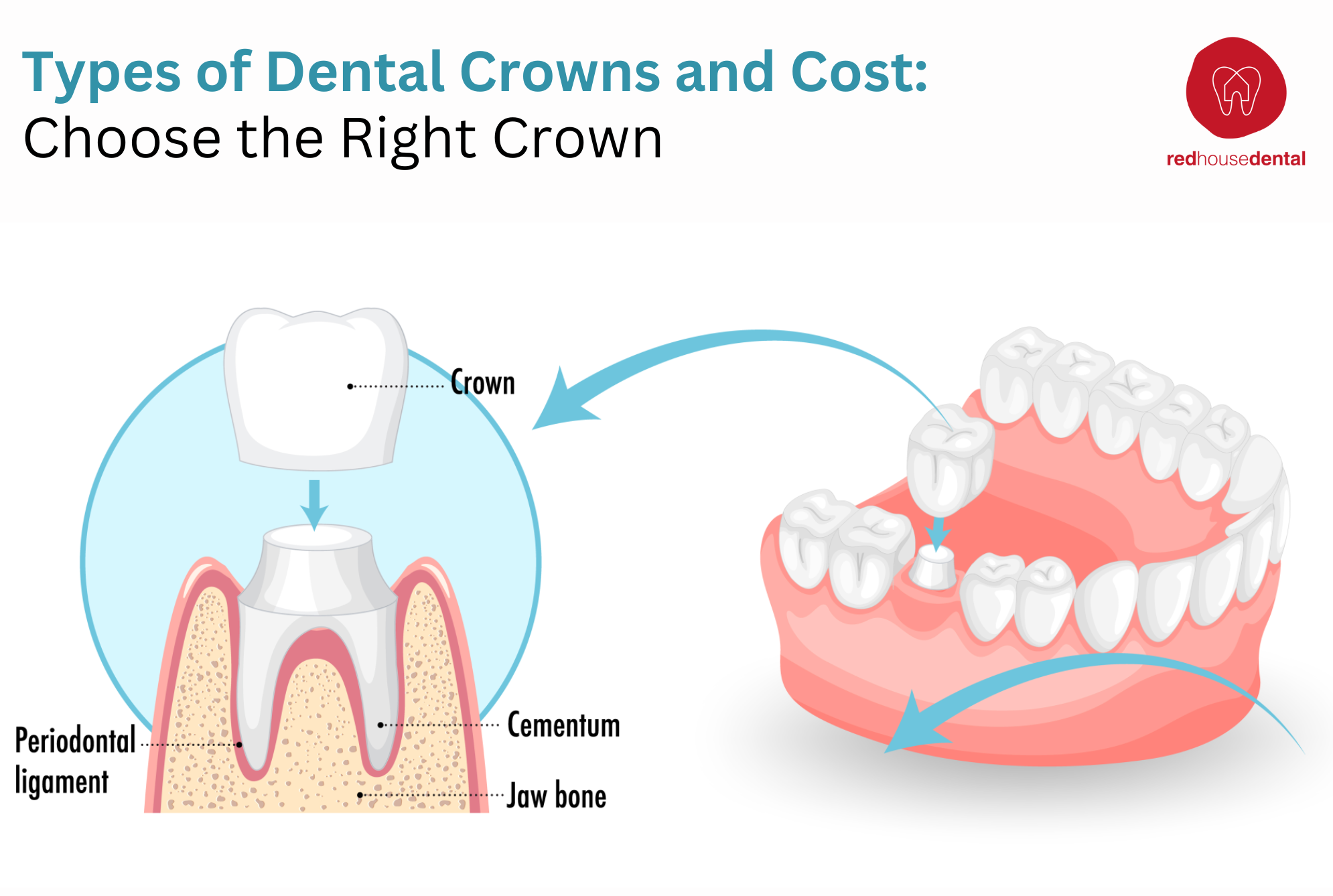
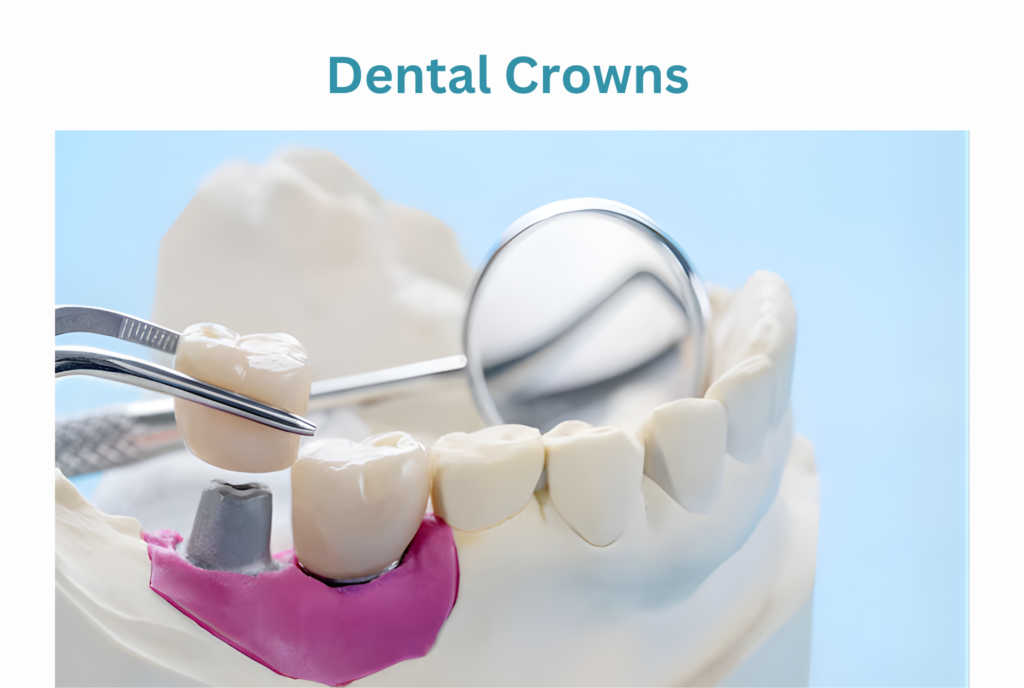
A dental crown is a crown on top of a weak or damaged tooth. Imagine it is a safety helmet for your tooth. It is placed on the whole exposed surface of the tooth, all the way to the gums.
Crowns are applied by dentists due to a number of reasons. Your tooth can be broken, severely decayed, or eroded away. A root canal treatment at times makes a tooth weak. A crown restores the shape, strength, and form of the tooth.
There is no difference in any capacity between a dental cap vs crown; they are the same thing. “Cap” is nothing more than an older colloquialism that is still used today.
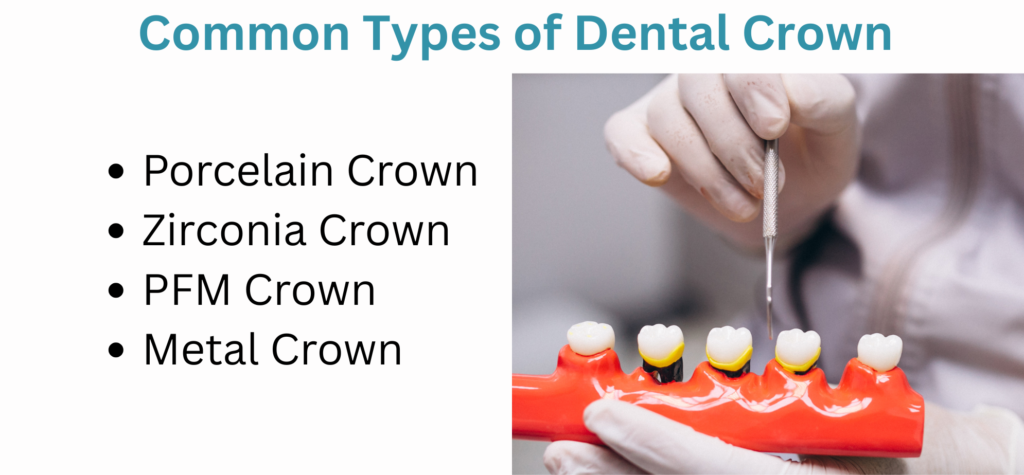
Common Types of Dental Crowns
Different materials work better for different situations. Here are the main types of dental crowns you might consider:
Porcelain Crown
A porcelain crown is the most natural. It looks like your other teeth. These are commonly prescribed by dentists for front teeth, as they just blend in.
Porcelain is not very strong for extensive chewing but can be chipped in case you grind your teeth. These crowns are made of no metal; therefore, they are a good option when you have metal sensitivities.
Zirconia Crown
A zirconia crown is composed of a highly powerful form of ceramic. It is harder than ordinary porcelain and still natural. Zirconia is becoming more popular amongst many dentists due to its long life and low tendency to break.
These crowns are suitable for both frontal and posterior teeth. They withstand chewing pressure more than porcelain. The colour is pretty close to your natural teeth, but not as good as pure porcelain.
PFM Crown
PFM stands for porcelain-fused-to-metal. This kind has a metal body and is topped by porcelain. It is very strong due to the metal and looks like teeth due to the porcelain.
PFM crowns are cheaper than all-porcelain. You may, however, notice a fine dark line close to the gum as time goes by and the metal heats through. These are good with back teeth, where appearance is not as important.
Metal Crown
A metal crown is the strongest option available. These are made of gold alloy or other metal mixes by dentists. They take the longest time and hardly ever chip or break.
The colour is the clearly apparent disadvantage. The majority of the population does not want to see shiny metal teeth when smiling. Due to this, metal crowns are normally placed on the back molars, where nobody will see them. They are fantastic for individuals who grind teeth.
Understanding the Tooth Crown Procedure
The placement of dental crowns teeth requires two visits in most instances. Here’s what happens:
The dentist prepares your tooth in your first appointment. This involves the removal of a little bit of tooth structure to make the crown fit. The dentist then imprints or scans your teeth. Meanwhile, you will be crowned with a temporary crown even as the real one is created.
During the second visit, the dentist takes out the temporary crown and examines the fitting of the new one. Once it has been adjusted to the required degree, they permanently fix it. The entire procedure is simple, and it is not very uncomfortable.
There are dental offices that provide same-day crowns based on special computer technology. Ask your dentist whether you may do this.
Dental Crown Cost in Canada
Dental crowns in Canada normally cost between $800 and $2500 per tooth depending on a number of factors. A dental crown has certain coverage under your workplace benefits program, a personal insurance plan, or government programs, provided you are eligible and it fulfills the conditions.
The average materials cost will be as follows:
- Porcelain or ceramic crowns range between $1,000 and $2,500 per tooth. These crowns are very aesthetic, and they correspond to the natural colour of your teeth, thus making them suitable for front teeth.
- Zirconia crowns cost between $1,200 and $2,500 per tooth. They are very strong and attractive with a natural appearance and are very strong in front and back teeth.
- Porcelain-Fused-to-Metal (PFM) Crowns normally cost between $800 and $2000 per tooth. They are well balanced and have a metal bottom to make them strong with porcelain to look natural.
- Metal crowns (base metal alloys or gold) cost between $900 and $2,500 per tooth. They are very hard and hard-wearing and therefore suitable for molars that do a lot of chewing.
The price you pay will depend on your circumstances, the experience of the dentist, and where you are located. Most dental plans cover part of the crown fee, particularly when the crown is medically necessary as opposed to a cosmetic crown. The Canadian Dental Care Plan (CDCP) can also assist in the ability of eligible patients to afford treatment of crowns.
Veneers vs. Crowns: What’s the Difference?
Veneers and crowns are confused at times. They both make your smile better but in different ways.
A veneer is the layer that is placed on the tooth but only on the front side. Veneers are primarily applied by dentists in order to make cosmetic changes to otherwise healthy and strong teeth. They are used in repairing chips, gaps, or discoloration.
The entire tooth is covered with a crown, which offers structural support. When a tooth is broken, weak, or damaged, you must have a crown. Crowns are effective and protective, but they are also attractive.
Consider it in this manner: a veneer is a false fingernail, and a crown is a full glove over your tooth. Depending on the situation, your dentist will prescribe the best alternative.
How to Choose the Right Crown for You
Several factors help determine which type of crown works best:
Location matters a lot. Crowns on front teeth should be natural looking; therefore, porcelain or zirconia would be suitable. Metal or zirconia would be good choices, as back teeth require strength due to chewing.
Your budget plays a role too. In case cost is an issue, PFM or metal crowns are a good value. Full porcelain or zirconia should be considered in case appearance is your priority and the budget is not an issue.
The decision depends on how hard you chew. Individuals having a grinding habit require a harder substance such as metal or zirconia. Individuals whose bite pressure is normal have increased options.
Any sensitivities or allergies are also important. All-ceramic is superior for individuals who have reactions to some metals.
These factors will be discussed with your dentist, and he or she will advise you on what is the most sensible for your particular tooth and circumstances.
Caring for Your Crown
When you properly take care of dental crowns and teeth, they last longer. Brush in the morning and evening as well as floss at least once a day, like the natural teeth. The crown itself will not die, but the tooth below it can die as bacteria creep under the edge.
Do not chew hard food such as ice and hard candy. Do not open packages with your teeth or bite your nails. Crowns, particularly those that are made of porcelain, can be harmed by these habits.
Go to the dentist on a regular basis. They will look at your crown to see that it still fits well and that nothing is going wrong under there.
Get Expert Crown Treatment at Red House Dental
The type of crown depends on the choice that is crucial to your dental health. At Red House Dental, we have a highly qualified team of professionals to help you decide on the most appropriate solution to your needs and budget.
Modern technology is used in making crowns that are perfectly fitted and look natural. You either require one single crown or multiple restorations; in any case, we offer sincere advice and quality care in a relaxed environment.
We accept the Canadian Dental Care Plan (CDCP), which makes it less expensive to treat qualified patients. We have clear pricing so that you will not meet hidden expenses.
Ready to restore your smile? Call us at 905-883-4643 or text 647-518-4643. You may also write to reception@redhousedental.com or pay us a visit at 38 Arnold Crescent, Richmond Hill. We have same-day appointments that are emergency (where applicable), and we have free parking directly outside our office.
Frequently Asked Questions (FAQs)
How long does a crown last?
Crowns have a life span of 10 to 15 years with proper care. Metal crowns have a longer life span of up to 20 years or more. The care you give your crown and the pressure you exert on your crown determine the length of your crown.
Does getting a crown hurt?
The actual process is not painful, as the dentist makes the area numb. There is a possibility of some sensitivity within a few days after, which disappears fast. The majority of people find it much easier to get a crown than they had anticipated.
Is it possible to eat with a crown?
Yes, you may eat like normal after the crown is fixed upon. The first day or two should be avoided with very hard or sticky foods. Then use it just like a normal tooth, but still it is a good idea not to chew ice or very hard objects.
Will my crown not be like the rest of my teeth?
The natural teeth should match very well with a well-made crown. The zirconia and porcelain crowns appear most natural. Your dentist will carefully select the colour so that it matches with your smile.
What becomes of me should my crown fall?
Call a dentist immediately when the crown becomes loose or falls off. Store the crown somewhere safe and come with it during your appointment. The dentist is often able to clean and recement the same crown. Do not take too much time because the tooth that is exposed can be damaged or irritated.