Wisdom teeth are the third set of teeth, which normally develop in your late teens or early twenties. These teeth present problems to many individuals, resulting in the removal of wisdom teeth. We also know that the thought of removing teeth can be worrying at Red House Dental. This blog will guide you through what to expect before, during, and after surgery, including risks and self-care tips.
What Are Wisdom Teeth, and Why Do Problems Occur?
The wisdom teeth are in the back of your mouth, one in each corner. They can be useful to chew when they grow properly, and there is a sufficient amount of room. Nevertheless, they have to be removed by many people because of a number of reasons.
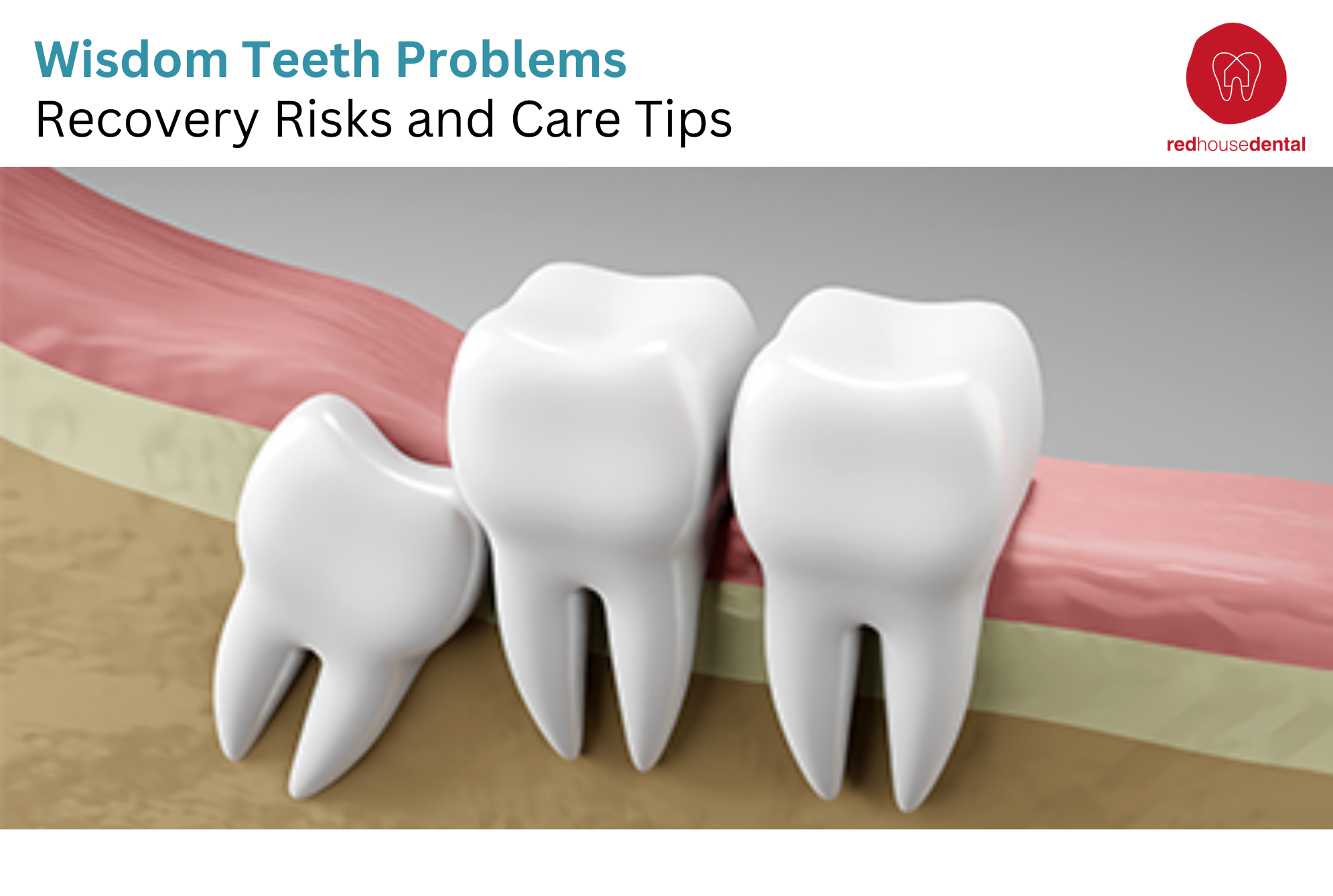
Sometimes, wisdom teeth grow at an angle instead of straight up. On other occasions, you just do not have enough space in your mouth. Crowded or trapped in your gums, the wisdom teeth may result in pain, swelling, and harm to the adjacent teeth. Also, the partially subgingival wisdom teeth are very hard to clean. Bacteria and food can be trapped in it, causing serious problems.
Benefits of Keeping Wisdom Teeth
The real advantages of wisdom teeth retention in case of proper positioning and good health. When your wisdom teeth come out straight and you are able to keep them hygienic, then they can be used just like the rest of your teeth. They are able to aid you in the way you can chew food much better, particularly when you get older. Some people experience no issues and choose to keep them.
But there are reasons that make most people have these teeth removed. At Red House Dental, your dentist will check your mouth and advise on extraction only when needed to maintain your health and comfort.
Understanding Wisdom Teeth Extraction Infections
Infection is one of the most prevalent misgivings that patients have regarding wisdom teeth surgeries. Infection of wisdom teeth extraction may occur once the bacteria make their way into the surgery zone during or after the surgery. Signs of infection in wisdom teeth removal include increased pain after several days, fever, swelling that gets worse instead of better, and discharge from the site.
When you follow the aftercare directions of your dentist, chances of wisdom teeth surgery infection are fairly low. To minimize your risk, follow any prescribed antibiotics given to you by your dentist strictly, as advised, maintain the area clean as advised, and do not touch the surgical site with your fingers or tongue.
Recovery Timeline: How Long Does It Take?
The recovery times vary between individuals, but having some knowledge on what to expect equips you to prepare. What is the duration of recovery from wisdom teeth? As a rule, the first few days will be painful and uncomfortable, and in the majority of cases, within several days to one week, people will be able to resume their normal daily functioning.
How long are wisdom teeth surgery? The actual operation normally lasts 30 minutes to 2 hours in accordance with the difficulty of extraction involved. Others are angled wisdom teeth, and some are deeply embedded, which take a longer time to come out.
How long for wisdom teeth to heal? Although you will feel better in a week, full recovery will require a long time. On the surface, the extraction site would normally require between four and six weeks to close up, and the underlying bone might also require months to fill fully.
Managing Pain and Caring for Your Mouth
The first days of wisdom teeth surgery are accompanied by some pain and swelling. To help control this, your dentist will prescribe pain medication. It is important to remember to take your drug when it is time and not to delay until the pain becomes so great that you start taking the drug.
The peak of swelling normally occurs on the second or third day after surgery. On the first two days, to reduce swelling, pack ice over the cheeks twenty minutes at a time. When the initial two days are over, then you should change to heat in order to make your body heal.
The first few hours following the procedure, bite on gauze pads to aid in bleeding. Take full rest on a surgery day, and do not engage in any physical activity for at least one week. Lie with your head raised to decrease swelling.
Concerning food, the first week should be characterized by soft food. Good choices include yogurt, smoothies, and mashed potatoes. On the first day, it is necessary to avoid hot food and at least one week without a straw because the suction can disrupt the healing location.

Before Your Surgery
You ask yourself, can you brush your teeth before wisdom teeth removal? Yes, you are supposed to brush and floss your teeth before going to bed, and you can brush before coming to your appointment. This will assist in keeping your mouth clean and healthy as you get to the procedure. Do not brush the area where the tooth was removed during the first week after surgery, but you can brush the other teeth.
Managing Bleeding and Preventing Dry Socket
The first two days of bleeding are regular. In case the bleeding is still excessive, bite on a wet tea bag for half an hour. The tea’s tannic acid has the potential to prevent bleeding.
A phenomenon known as dry socket may come up when the blood clot that forms in the extraction site is dislodged. This is painful and occurs in approximately two to five percent of the removals of wisdom teeth. In order to avoid it, avoid rinsing, spitting violently, or using straws during the first five days after surgery. Do not smoke; this would pose a great risk to you.
When to Seek Help
Although some pain is expected following surgery, consult the doctor immediately when you develop intense pain that fails to respond to medication, a fever higher than 101 degrees Fahrenheit, excessive bleeding, which does not reduce after 30 minutes, and discharge of pus at the site.
Ongoing Care and Prevention
Once the wisdom teeth have been healed, ensure that you keep your mouth clean. Brush your teeth 2 times a day, floss on a daily basis, and have your checkup at Red House Dental every six months. Good oral health makes you smile all the way into old age.
Conclusion
Wisdom teeth removal is not as complicated as it may sound, as most individuals heal without complications with appropriate preparations and follow-up care. It is all a matter of knowing the risk and giving your dentist following your dentist’s instructions.. If you worry about wisdom teeth questions, call Red House Dental at 905-883-4643 or visit us at 38 Arnold Crescent, Richmond Hill. Our team will guide you through the process step by step.
FAQs
1. What are the risks of getting your wisdom teeth removed?
Wisdom teeth removal is just like any surgery which has its own risks. They can be dry socket (removal of the clot prematurely), infection at the site of extraction, nerve injury (rare), excessive bleeding, swelling. These risks are reduced to a minimum by following the instructions given to you by your dentist during the aftercare. In Red House Dental, our staff goes an extra mile to make sure that your treatment is secure and comfortable.
2. How bad is recovery for wisdom teeth?
Wisdom teeth removal is just like any surgery which has its own risks. They can be dry socket (removal of the clot prematurely), infection at the site of extraction, nerve injury (rare), excessive bleeding, swelling. These risks are reduced to a minimum by following the instructions given to you by your dentist during the aftercare. In Red House Dental, our staff goes an extra mile to make sure that your treatment is secure and comfortable.
3. Can wisdom teeth affect your immune system?
Yes, affected or infected wisdom teeth may put a strain on your immune system. Bacteria around a partially erupted or decayed wisdom tooth (which are also known as periodontitis) makes your body to always struggle to resist infection. This may undermine your immune system in the long run. Earlier wisdom teeth removal prevents inflammation and safeguards the general well-being.
4. How long does it take for impacted wisdom teeth to heal?
The process of healing of the affected wisdom teeth may take different durations depending on the nature of the operation. As a rule, the gum tissue has been closed in 2-3 weeks, but full bone recovery can take up to three months. The first week is spent on adhering to aftercare guidelines, such as eating soft food, avoiding the use of straws, and keeping the area clean in order to achieve faster healing and prevent complications.