Yellow teeth do not ruin your life. But they sit in the back of your head. Every photo. Every meeting. Every time someone catches you mid-laugh and you immediately close your mouth.
That quiet self-consciousness is more common than people admit. And teeth whitening is usually what finally pushes someone to book an appointment.
Red House Dental in Richmond Hill gets asked about this constantly. What is actually happening inside the tooth? Is it doing any damage? Why does it hurt some people and not others? Here is the actual answer with no fluff.
What Is Teeth Whitening and How Does It Work?
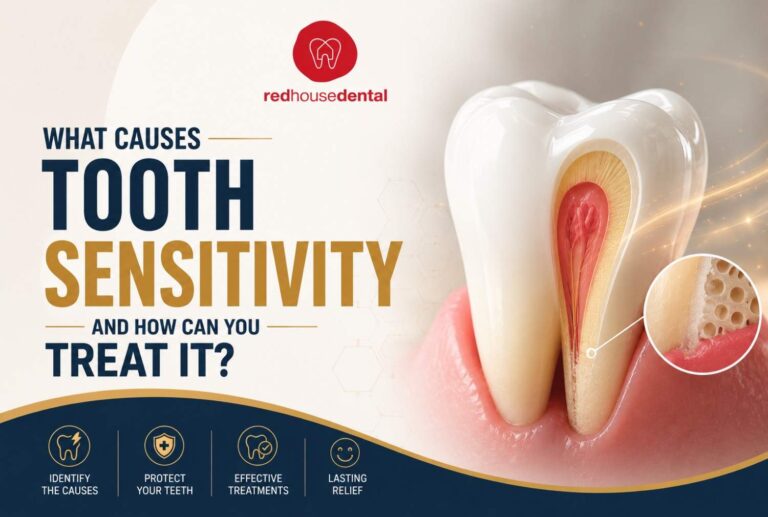
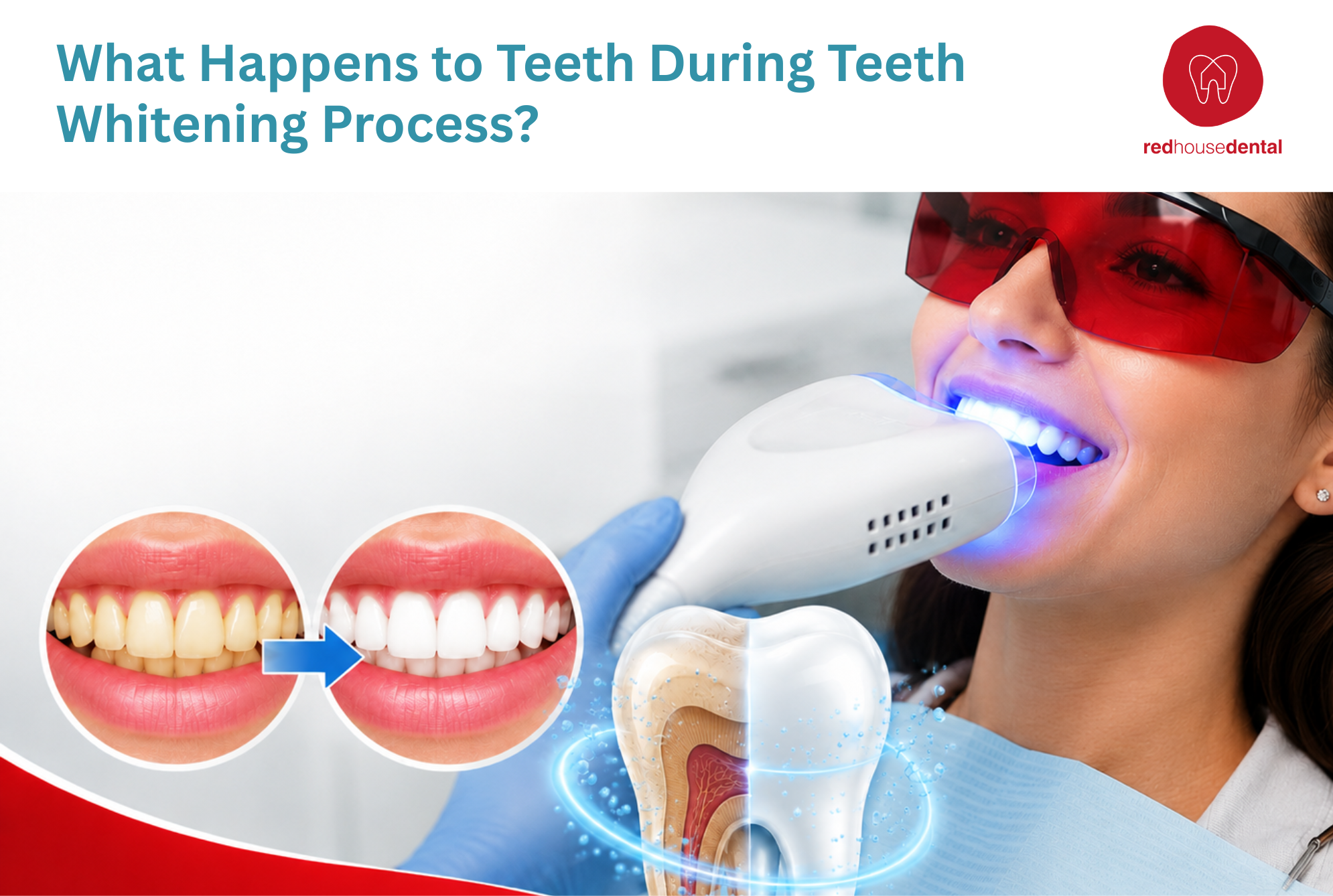
Your tooth is not just a solid white block. There is an outer layer called enamel, hard but slightly see-through. Under that sits dentine, which runs naturally more yellow. Over years of coffee, wine, tea, and food, stain molecules creep into the tiny pores sitting in that enamel layer and settle there.
Teeth whitening pushes a bleaching agent into those same pores. Hydrogen peroxide or carbamide peroxide, usually. Once it gets in there, it breaks those stain molecules apart through a chemical reaction. The molecules stop absorbing light the same way, and the tooth looks lighter.
Nothing is getting scrubbed off the surface. The whole thing is happening from inside the enamel. That is the reason whitening teeth gets results that a polish or whitening toothpaste simply cannot touch.
Professional Teeth Whitening vs. the Pharmacy Shelf
Strips, pens, trays, and toothpastes. The options at any pharmacy look convincing on the packaging.
The problem is regulation. Over-the-counter products are capped at very low concentrations of active ingredients. Low concentration means slow, weak, and often patchy results because the strips and trays do not sit properly across every tooth surface. Some spots get treated. Others barely get touched at all.
Professional teeth whitening operates at a much higher concentration. It gets applied properly across every surface. A dental professional controls the whole process from start to finish.
The gap in results between professional teeth whitening and a pharmacy product is not small. People who have tried both know this immediately.
What Is Actually Happening Inside the Tooth?
The bleaching gel lands on the enamel surface and starts pushing through the microscopic pores. Sitting inside those pores are compounds built up over years from everyday food, drink, and habits. The peroxide gets in and chemically breaks those compounds apart.
Once broken down, those molecules reflect light differently. The tooth reads as lighter to the eye. That is the whole mechanism.
During this process the enamel pores open up slightly. It’s a completely normal part of how teeth whitening dental care works. Within a day or two afterward, they close back up again as the tooth remineralizes on its own.
Professionally done teeth whitening dental care on healthy teeth does not strip enamel or cause permanent damage when a qualified dental professional carries it out properly. That part matters.
Why Do Some People Get Sensitivity?
Sensitivity during or after teeth whitening catches people off guard when no one warned them it might happen.
Reasons it comes up:
- Temporarily open enamel pores leave the tooth more reactive than usual
- The nerves inside the tooth become more responsive for a short window.
- People with naturally thinner enamel feel it more sharply.
Most of the time it fades within 24 to 48 hours. Gone completely by day three for the majority of people. If you already deal with sensitivity before any whitening happens, that is a conversation to have with your dentist before starting, not after. There are specific products and adjusted approaches that make a real difference for people in that situation.
Teeth Whitening Cost in Canada
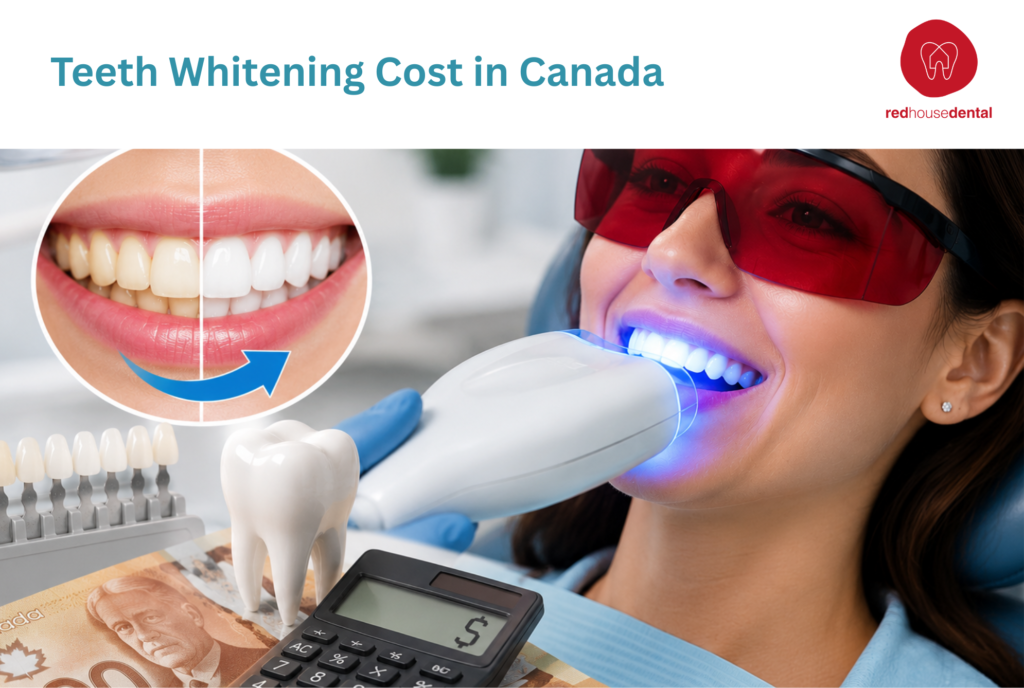
Teeth whitening cost is almost always the first practical question people want answered.
In-chair treatment done at the dental clinic in Richmond Hill carries a higher teeth whitening cost than custom take-home trays your dentist makes for you. Both are professional grade, and both work. In-chair is faster. Results show up in a single visit and tend to be more dramatic. Take-home trays work more slowly over a couple of weeks but give you flexibility around your own schedule.
Teeth whitening cost is not covered under most Canadian dental insurance plans. It gets classified as cosmetic treatment. Worth knowing before you show up expecting a rebate.
At Red House Dental, the teeth-whitening cost gets laid out clearly before anything starts. No vague estimates sitting in the chair, wondering what the bill looks like.
Who Gets Good Results and Who Might Not?
Whitening teeth works well for people dealing with staining that built up gradually from everyday life. Natural enamel responds well to the process.
Worth knowing before you go in:
- Whitening teeth has no effect on crowns, veneers, or existing fillings. Those stay the same colour they already are.
- Active decay or gum problems need sorting before whitening can happen.
- Some deeper internal staining from certain medications taken during tooth development may not fully respond.
- Pregnant or breastfeeding patients are generally told to wait until after
A short consultation saves a lot of assumptions. Your dentist looks at what you are actually working with and tells you straight whether now is the right time or something else comes first.
How to Make Results Stick Around
Whitening teeth and then going straight back to three coffees a day is going to shorten how long things stay bright. No way around it.
Habits that genuinely help:
- Rinse with water straight after anything that stains
- Pull back on coffee, tea, red wine, and dark fizzy drinks where possible.
- Use a whitening toothpaste to maintain it between treatments
- Keep going to regular professional cleanings
- If you smoke, avoid it during recovery at minimum.
Results can hold well for over a year for people who are a bit mindful. For people who change nothing, considerably less.
Why Red House Dental
Red House Dental is based in Richmond Hill, Ontario. The clinic provides not only a comprehensive dental care package but also teeth whitening.
You’re not forced to do anything here. The dentist examines the teeth correctly and explains what is achievable for your case and is honest with you about your expectations. If there’s something else that needs to be sorted out first before whitening would make sense, you’ll hear about it first.
Clinics accept the Canadian Dental Care Plan (CDCP) for eligible treatments. It consists of Dr. Ria Pudjo, Dr. Kavita Gupta, Dr. Sandeep Tayal, and Dr. Susie Ang.
38 Arnold Crescent, Richmond Hill, ON. Call +1 (905) 883-4643. Monday through Friday, 8AM to 6PM; and Saturdays, 9AM to 3PM. Great for parking directly in front of the store.
Frequently Asked Questions (FAQs)
Does professional teeth whitening damage enamel?
No, not when a dental professional does it properly. Enamel pores open up temporarily during the process and close back up within a couple of days on their own. The enamel itself does not get stripped or permanently altered.
How long do whitening teeth results actually last?
Somewhere between six months and two years for most people. Habits make the biggest difference. Cutting back on staining food and drink and keeping up with regular cleanings stretches noticeably further.
Is teeth whitening cost covered by dental insurance in Canada?
Generally not. Whitening teeth sit under cosmetic treatment and most plans leave it out. Red House Dental runs through teeth whitening cost with you clearly before the appointment starts so nothing is a surprise.
How many shades whiter can I actually expect?
Depends on where your teeth are starting from and what kind of staining is there. Some people see a dramatic shift, others something more subtle. A consultation gives you a realistic picture based on your actual teeth rather than a guess.
Can I do teeth whitening dental care if my teeth are already sensitive?
Most of the time, yes. Bring it up with your dentist before anything begins. There are pre-treatment products and adjusted approaches that make the process significantly more comfortable for people already dealing with sensitivity. Do not assume it rules you out entirely.