You brush every morning. You floss most nights. You cut back on sugar. And yet your dentist still finds a cavity sitting in the back of your mouth at your next checkup.
That is not a hygiene failure. The back teeth have grooves and pits carved into their chewing surfaces that a toothbrush simply cannot reach the bottom of. Bacteria settle in there, food gets trapped, and decay starts. A dental tooth sealant fills those grooves in and takes that hiding spot away from bacteria entirely.
Red House Dental in Richmond Hill offers this as part of everyday preventive care for both children and adults. Most patients coming in for a dental tooth sealant have never had one before and are not sure what to expect. Here is everything laid out plainly.
What Are Dental Sealants?
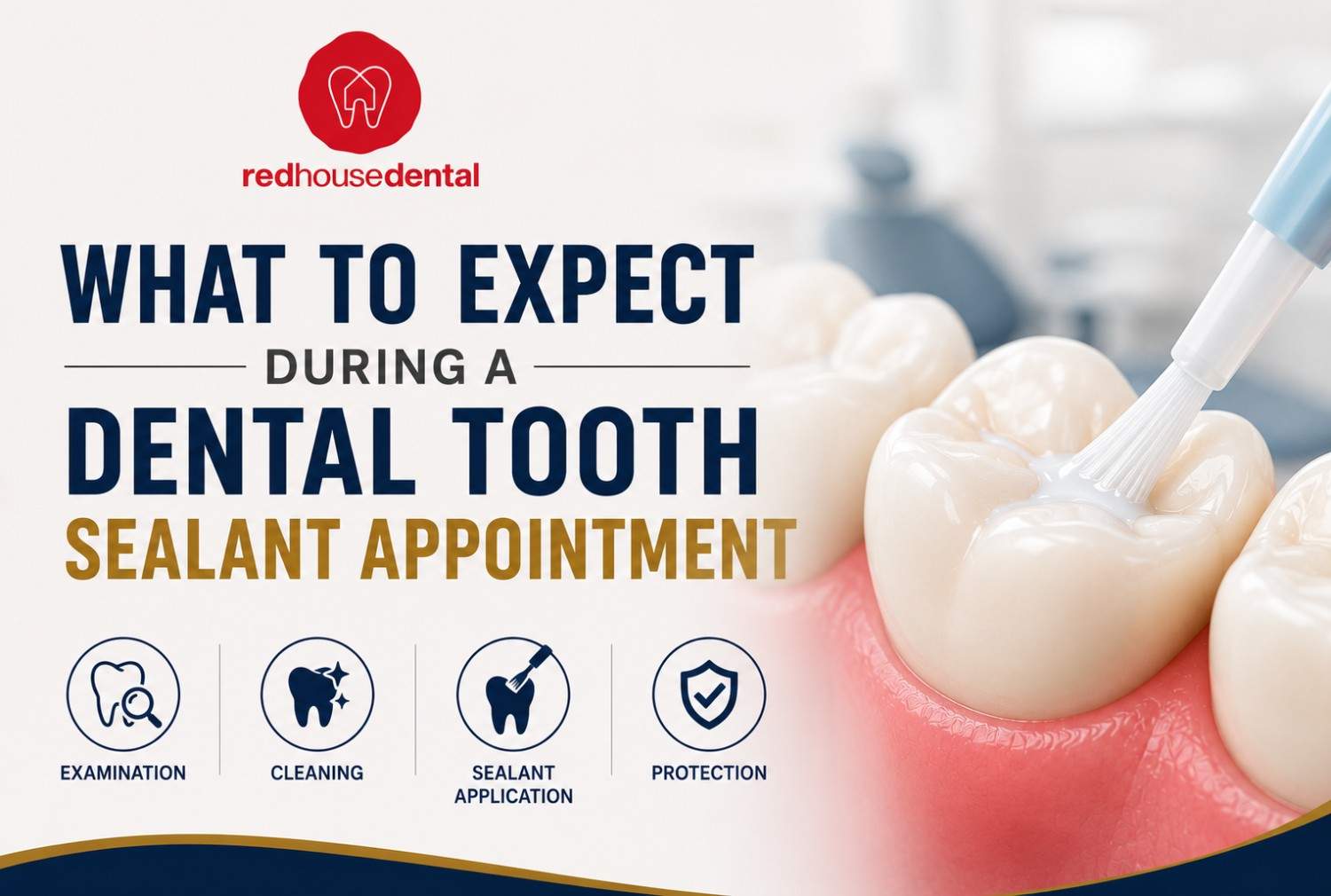
What are dental sealants in simple terms? A thin liquid coating gets painted directly onto the chewing surface of the back teeth. It flows into the grooves and pits, bonds to the tooth surface, and hardens into a smooth protective barrier.
Once a dental tooth sealant is in place, those grooves no longer exist as open crevices. Food slides off instead of getting packed in. Bacteria have nowhere to accumulate. The surface becomes far easier to keep clean with a regular toothbrush and daily brushing actually does what it is supposed to do back there.
Dental sealants are purely preventive. They go on healthy teeth with no existing decay. Once decay has formed, a teeth filling may be needed instead.
Who Should Get One?
Dental Sealants for Kids
Dental sealants for kids get recommended more than almost any other preventive dental treatment for children. The reason is straightforward. Permanent back teeth erupt around age six and twelve. These are the teeth that collect the most decay during childhood because the grooves tend to be deep and kids are still developing consistent brushing habits.
Getting dental sealants on kids’ teeth as soon as they come through is often recommended during their early pediatric dental visits. The window for getting the most benefit from this is early.
Dental Sealants for Adults
Dental sealants for adults do not get nearly the attention they deserve. If the back teeth have no existing fillings and no active decay, a dental tooth sealant goes on just as effectively as it does on a child’s tooth.
Adults who are prone to cavities, who have naturally deep grooves in their molars, or who want to be more proactive about protecting their teeth are all solid candidates. Age is not a barrier here. Dental sealants for adults are a straightforward preventive step that gets overlooked far too often.
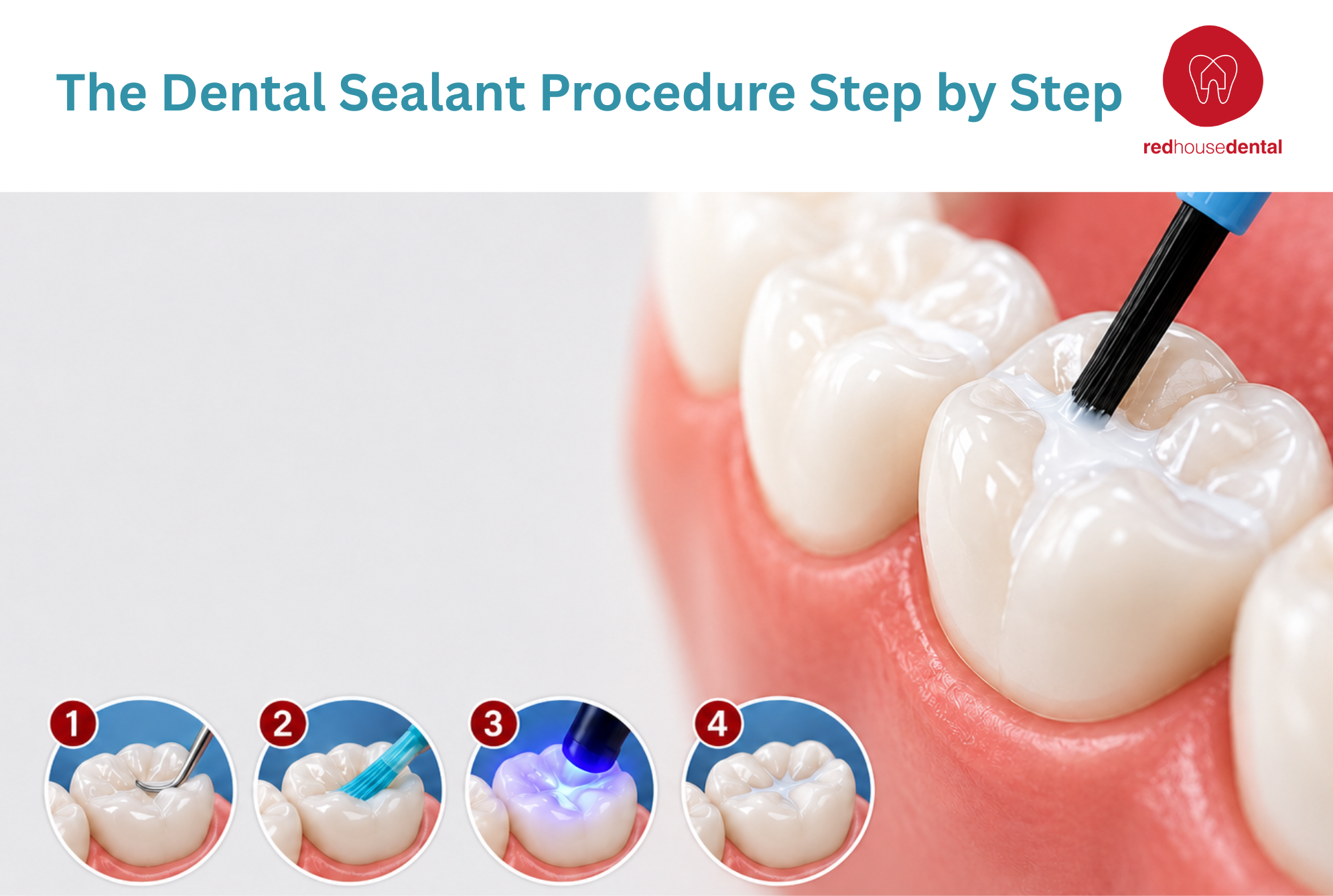
The Dental Sealant Procedure Step by Step
Patients hear dental procedure and immediately brace for needles and drills. The dental sealant procedure involves neither. It is one of the most comfortable things that happens in a dental clinic.
Cleaning the Tooth
The chewing surface of the tooth gets cleaned properly before anything else happens. Plaque, debris, anything sitting in those grooves gets cleared out. A dental tooth sealant needs a completely clean surface underneath it. Anything left behind affects how well it bonds and how long it holds.
Getting the Tooth Dry
Cotton rolls or small absorbent pads go around the tooth to keep moisture away from the surface. This part sounds minor but actually matters quite a bit. Saliva getting onto the tooth during application stops the dental tooth sealant from bonding the way it needs to.
The Acid Gel Step
A mild acid gel gets applied to the chewing surface for a short time, maybe thirty seconds. What this does is roughen the surface at a microscopic level so the dental sealant has a textured surface to grip onto rather than a smooth one. You feel nothing during this step. It sounds more dramatic than it is.
Rinsing and Drying Again
The gel gets rinsed off thoroughly and the tooth gets dried once more before anything else goes on.
Applying the Dental Tooth Sealant
The dental tooth sealant material gets painted onto the chewing surface. It is a liquid at this stage and naturally flows down into the grooves and pits. The colour is usually clear or faintly white and once set it sits completely flush with the surrounding tooth surface.
Hardening With a Curing Light
A small blue light gets directed at the tooth for several seconds. This is what hardens the dental sealant and locks it into place. Once the light is done the coating is fully set. Hard, bonded, and ready.
The whole dental sealant procedure for several teeth takes around half an hour. A single tooth is just a few minutes. No numbness to wait out, no recovery period. Patients walk out and eat and drink normally.
How Long Before It Needs Replacing?
Five to ten years is a reasonable expectation depending on what the person eats, how they chew, and how consistent they are with dental checkups.
At every routine visit the sealant gets checked over. If any section has worn thin or lifted slightly it gets touched up or redone. Quick and easy both times.
What a Dental Tooth Sealant Does and Does Not Do
Being straight about this saves patients from disappointment.
A dental tooth sealant does:
- Cover the chewing surface grooves and pits of back teeth with a protective layer
- Reduce the risk of decay starting in those areas significantly
- Make the back teeth easier to clean properly with day-to-day brushing
- Last several years before needing any attention
A dental tooth sealant does not:
- Treat decay that is already sitting inside a tooth
- Cover the sides of teeth or the spaces between them
- Remove the need for brushing, flossing, or regular checkups
- Work on teeth that already have fillings in the same area
The sealant covers the chewing surface only. Decay can still develop elsewhere on the same tooth, and healthy gums still need regular care.
Red House Dental in Richmond Hill
Red House Dental is at 38 Arnold Crescent, Richmond Hill, ON. Dental tooth sealant is a regular part of preventive care here for patients of all ages.
Before anything starts at Red House Dental, a dentist in Richmond Hill looks at the teeth properly and explains whether a dental tooth sealant is genuinely the right call. If it is not needed, that is what gets said. No filling appointment slots with treatments people do not actually benefit from.
The dental sealant procedure at Red House Dental gets explained step by step before it begins. Particularly with children, the team takes time to walk through what is happening so nobody is caught off guard by anything during the appointment.
The dental clinic accepts the Canadian Dental Care Plan (CDCP), which may cover dental sealants for eligible patients. The team includes Dr. Ria Pudjo, Dr. Kavita Gupta, Dr. Sandeep Tayal, and Dr. Susie Ang.
Call +1 (905) 883-4643. Monday to Friday 8am to 6pm, Saturdays 9am to 3pm. Free parking outside.
Frequently Asked Qustions (FAQs)
Does the dental sealant procedure hurt?
No. Nothing about it is uncomfortable. No needles, no drilling, no pressure on the tooth. Children go through it without much fuss at all and most adults say it was far easier than they expected going in.
What are dental sealants actually made from?
A plastic resin material that bonds to the tooth surface and hardens under the curing light. Some versions use glass ionomer which releases a small amount of fluoride into the surrounding tooth over time which adds a bit of extra protection.
Can dental sealants for kids go onto baby teeth?
Sometimes. If a baby tooth has very deep grooves and is at real risk of developing decay, a dental tooth sealant on that tooth can carry it through until the adult tooth comes in. Whether it makes sense depends on the specific tooth and the child’s situation. Your dentist would assess that at the appointment.
How soon can eating happen after the appointment?
Quite quickly. The dental sealant procedure has no recovery period attached to it. Eating and drinking can happen shortly after leaving the clinic. Skipping very hard or sticky foods for the first day is sensible but nothing strict applies.
Do dental sealants for adults get covered by insurance in Canada?
Depends on the plan. Dental sealants for kids tend to have stronger coverage than adult sealants across most plans. The CDCP may cover sealants in certain situations. Red House Dental checks your specific coverage before the appointment starts so the cost side is clear before any treatment happens.