
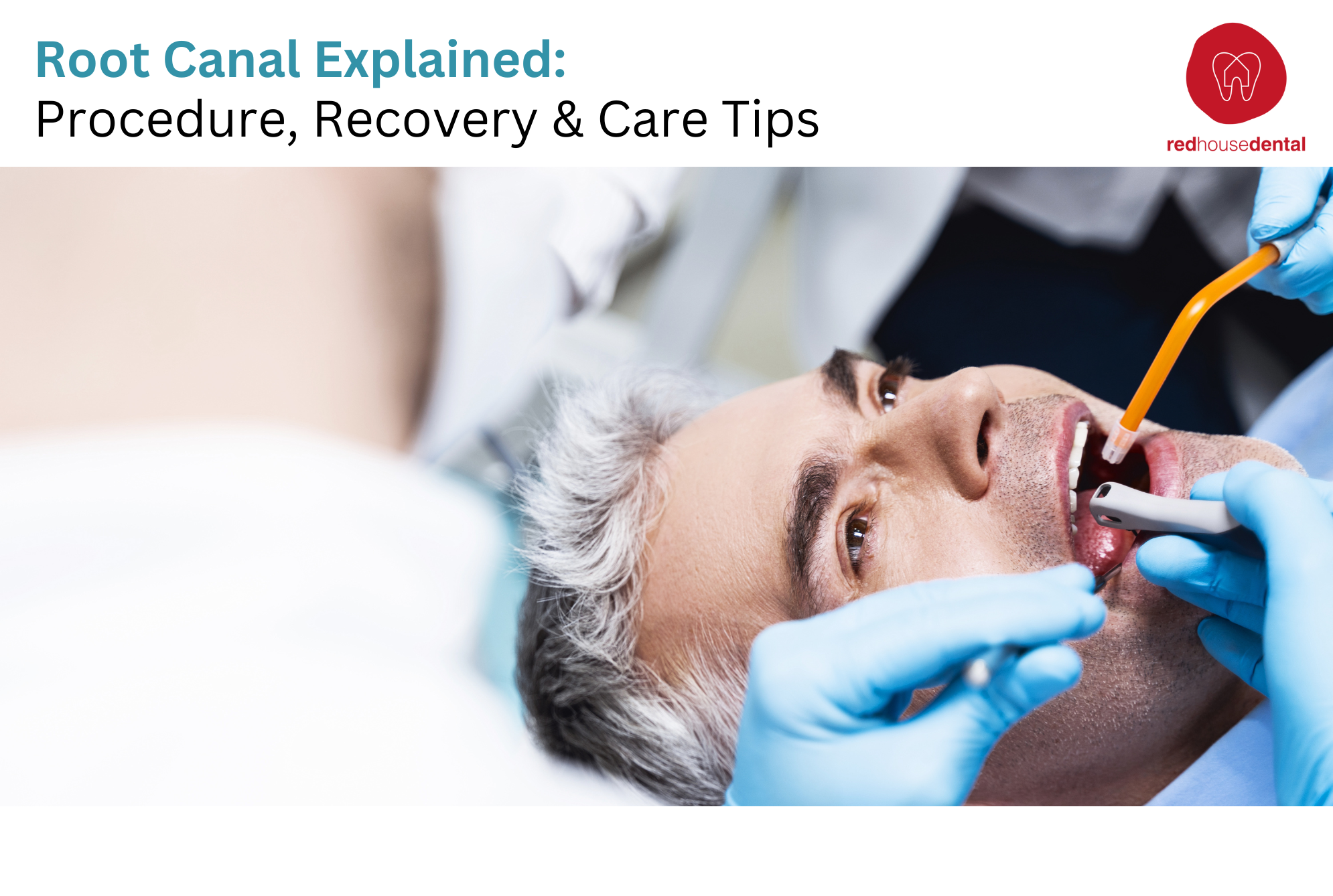
A root canal is a dental treatment that saves your tooth when the inner part becomes infected or damaged. You have a soft structure on the inside of every one of your teeth, which is called the pulp. Nerves and blood vessels are found in this pulp and are required for your tooth to grow and remain healthy. In the event of infection or pulp death, root canal treatment is necessary to alleviate your pain and preserve your tooth.
At Red House Dental, we save infected teeth using precise and painless root canal treatment. Instead of losing your tooth, our highly qualified dentists help to make it strong and healthy.
What Causes Root Canal Problems?
Several factors can damage the pulp inside your tooth. One of the most common causes is a deep cavity that remains untreated. Bacteria that chew through the hard surface of your tooth can reach the pulp inside.
A tooth with a crack or chip also provides a hole where bacteria can enter. An old filling or a crown may sometimes fail, exposing your tooth to infection. Pulp can also be damaged by an accident to your tooth. Grinding your teeth over time can also damage the inner part of the tooth.
Signs You Need a Root Canal
How do I know if I need a root canal? There are several signs you might need a root canal, and they shouldn’t be ignored. When biting down, or when chewing food, the most noticeable caution is acute pain. The pain may come and go or stay constant.
There are those who feel sensitive to hot or cold food and beverages, which continues even after the hot or cold disappears. Your tooth can be darker or discoloured in comparison to your other teeth. These include root canal infection symptoms that can be the swelling and tenderness in your adjacent gums. You could even notice that you have a tiny pimple-like bump at your gums towards the affected tooth.
The root canal signs and symptoms are different in individuals. You may not always be able to see any symptoms. That is why it is important to do regular check-ups. Issues can be identified at an early stage before they cause pain.
The Root Canal Procedure Explained
How Long Does a Root Canal Take?
How long does a root canal take? The duration of root canal procedures varies between 30 minutes and 2 hours depending on the kind of tooth that is to be treated and the complexity of the case. The front teeth do not require as much time as the back ones because they have many roots. The first appointment will also give you a better time estimation by your dentist.
The Steps Root Canal Treatment Involves
- X-rays and Numbing: The procedure begins with X-rays to determine the infection. Local anaesthetic is used to numb the area, ensuring you don’t feel pain during the procedure.
- Tooth Isolation: A rubber dam will be applied to a tooth to ensure that it is not wet and bacteria-free.
- Access and Cleaning: The dentist creates a small hole on the surface of the tooth in order to open the pulp chamber, and then with small dental files, he carefully removes the infected tissue.
- Shaping and Filling: Once the cleaning is done, we disinfect, shape, and stuff a rubber-like substance known as gutta-percha into the space that is inside the roots. This blocks the canals to avoid reinfection.
- Temporary Filling: The temporality of filling is used to seal the opening until a permanent restoration or crown is fitted.
You will come back a few weeks later and have a permanent crown fitted, which helps in protecting the treated tooth and also in recovering full strength and appearance.
How Painful Is a Root Canal?
How painful is a root canal? Most patients are surprised to learn that a root canal isn’t more uncomfortable than a regular filling. Indeed, the root canal alleviates the intensive pain that was already experienced due to the infection. The anaesthetic drug makes the procedure painless.
Some pressure and sound coming out of the dental tools may be experienced, though they should not be painful. In case of pain in the process of the root canal procedure, inform your dentist immediately, and he/she can administer more numbing drugs to you.

Root Canal Recovery and Aftercare
Understanding Recovery Time
The root canal recovery time is usually very rapid. Most people feel better within a few days. Usually, you have a tender or sensitive tooth that can last a week or two. You can go back to your everyday life activities immediately.
Soreness After Root Canal
Post-root canal soreness is normal and anticipated. Your tooth and the surrounding area have been subjected to a procedure, and it is only natural that they are feeling some light pain. You might feel some soreness while chewing or sensitivity to temperature. This will disappear in a couple of days or a week.
This soreness can be treated by over-the-counter painkillers such as ibuprofen or acetaminophen. Do as the package says and take only what is necessary. The vast majority of patients require only a few days to treat pain.
Foods to Eat Post Root Canal
As far as the foods to consume after a root canal are concerned, soft foods should be consumed during the initial days. Among the good options, there are yogurt, soup, mashed potatoes, eggs, oatmeal, and smoothies. Hard or sticky food should be avoided, as it may destroy the temporary filling.
Also avoid very hot foods and beverages during the first week. When healed, you are able to gradually resume a normal diet. Use a soft toothbrush till the permanent crown is put on.
Possible Side Effects and Complications
Root Canal Treatment Side Effects
The majority of side effects of root canal treatment are minor and temporary. Light pain, touch sensitivity, and minimal swelling are usual. The symptoms normally disappear in several days on their own.
Some people notice their treated tooth feels slightly higher or different than the others. This mostly implies that a limited amount of some filling material will be left, which your dentist can correct.
Long-Term Side Effects of Root Canal Treatment
Root canal treatment has few side effects in the long run. The tooth will no longer contain the living pulp and thus will not be able to sense either temperature or pain caused by decay inside. Nevertheless, your tooth will still develop cavities on the outside; hence, continue brushing and flossing.
The treated teeth may get a little bit brittle after some time due to the lack of nutrients supplied by the pulp. This explains why after undergoing an oral root canal procedure, it is important to have a crown to guard your tooth over a long period of time.
Root Canal Complications
When done carefully, root canal complications are rare. Sometimes a fragment of a filling may chip off in the tooth, and this does not normally present any problems. A root canal is not always successful, and the infection comes back. In such uncommon instances, you may have to undertake a second root canal procedure known as retreatment.
When Is a Root Canal Necessary?
What is the timing of a root canal? A root canal may be proposed by your dentist in case your dentist discovers that your pulp is affected, dying, or dead. They will not recommend unnecessary treatment to you. If you do need something, they will explain why and show you the available options.
Why Choose Red House Dental?
We offer precise and painless root canal treatment at Red House Dental, a dental clinic in Richmond Hill, in a relaxed setting. Our team uses the latest technology and gentle techniques to make your experience as comfortable as possible. We are confident that good dental care will not be too expensive, and we are committed to providing what you need. We have also accept the Canadian Dental Care Plan, making treatment more affordable for our patients.
In case of extreme pain, call us at 905-883-4643 or text 647-518-4643. When possible, we keep emergency spots open to assist you in obtaining relief.
FAQs
1. What is a root canal procedure?
Root canal is a dental process in which the infected / damaged pulp is excised in the middle of your tooth. The dentist cleans and disinfects the canal carefully and fills and seals it to avoid the infection. This is useful in saving your natural tooth and you can get it functional again.
2. What are the 10 general steps in root canal therapy?
Though each case is different, a standard root canal requires the following ten steps:
- X- rays, dental examination.
- The administration of local anesthesia.
- Isolation of teeth using a rubber dam.
- Opening of access into the tooth.
- Pulp decontamination and debridement.
- The canals were to be shaped and disinfected.
- Caulking the canals with gutta-percha.
- Temporal sealing of the tooth.
- Instalment of a permanent restoration or crown.
- Post visit check up to ascertain healing.
3. What are the 5 basic root canal steps in order?
A typical root canal follows five steps, which are:
- X-ray and numbing
- Washing the pulp in question.
- Shaping the canals
- Obtocling and closing the canals.
- Crown or permanent filling to restore the tooth.
4. What is the recovery process for a root canal?
Root canal recovery is fairly fast and painless. It is normal to experience mild soreness or sensitivity during a few days which may be treated with over-the-counter pain relievers. Initially, soft foods are advised and the majority of the patients resume normal activities after 24 hours. After having permanently crowned the tooth; the tooth behaves like any other healthy tooth.