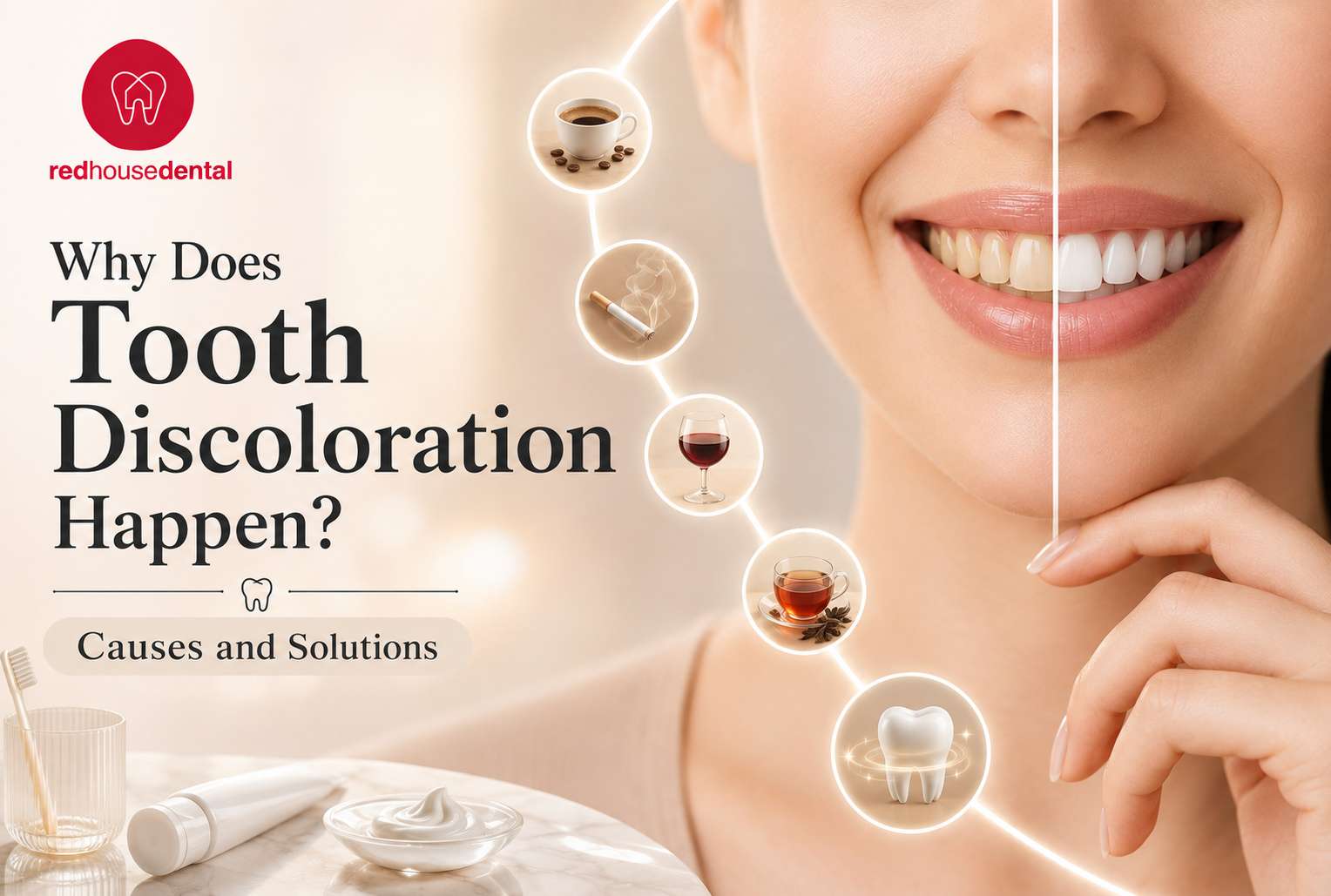
Your teeth are not supposed to be pure white. That is actually the first thing worth knowing. Natural tooth colour varies from person to person and always has. But there is a difference between natural variation and tooth discoloration that has developed over time from something specific.
Yellow that showed up gradually. A single tooth that went grey. White patches that appeared after braces came off. Brown along the gum line that will not budge no matter how much you brush.
These are not the same problem. They do not have the same cause. They do not have the same fix.
Inside the Tooth or Outside. Matters More Than People Realise
Two types.
Outside
On the enamel surface. This is extrinsic tooth discoloration. Comes from what your teeth come into contact with regularly. Food, drinks, tobacco, plaque that hardened because brushing was inconsistent. This type is reachable. Whitening treatments and professional cleaning can get to it.
Inside
In the dentine underneath enamel. This is intrinsic discoloration. Comes from medication exposure during development, trauma to the tooth, disease, certain dental materials. Whitening does not always reach intrinsic staining. Veneers, bonding, crowns. That is what intrinsic discoloration often needs.
People try whitening strips on intrinsic staining for months and get frustrated. Usually because nobody told them which type they were dealing with.
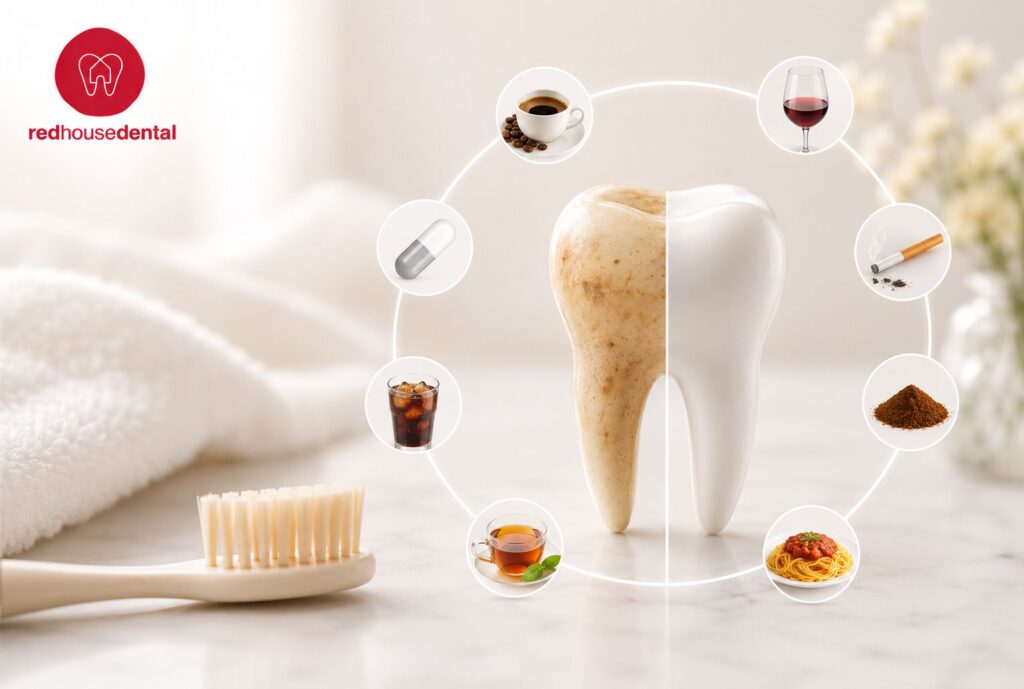
What Is Actually Causing It
The Stuff You Brought on Yourself, Not Said Judgmentally, Just Factually
- Food and drink. Coffee every morning. Tea every afternoon. Red wine, berries, soy sauce, dark cola. All of it leaves pigment behind over time especially when combined with any acidity. Acid softens enamel temporarily. Soft enamel picks up pigment faster. So it is not just dark drinks, it is acidic dark drinks that cause the most staining the fastest.
- Tobacco. Smoking or chewing. Nicotine and tar are genuinely difficult to remove from enamel once they are in there. Whitening toothpaste is not going to do much. Most people with heavy tobacco staining need professional treatment and even then it takes work.
- Not cleaning properly. Plaque that stays on teeth hardens into tartar. Tartar is brown and yellow and once it sets it is there until a hygienist removes it. Cannot be brushed away at home. No toothpaste removes it. This is the most preventable cause of tooth discoloration and probably the most common.
- Too much fluoride as a kid. Sounds contradictory because fluoride protects teeth. But very high fluoride intake during childhood while enamel was forming can cause white spots on teeth. That is fluorosis. Mild version shows as faint streaks. More significant cases involve brown patches or pitting.
The Stuff That Was Not Your Choice
- Getting older. Enamel thins with age. The dentine underneath is naturally more yellow than enamel. Thinner enamel means more of that yellow shows through. Not a personal failing, just biology.
- Genetics. Some people have naturally darker or more yellow enamel. Nothing to do with hygiene. Just how their teeth formed.
- A knock to the mouth. Sports, falls, car accidents. Trauma to a tooth can cause tooth discoloration that shows up weeks later, not immediately. A tooth that goes grey on its own after an injury usually means the nerve inside died. That is intrinsic discoloration from trauma and may need root canal treatment and professional assessment.
- Medications. Tetracycline antibiotics during childhood while teeth were developing cause staining that runs all the way through the tooth. Some blood pressure medications and antihistamines in adulthood are also linked to it. Chemotherapy and radiation to the head and neck area can change tooth colour too.
- Fillings and dental work. Silver amalgam fillings can give surrounding tooth structure a grey or dark appearance over time. Some teeth darken after root canal treatment.
- Illness. Liver disease, celiac disease, eating disorders, calcium deficiency, certain metabolic conditions. All of these can contribute to tooth discoloration in their own ways.
What the Colour Actually Means
Yellow
Usually food, drinks, ageing, or hygiene. Most treatable type of tooth discoloration.
Brown
Tobacco most of the time, or heavy coffee and tea. Brown patches with soft areas nearby often mean decay is involved not just staining.
Grey
One single grey tooth that used to be normal is almost always trauma related. The nerve died. Needs to be looked at properly.
Purple
Red wine. Pretty much always.
White Spots on Teeth
White spots on teeth come from different places.
Fluorosis from childhood fluoride exposure. Early enamel demineralisation from plaque building up in one spot too long, which can turn into a cavity if nothing happens. Previous braces where decalcification occurred under the brackets while they were on.
White spots on teeth that are new or growing should be checked. Some of them are harmless cosmetically. Some of them are early decay that looks white before it turns into something worse.
Black Spots on Teeth
Black spots on teeth are not a staining question. Black spots on teeth almost always mean severe decay. The black colour is the decayed area of the tooth. Home whitening products do nothing for this. How to remove black spots on teeth involves a dentist removing the decay and restoring the tooth properly. Leaving black spots on teeth alone allows the decay to go deeper. Not something to put off.

How to Prevent Tooth Discoloration
Not all of it is preventable. But most everyday surface tooth discoloration is.
- Brush twice a day properly. Two minutes. Soft bristled brush. Fluoride toothpaste. Removes plaque before it gets a chance to harden.
- Floss daily. Non-negotiable if you actually care about this. Understanding Tartar vs Plaque can also help you see why daily flossing and proper brushing matter. Plaque between teeth hardens into tartar in the exact spots a brush cannot reach. That is where a lot of discoloration and decay both start.
- Rinse with water right after anything dark. Coffee, tea, wine, food. Not a perfect solution but it reduces how long pigment sits against enamel.
- Use a straw for cold drinks with heavy pigmentation. Cuts down enamel contact.
- Stop tobacco. Nothing whitening-related holds up long term while tobacco use continues. The staining comes back faster than treatments work.
- Do not brush immediately after acidic food or drinks. Citrus, soda, anything vinegar-based. Wait an hour. Acid softens enamel and brushing right after works the acid further in. Saliva neutralises it given time.
- Professional cleanings at least twice a year. A huge amount of discoloration people think needs whitening treatment actually clears up after proper tartar removal.
How to Get Rid of White Spots on Teeth
How to remove white spots on teeth depends on why they are there.
Demineralisation caught early enough can sometimes be reversed with professional fluoride treatment before it becomes a cavity. Early intervention matters here.
How to get rid of white spots on teeth from fluorosis or old braces depends on severity. Mild spots sometimes respond to microabrasion, a technique that removes a very thin layer of surface enamel. More visible spots usually need composite bonding or veneers to cover them properly.
Professional Treatment Options
Whitening
Hydrogen peroxide or carbamide peroxide breaks up staining and lifts it from enamel, making professional teeth whitening more effective. In-office treatment takes about an hour. Custom take-home trays need daily use over a few weeks. Both work significantly better than anything over the counter. Avoid products with activated charcoal or citric acid, as both can damage enamel.
Bonding
Composite resin covers discoloured areas with tooth-coloured material. Used for deeper discoloration that whitening cannot reach. Needs touch-ups every five to seven years.
Veneers
Thin ceramic shells bonded permanently to the front surface. Best for widespread intrinsic tooth discoloration that bleaching cannot fix. Not reversible. Replaced every five to fifteen years roughly.
Crowns
Used when the tooth is structurally compromised in addition to being discoloured. Covers the whole tooth and protects it from further damage while restoring appearance.
Frequently Asked Questions
What causes tooth discoloration most often?
Food, drinks, tobacco, and poor oral hygiene are the big ones. Ageing, medications, and dental trauma cause tooth discoloration from inside the tooth where whitening cannot easily reach.
How to prevent tooth discoloration happening in the first place?
Brush properly twice a day, floss daily, rinse with water after dark drinks, avoid tobacco, and get professional cleanings. Most surface tooth discoloration is preventable with consistent habits.
What are white spots on teeth a sign of?
Could be fluorosis, early demineralisation that might turn into a cavity, or decalcification from previous braces. White spots on teeth should be checked rather than assumed harmless.
How to get rid of white spots on teeth?
How to remove white spots on teeth depends on the cause. Fluoride treatment, microabrasion, bonding, or veneers depending on severity and origin. Ask your dentist which fits your situation.
Are black spots on teeth just staining?
No. Black spots on teeth mean severe decay in almost every case. How to remove black spots on teeth involves professional treatment to clear the decay and restore the tooth. Whitening products are not the answer.