Headache before the day has even started. Jaw already sore. Partner says they heard something strange coming from your side of the bed last night. Or your dentist found wear on your teeth at your last checkup that you genuinely did not know was there.
Grinding teeth quietly does this to people. Often for years. Because it mostly occurs during sleep, the connection between symptoms and cause is often missed for a long time.
Red House Dental in Richmond Hill sees this regularly, patients coming in with headaches and jaw pain and no idea that grinding teeth has been behind it all along.
What Is Bruxism?
Clenching. Grinding. Gnashing. Bruxism is any of these, happening subconsciously, during sleep or during the day without the person realizing they are doing it.
Occasional grinding during a stressful week is one thing. Not a major concern for most people. The problem is when it becomes frequent. Consistent grinding teeth over time puts real strain on teeth and jaw, and the damage accumulates quietly rather than announcing itself.
Awake vs Sleep Bruxism
Awake Bruxism
Jaw clenching or grinding teeth while awake, usually without the person having any clue it is happening. Stress sets it off. So does anger, anxiety, or just sitting there concentrating hard on a work problem. At least being awake means there is a chance to notice and stop it.
Sleep Bruxism
Far more damaging. Grinding teeth during sleep with zero awareness that it is even happening. No self-correction possible. Symptoms appear in the morning, and treatment is usually needed to get things under control.
What Causes Grinding Teeth?
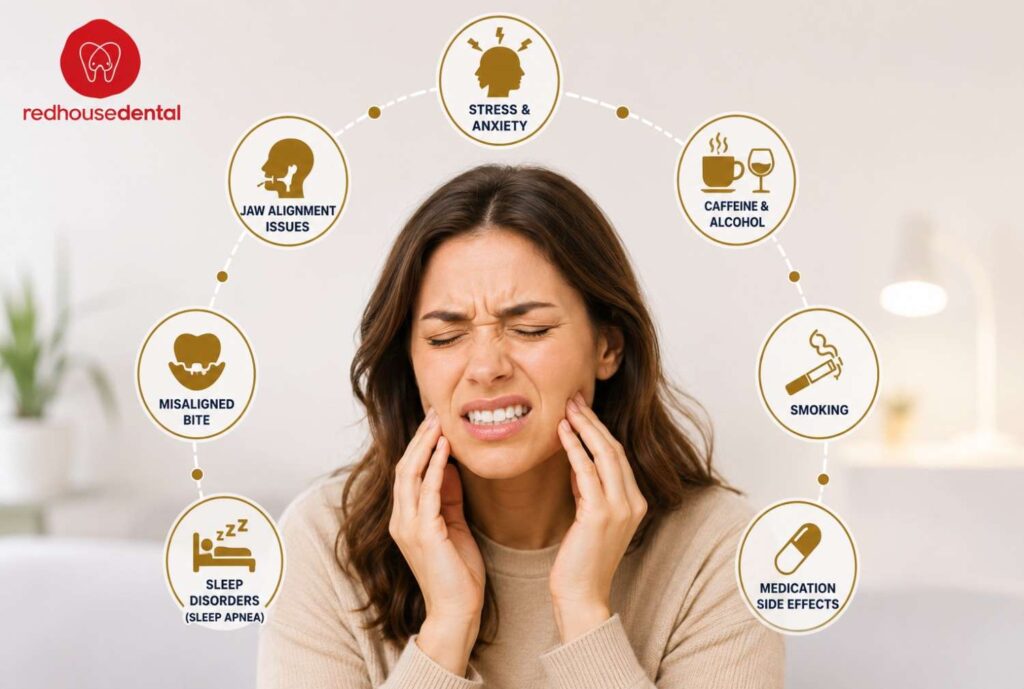
No single cause sits behind it. A handful of things tend to cluster together though.
- Stress and anxiety sitting underneath everything, depression and anxiety disorders both push the risk up further
- Smoking, drinking regularly, or hitting the caffeine hard all seem to roughly double how likely grinding teeth becomes
- Certain antidepressants and anti-anxiety medications carry bruxism as a known side effect
- Sleep apnea and grinding teeth appear together often enough that a connection clearly exists, though exactly how they relate is still being figured out
Baby Grinding Teeth
Parents hear it and immediately worry. Baby grinding teeth is genuinely common, tends to kick in as new teeth arrive, and quite often just fades on its own.
If baby grinding teeth keeps going for a while though, or gets louder, or the child seems bothered by it, that is worth flagging at the next dental visit. Not necessarily a problem, but worth a look rather than just leaving it.
Signs That Something Is Going On
- Morning headaches or facial pain
- Earaches without any obvious ear issue
- Jaw muscles that feel sore or tired on waking
- Ringing or buzzing in the ears
- Pain when chewing or biting
- Trouble fully opening or closing the mouth.
A lot of people have these symptoms for months before a dentist connects them back to grinding teeth.
What Happens If Nothing Gets Done
- Tooth surfaces gradually erode and wear flat
- Teeth crack or chip under repeated pressure
- Teeth loosen as supporting structures get worn down
- TMJ disorder develops in the jaw joint
- Chronic headaches and facial pain
- Sleep gets disrupted, and overall health suffers
Grinded Teeth Repair
What grinded teeth repair looks like depends entirely on how far things have progressed.
- Bonding builds back the shape and surface of worn teeth
- Crowns go over teeth where the damage is more structural
- Veneers address significant front tooth wear
- More extensive ground teeth repair may be needed in advanced cases
A proper assessment first determines which ground-teeth repair option actually fits.
Treatment of Teeth Grinding
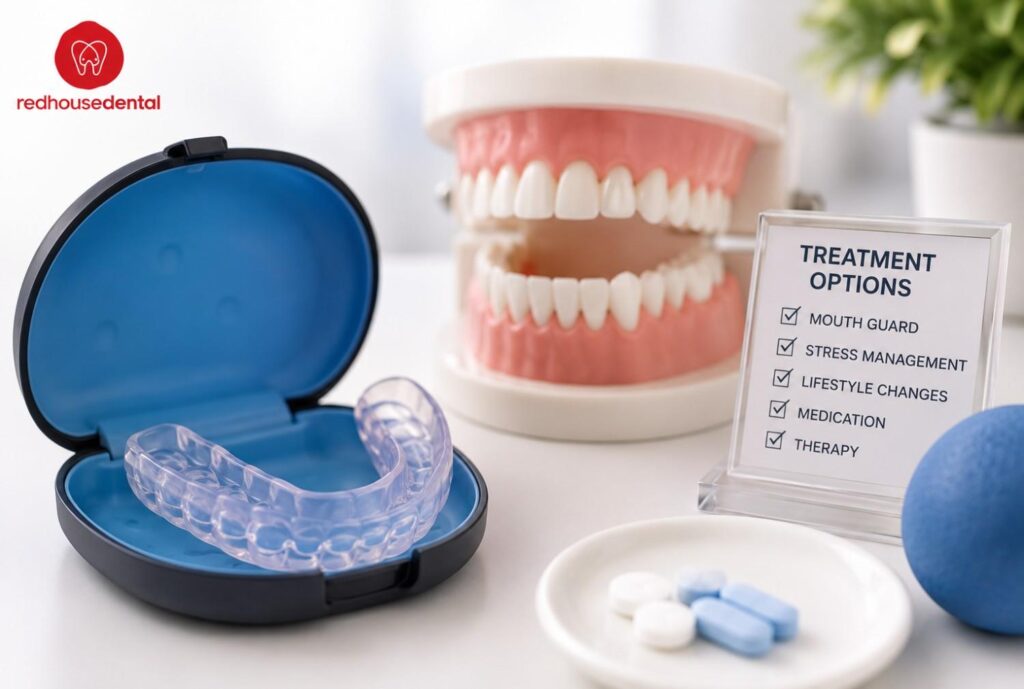
Custom Mouth Guards
Fitted specifically by a dentist to the patient’s own teeth. Absorbs grinding pressure, protects surfaces, and positions the jaw to reduce strain on the joint. Wearing it consistently is what makes it work as a treatment for teeth grinding.
Stress Reduction
Meditation, exercise, therapy. When stress is clearly driving the grinding, working on that side directly tends to reduce frequency and intensity.
Lifestyle Adjustments
Less caffeine in the evenings. Less alcohol. Quitting smoking. These all contribute to reducing grinding teeth among people whose habits are part of the picture.
Medications
Short-term muscle relaxants before bed can reduce grinding teeth at night. Most providers use this temporarily rather than as a long-term treatment of teeth grinding.
Botulinum Toxin Injections
Severe cases sometimes call for Botox into the jaw muscles. Temporarily relaxes them and reduces grinding. Lasts roughly three to four months before repeat treatment is needed.
How to Stop Grinding Teeth at Night
Sleep bruxism is hardest to manage because it is happening without any awareness. How to stop grinding teeth at night often involves combining a few strategies rather than relying on a single solution.
- Get a custom night guard made by a dentist
- Work on stress and anxiety consistently, not just occasionally
- Pull back on caffeine and alcohol in the hours before sleep
- Get any sleep disorder like sleep apnea looked at and treated
- Wind the jaw down before bed with some relaxation exercises
- Skip chewing gum during the day; it keeps jaw muscles firing unnecessarily
How to stop grinding teeth at night rarely comes down to one thing. Usually a combination works better than any single approach on its own.
Prevention
- Dental checkups every six months so wear gets spotted early
- Stress management that actually happens regularly, not just during bad patches
- No smoking, no recreational drugs, lighter alcohol consumption
- Paying attention to jaw tension during the day and releasing it before it builds
Red House Dental in Richmond Hill
Red House Dental, a dentist in Richmond Hill, ON. Grinding teeth and what it does to tooth structure gets looked at during every routine appointment here.
Custom mouth guards, ground-teeth repair options, and guidance on treating teeth grinding are discussed based on what is actually happening in each patient’s mouth, rather than a generic recommendation.
If grinding has been ongoing, the team will find evidence of it and explain what that means going forward. We accept the Canadian Dental Care Plan for eligible patients.
FAQs
Is grinding teeth actually something to worry about?
Occasional grinding during a stressful week, probably fine. Grinding teeth happening consistently night after night is different. Cracked teeth, jaw problems, daily headaches can all follow if nothing gets done.
How would I know if I grinds with teeth during sleep?
Sore jaw on waking. Morning headaches that are just always there. A partner hearing it. Or a dentist finding unexpected wear at a checkup. Any of those is worth mentioning.
Can baby grinding teeth cause lasting damage?
Baby grinding teeth usually sorts itself out as kids grow. Unlikely to cause permanent damage in most cases. Mention it to a dentist though if it keeps going or the child seems uncomfortable.
What is the most effective treatment of teeth grinding?
A properly fitted night guard from a dentist is where most people start. Treatment of teeth grinding works better when stress gets addressed alongside it rather than just the physical symptoms.
How to stop grinding teeth at night when a mouth guard is not enough?
Get any sleep apnea looked at. Cut back on evening caffeine and alcohol. Work on stress properly. Ask a provider about muscle relaxants or Botox injections if how to stop grinding teeth at night still feels unresolved.