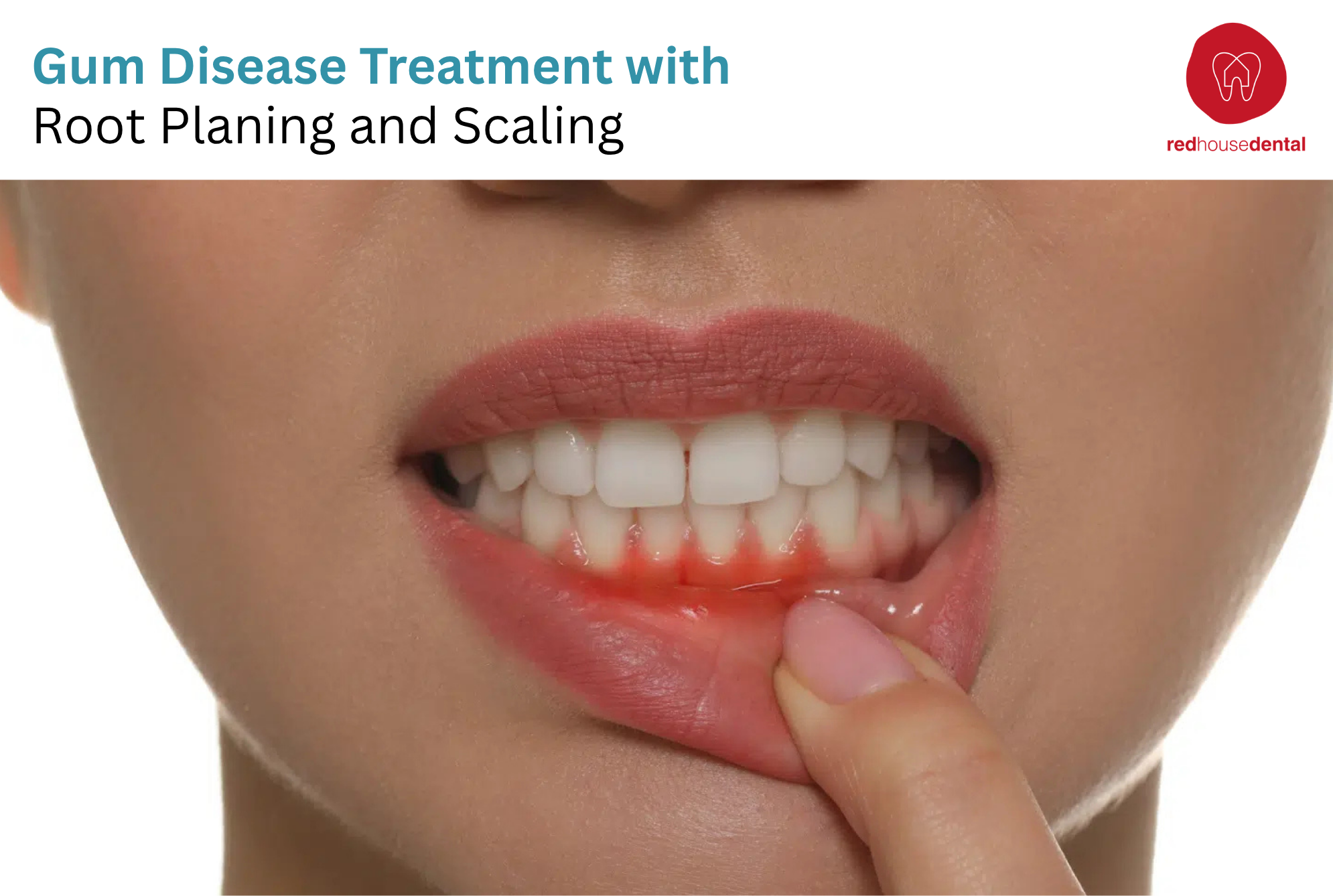
Most people don’t think about their gums until something goes wrong. You’re brushing your teeth half-asleep at 7am, and suddenly oh. That’s blood. That’s not supposed to be there.
Or maybe your dentist said something at your last visit. Something about “pockets.” You nodded like you understood, went home, and immediately forgot about it. Classic.
Here’s the thing though gum disease isn’t something that sorts itself out if you ignore it long enough. It gets worse. Slowly, quietly, and then all at once. The bacteria sitting below your gumline don’t take days off.
The good news? Teeth scaling and root planing are genuinely one of the better non-surgical fixes available for gum disease. No hospital stays. No stitches. Just a proper deep clean that actually reaches the source of the problem.
This article explains the whole thing what dental scaling actually involves, what root planing of teeth does, and what you’re in for during and after the procedure. Plain language only. No confusing dental jargon.
What Is Dental Scaling And Why Your Regular Clean Isn’t Fixing It
Think of your usual dental cleaning like vacuuming the carpet. It keeps things looking decent. It handles the surface stuff.
Teeth scaling cleans where regular cleaning can’t reach.
More specifically, what is dental scaling? It’s the removal of hardened plaque (called tartar or calculus) that’s built up along the gumline and crept below it. You can’t brush tartar off. It hardens and sticks, and once it’s there, only a dental instrument gets it off.
When tartar forms below the gum, the gum tissue gets irritated and pulls away slightly from the tooth. That gap called a pocket is where bacteria set up shop. They sit there. They multiply. They quietly cause more damage.
Teeth scaling goes into those pockets and clears them out. That’s the job.
Why Your Six-Month Clean Can’t Do This
A standard cleaning works beautifully for healthy gums sitting at one to three millimetres. Once gum disease has pushed those pockets to four, five, six millimetres or deeper a regular cleaning literally can’t reach.
It’s not that your hygienist wasn’t trying hard enough. The tools just aren’t built for that depth. Deep cleaning root planing and scaling uses different instruments and a different approach entirely.
Worth watching for: gums that bleed regularly, bad breath that survives brushing and mouthwash, gums that look more red than pink, teeth feeling slightly wobbly, or a dentist measuring pocket numbers and looking mildly concerned. Any of those, get it checked.
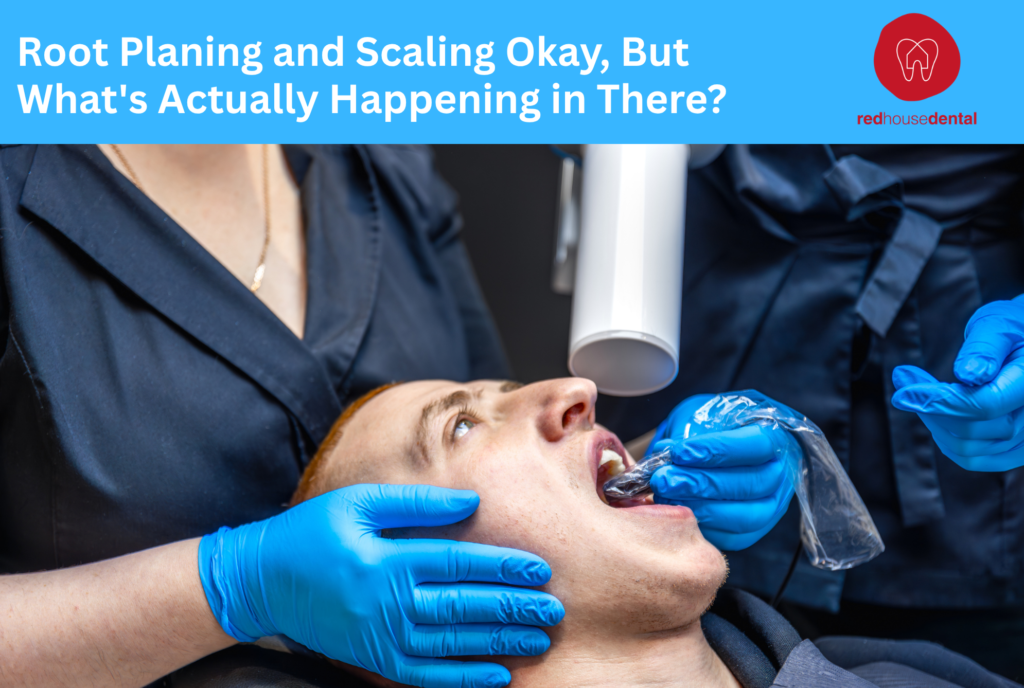
Root Planing and Scaling Okay, But What’s Actually Happening in There?
Right. So this is the part people find confusing mostly because it sounds more dramatic than it is.
What is root planing and scaling as an actual procedure? Two steps. They happen together. Neither one works as well without the other.
Step one is scaling. The tartar, the bacteria, the general mess that’s collected below the gumline all of it gets removed. The pockets get cleaned out properly.
Step two is root planing of teeth. This one surprises people. Tooth roots aren’t smooth. After years of tartar sitting against them and bacteria doing their thing, the root surfaces get rougher and more uneven. Rough surfaces are basically a welcome mat for bacteria. They make it easy to reattach.
Root planing smooths those root surfaces down. Removes the damaged tissue. Takes away the texture that bacteria were clinging to.
Think of it like this. Scaling is clearing the weeds. Root planing is fixing the soil so it doesn’t just grow straight back. One without the other, and you’re back where you started sooner than you’d like.
Is It Going to Be Uncomfortable
Genuinely not during. The area gets numbed with local anaesthetic before anything happens. You’ll feel some pressure and movement while the dentist works. You won’t feel pain.
Afterward is a different story mild soreness, some tenderness, maybe a bit of sensitivity to hot and cold for a few days. Nothing that requires lying on the sofa dramatically. Most people go about their normal day right after.
The appointment usually runs sixty to ninety minutes. Some people get the whole mouth done in one visit. Others split it across two sides of the mouth at a time. Either way, your dentist will tell you what makes sense for your situation before booking anything.
Recovery What the Next Few Days Look Like
Honestly, recovery from deep cleaning, root planing, and scaling isn’t a big event. It’s more of a minor inconvenience for a few days.
Your gums will feel tender. That’s expected they just had a proper clean-out. Some mild swelling is normal. A little bleeding when you brush the first day or two is also normal. Temperature sensitivity usually hangs around for three to five days and then fades.
Soft foods for the first day help. Warm salt water rinses are genuinely soothing not just something dentists say to sound helpful. Avoid smoking if you can; it slows down healing more than most people realize.
About four to six weeks after treatment, you’ll go back for a follow-up. The dentist measures the pocket depths again to see how things have healed. In most cases, the pockets are smaller. The tissue has tightened. Things look noticeably better.
After that, most people move to maintenance cleanings every three to four months instead of six. That frequency is what keeps the problem from quietly creeping back.
Book Your Appointment at Red House Dental
If your gums have been bothering you or if a dentist has flagged something and you’ve been putting off following up now is a decent time to actually do something about it.
Red House Dental in Richmond Hill offers teeth scaling and root planing along with a full range of dental services. The team includes Dr. Ria Pudjo, Dr. Kavita Gupta, Dr. Sandeep Tayal, and Dr. Susie Ang and they’re the kind of dentists who actually explain what’s going on rather than using words nobody understands.
They accept the Canadian Dental Care Plan.
Red House Dental welcomes patients on the Canadian Dental Care Plan (CDCP) which means deep cleaning, root planing, and scaling may cost significantly less than you’re expecting. Free parking outside the clinic. Same-day spots kept open for urgent cases. And zero judgment if it’s been a while since your last visit. They’ve seen it all.
Monday to Friday: 8 AM to 6 PM Saturday: 9 AM to 3 PM |
Sunday: Closed Call: +1 (905) 883-4643 38 Arnold Crescent, Richmond Hill, ON reception@redhousedental.com
Call them. Your gums have been patient long enough.
Frequently Asked Questions (FAQs)
How long does teeth scaling and root planing take?
Roughly sixty to ninety minutes per session. Some mouths need two visits one side at a time. Your dentist will look at what’s actually going on and tell you upfront what to expect before anything gets booked.
Does root planing of teeth hurt?
During no. Local anaesthetics handle that. Afterward, mild soreness for a couple of days, which is totally manageable. Most people are surprised by how fine they feel once the numbing wears off.
How many times will I need deep cleaning, root planing, and scaling?
Depends entirely on your gums. Some people need one round and that’s it. Others need it again down the line if things slip. Regular maintenance visits afterwards are what usually prevent a repeat.
What is dental scaling going to feel like during the procedure?
Pressure. Some vibration if ultrasonic tools are used. Movement. Not pain the area is numb. The sounds are honestly worse than the experience itself.
Can gum disease return after treatment?
Yes, if the right habits aren’t followed. Brushing twice daily, flossing, and keeping your maintenance appointments are what make the results stick. Your dentist will put a follow-up plan together so you’re not just guessing what to do next.