
Teeth chip more easily than most people expect. Hard candy, a stray popcorn kernel, a fall, a bad night of grinding — any of these can do it. Sometimes you feel it happen. Sometimes you run your tongue across your teeth one morning and something just feels wrong.
Either way the question is the same. What do you actually do about it?
The answer depends on how much tooth is gone and where. A hairline chip on a back molar is a completely different situation from half a front tooth snapping off. Both are fixable. The approach just varies — and knowing your chipped tooth treatment options before you walk into a clinic makes the whole thing far less stressful.
Chipped Tooth Causes
Some of these are genuinely preventable. Worth knowing.
Hard food and hard objects: Ice is the one that surprises people most. Hard candy, popcorn kernels, biting fingernails — none of these feels dangerous until the moment they are. A surprising number of dental appointments start with someone saying they were just eating normally.
Impact: Falls, sporting collisions, car accidents. Anything that delivers force directly to the mouth. Front teeth are most exposed to this category. A mouthguard during contact sports costs almost nothing compared to what it prevents—and most people do not bother until after something happens.
Grinding: Bruxism is a slow one. Enamel wears down over months and years of clenching or grinding, usually at night, usually without the person having any idea it is happening. By the time a tooth chips from something that should not have caused a chip, the groundwork has been laid for a long time. Dentists see the wear patterns long before patients notice any symptoms.
Decay inside the tooth: A cavity does not always announce itself. A tooth can look and feel fine while being progressively hollowed out internally. Treating decay early with a teeth filling often prevents larger fractures.
Age: Straightforward. Enamel wears over the decades. A tooth that would have handled hard food at 30 without issue chips more easily at 60. Nothing unusual about it—just a reality of how teeth age.
Acidic diet: Fizzy drinks, citrus, vinegar-heavy foods — all of these erode enamel gradually with repeated exposure. Thinner enamel chips more readily. The damage is cumulative and usually invisible until something breaks.
Chipped Tooth Symptoms
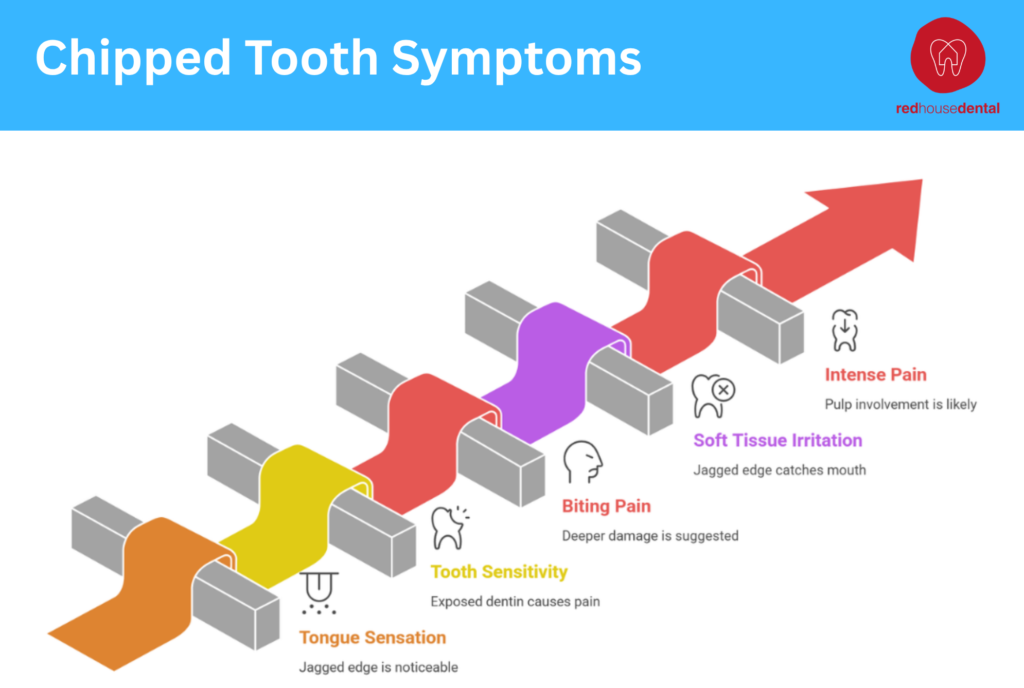
Smaller chips on back teeth often go unnoticed for days or longer. Larger chips, particularly on front teeth, tend to be immediately obvious. Here is what actually signals a chip in most cases.
The tongue finds it first. That jagged edge where the tooth surface used to be smooth—once you notice it, you cannot stop checking it. This is how a lot of back tooth chips get discovered days after they actually happen.
Sensitivity shows up next for many people. Hot drinks, cold water, anything sweet. A chip that exposes dentin—the layer sitting under enamel—opens up tiny channels that connect directly to the nerve. The result is sensitivity that ranges from a brief sharp sting to a dull ache that lingers after the trigger is gone.
Pain when biting is a different thing entirely. A sharp shooting sensation when biting down, or sometimes when releasing, suggests the damage goes deeper than the surface enamel. Possibly a crack rather than a simple chip. That distinction changes what treatment gets recommended.
Soft tissue irritation gets overlooked most often. A jagged edge catches the inside of the cheek or the tongue repeatedly throughout the day. If you have a sore spot on the inside of your mouth that keeps returning in exactly the same location, a tooth edge is worth checking.
One situation that does not wait: intense constant pain unconnected to any specific trigger. Hot, cold, pressure, nothing — the pain is just there. That points to pulp involvement. The nerve and blood supply at the centre of the tooth has been exposed or damaged. That needs same-day attention, not a routine booking next week.
How to Fix a Chipped Tooth
Your dentist looks at the size of the chip, where it sits, how much tooth structure remains underneath, and whether any nerve involvement exists. That assessment drives the recommendation. Here is what each chipped tooth treatment actually involves.
Smoothing and Polishing
The simplest fix that exists. A tiny chip with no structural concern — just a sharp edge that needs rounding off — gets smoothed and polished. Nothing added, nothing drilled. Takes minutes. Only appropriate when the damage is genuinely superficial and the tooth underneath is completely intact.
Dental Bonding
Most chipped teeth end up here. Tooth-coloured resin gets applied to the damaged area, shaped to match the natural tooth contour, then hardened with a curing light. One appointment. No anaesthetic needed for minor chips. Looks natural when done well.
Bonding is not as hard as enamel. It can chip again under the same conditions that caused the original damage—grinding, hard food, and biting nails. With sensible habits, it holds up for several years. Front teeth that take direct biting pressure wear it faster than bonding sitting in a less-stressed position.
Dental Veneer
For a chip on a visible front tooth where appearance genuinely matters, a dental veneer is often the better long-term answer over bonding. A thin porcelain shell is made in a dental lab and bonded to the front surface of the tooth. Covers the chip completely. Resists staining. Lasts considerably longer than composite resin.
The permanent part: a thin layer of enamel has to come off to make room for it. That is irreversible. The tooth needs a veneer from that point forward — always. Two to three appointments from start to finish.
Dental Crown
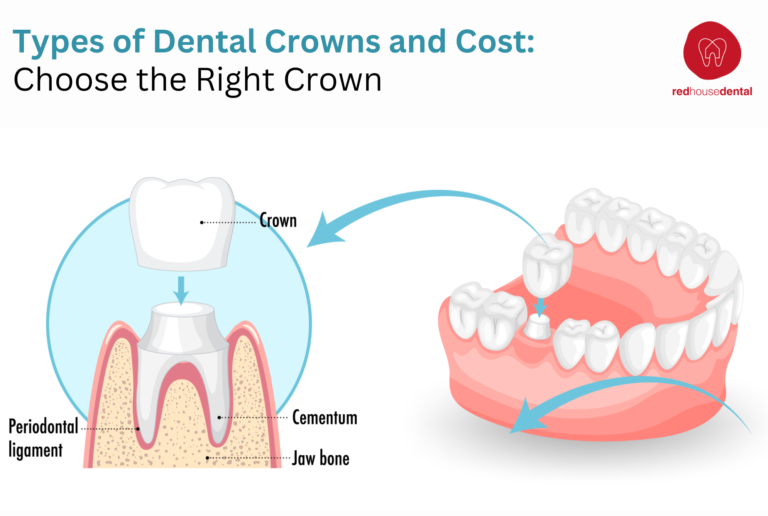
Large chip, weakened remaining structure, decay alongside the damage — crown territory. The crown covers the entire visible portion of the tooth above the gumline. Protects what remains. Restores normal biting function.
Two appointments. The first one prepares the tooth and places a temporary. The second one seats the permanent crown once the lab has made it. Material gets chosen based on tooth location and how much force that part of the mouth generates.
Root Canal Followed by a Crown
When the chip has reached the pulp — the nerve — a root canal clears the damaged tissue out before anything else can be done. The tooth gets sealed, then capped with a crown.
The reputation root canals carry is dramatically worse than the actual procedure. It is done under local anaesthetic. What people dread is almost always the infection or nerve damage that was already present, not the treatment. Most patients say afterwards they were surprised by how manageable it was.
Extraction
When the fracture runs below the gumline, when decay has destroyed too much of the internal structure, when nothing else holds—the tooth comes out. This is not the standard outcome for a chipped tooth. It is the outcome when damage is so extensive that no restoration is viable. Replacement options including an implant, bridge, or partial denture get discussed from there.
How to Fix a Chipped Tooth Naturally
This comes up constantly in searches. The direct answer: you cannot. Enamel does not grow back. No oil, paste, rinse, or supplement rebuilds tooth structure once it is gone. That is simply not how teeth work.
What you can do while waiting for an appointment is manage the situation. Warm salt water rinses keep the area clean. Dental wax — sold at pharmacies without a prescription — pressed over a sharp edge stops it from cutting the tongue and cheek repeatedly. Avoid biting on that side. Over-the-counter pain relief handles discomfort in the short term.
If the piece that broke off is still intact, bring it to the appointment. Occasionally, a dentist can reattach it with bonding resin. Not always possible—but worth bringing just in case.
None of these repairs anything. It holds the situation steady until proper treatment happens.
Does Insurance Cover Chipped Tooth Repair?
Bonding typically falls under restorative benefits on most Canadian dental plans — partial coverage, usually somewhere around 50% to 80% of the fee up to the annual maximum. Crowns are generally covered at a similar rate, though waiting periods and per-tooth limits apply on many plans.
Veneers are classified as cosmetic by most insurers and are not covered in standard cases. If the chip came from an accident, some plans treat the claim differently under trauma provisions, worth asking your insurer directly about that.
The Canadian Dental Care Plan covers certain restorative treatments for eligible patients. At Red House Dental, a dental clinic in Richmond Hill, we accept the CDCP and will confirm what your plan covers before anything starts.

Come and See Us at Red House Dental
A small chip that gets ignored has a way of becoming a larger problem. The exposed area decays faster than intact enamel. The edge can extend into a bigger fracture. A bonding repair becomes a crown situation. It is one of those cases where acting promptly genuinely saves time, discomfort, and complexity down the track.
We keep same-day spots available for situations like this when we can. Call us and we will get you seen.
Frequently Asked Questions (FAQs)
Can a chipped tooth heal on its own?
No. That is not how teeth work. Enamel does not grow back once it is gone. The chip stays until a dentist fixes it—and the longer it sits, the worse it tends to get.
Is a chipped tooth always a dental emergency?
Depends on the chip. Constant pain, bleeding, or a large piece missing — call us today. A tiny chip with no pain can wait a day or two but should not be ignored indefinitely. Small chips have a habit of turning into bigger problems.
How long does bonding last?
A few years, usually. Front teeth that take direct biting pressure wear it down faster than bonding on a back tooth. Biting nails, chewing ice, eating hard candy — all of that shortens it. Look after it, and it holds up reasonably well.
Can the tooth be fixed in one appointment?
Bonding, yes. Polishing, yes. Crown or veneer—no, those need a lab, so there is always a second visit involved. We will let you know at your consultation what your specific repair requires.
What happens if it is just left alone?
Nothing good. The sharp edge cuts your tongue and cheek repeatedly. Bacteria get into the exposed area, and decay starts. The fracture can extend deeper under normal biting. What was a fifteen-minute bonding job becomes a chore or worse. Come in sooner rather than later.