Brushing gets all the love. Twice a day. Two minutes. Fluoride paste. Most people already have this down.
Flossing? That’s the one everyone skips. It’s fiddly. Easy to forget. It takes too long when you’re tired. A water flosser can make cleaning between your teeth easier, especially for people who struggle with traditional floss. But skip it altogether, and you’re leaving almost 40 percent of each tooth totally uncleaned.
That’s where trouble starts. Quietly. Decay creeps in between teeth. Gums get inflamed in spots your brush never touches. Bad breath shows up and won’t go away no matter how much you brush.
So really, the question isn’t whether you should floss. It’s what method you’ll actually keep doing.
Why Flossing Really Matters
Your toothbrush only gets about 60 percent of each tooth. The rest? Tight spaces between teeth and under the gumline. Your brush can’t touch those spots on teeth and an.
What flossing does for you:
- Removes plaque and food stuck between teeth
- Cuts your risk of gum disease, gingivitis or periodontitis.
- Fixes bad breath coming from between your teeth
- Lowers decay risk in spots your brush misses
Skip flossing, and you’re leaving almost half your teeth uncleaned. Every day. That piles up fast.
What Is Traditional Dental Floss?
It’s a thin string. Nylon or Teflon. Costs next to nothing. You can buy it anywhere.
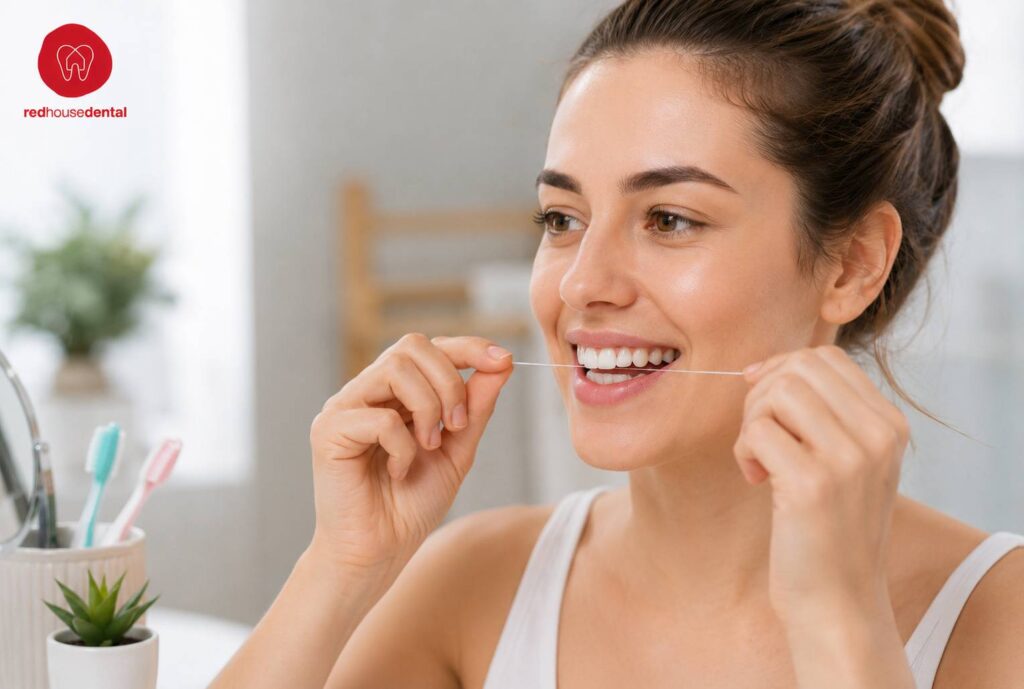
You slide it between each tooth, curve it into a C around the tooth, and move it up and down gently. Do it right, and it physically scrapes plaque off the surface.
What’s good about floss:
- Removes sticky residue really well, if your technique’s right.
- Barely costs anything
- No batteries. No charging. Nothing to set up
- Handles tight spaces between teeth easily
- Fits in your pocket
Where it falls short:
- Needs decent hand dexterity; harder if you’ve got arthritis.
- Takes practice to get the technique right
- Way too easy to rush or skip when you’re exhausted
- Some people get sore gums or light bleeding at first.
What Is a Water Flosser?
It shoots a pulsing stream of water between your teeth and along your gumline. You just move the tip around your mouth. The water does the actual work.
What’s good about it:
- Way easier than string, especially if you have braces, bridges, implants, or Dental Crowns.
- Gentler on sensitive gums than string usually is.
- Gets deep into gum pockets that floss sometimes can’t reach.
- Great if you’ve got limited hand dexterity.
- People who never floss with string actually stick with this.
- Genuinely reduces gum inflammation.
Where it falls short:
- Costs more upfront than string floss
- Needs water, plus power or batteries
- Doesn’t scrape plaque off tight spots as well as string does
- Bulkier, not great for travel
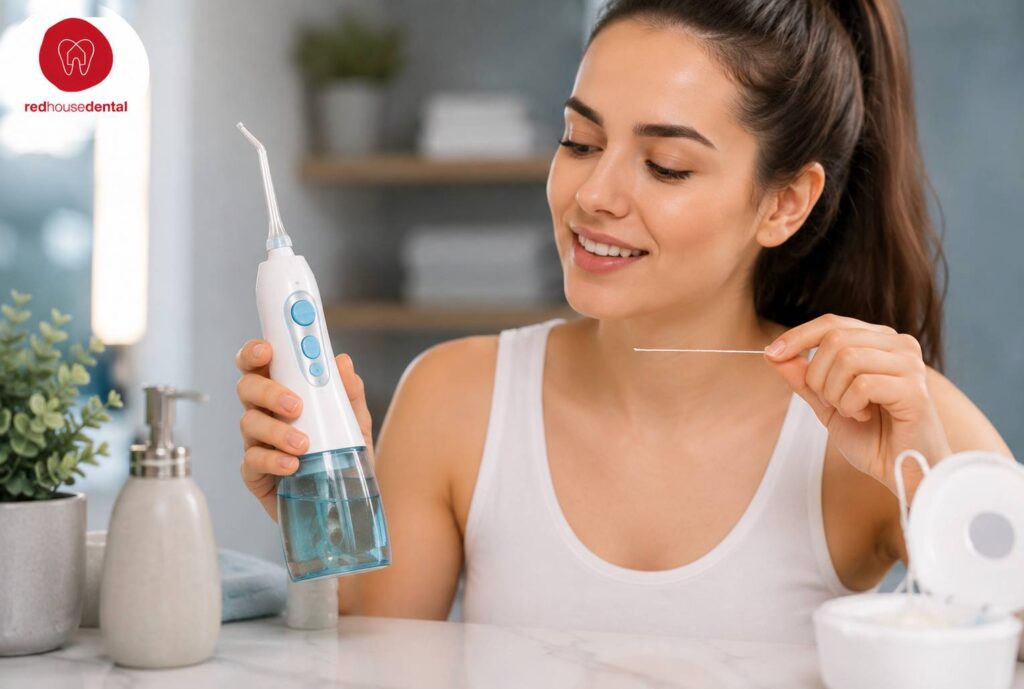
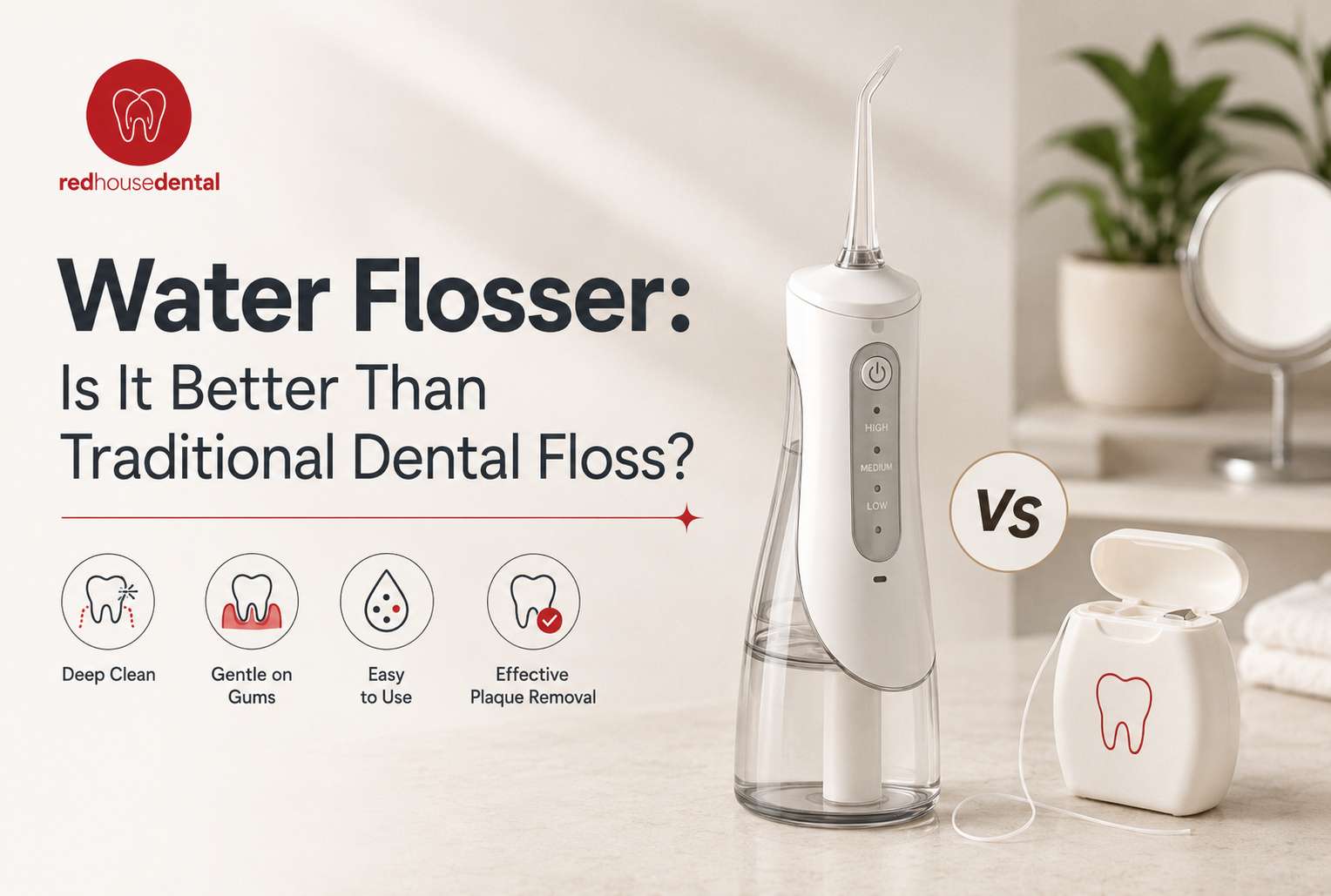
Water Flosser vs. Dental Floss: The Real Comparison
Both work. Both are legit. They just work differently, for different people.
Floss physically scrapes plaque off your teeth. That direct contact between string and tooth is what makes it work. Floss is still the best option if your teeth are spaced normally and your gums are in good condition.
A water flosser uses water pressure to remove debris and reduce gum irritation. In areas where gum pockets are deeper than usual, like braces, implants, or bridges, it truly shines.
Honestly? Using both is the best way to loosen plaque mechanically. Then use a water flosser to flush it all out. Covers everything.
If you can only pick, then use a:
- Go with Dental floss if your gums are healthy and your teeth are normally spaced with no major dental work. Good technique with string gives you the deepest clean.
- Go with a water flosser if you’ve got braces, implants, bridges, crowns, or gum disease. Same goes if dexterity makes string hard, or if you’ve simply never managed to stick with flossing. A water flosser used daily beats floss used badly or barely at all.
Who Ben is the same as most from a water flosser
- People with braces. Threading string around brackets and wires is a nightmare. A water flosser gets into those spots way easier.
- People with implants, bridges, or crowns. These create awkward gaps that string struggles with. A water flosser handles them without the hassle of threading under a bridge.
- People with gum disease or deep pockets. Water reaches further into the pocket than string manages. The pulsing also helps cut bacteria down in there.
- People with arthritis or limited hand movement. String needs fine motor control between every single tooth. A water flosser skips most of that need.
- People who just won’t floss, period. This is a real group. If you’ve tried string over and over and it never sticks, a water flosser beats doing nothing. Consistency wins over method every time.
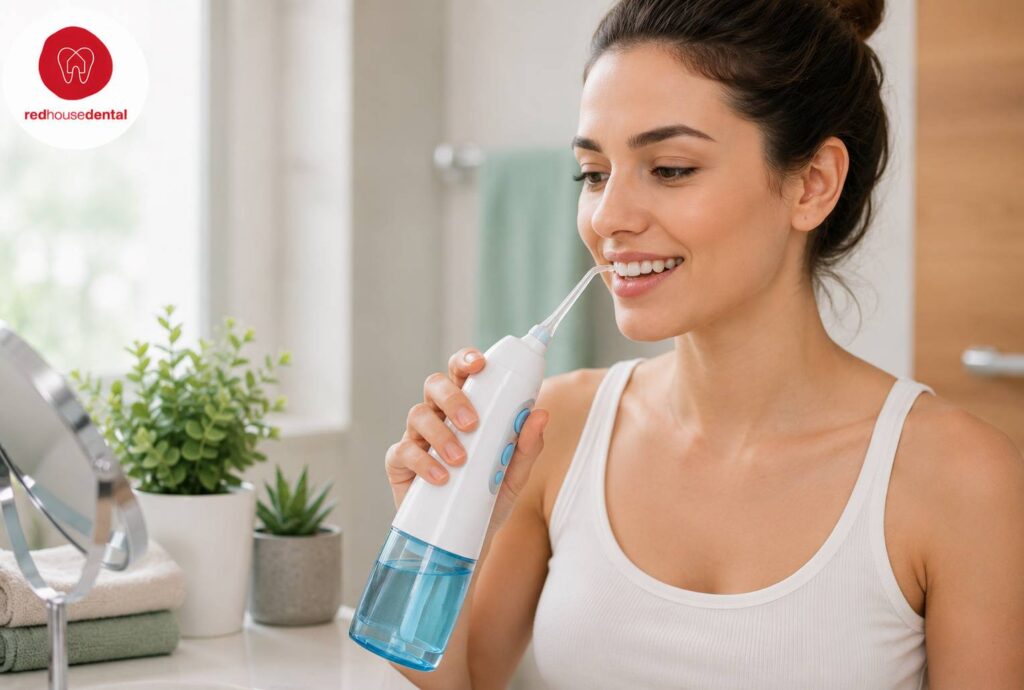
How to Use a Water Flosser Correctly
It’s simple. But technique still counts.
- Fill the tank with lukewarm water. Sensitivity is brought about by hot or cold.
- Start on the lowest pressure. Work your way up once you’re comfortable.
- Bend over the sink to begin with. It’s a bit cluttered until you know how to use it.
- Bring the tip to the gum line, at an angle of about 90° to the teeth.
- Go around methodically. Outside uppers, inside uppers, outside lowers, inside lowers.
- Slowly between each tooth to give the water time to get into the tooth.
- Don’t rush it. If driving too quickly, debris is not properly cleared.
Once you’ve got the routine, a full session takes about a minute, maybe ninety seconds.
Should You Floss Before or After Brushing?
Either is fine, as long as it’s every day. Flossing first gives an advantage as it releases debris in order to get fluoride to more edges. Even flossing after brushing is better than not flossing.
The key is to do it each and every day. That’s all that matters next to the order, anyway.
How Often to Floss
Once a day. Every day.
Not “when you remember.” Not “a few times a week.” Not just “when something’s stuck.” Daily.
Plaque builds fast. Skip one day, and that’s one more day of buildup sitting in spots your brush can’t reach.
Frequently Asked Questions(FAQs)
Is a water flosser better than dental floss?
Depends on you. Floss removes plaque more mechanically in tight spots. A water flosser wins for braces, implants, gum disease, or if string just isn’t working for you. Best result? Use both.
Can I skip dental floss and just use a water flosser?
For a lot of people, yes, especially with braces, implants, or sensitive gums. If your teeth are healthy with normal spacing, floss still cleans mechanically better. But a water flosser used daily beats floss used badly or not at all.
How often should I use a water flosser?
Once a day. Same as floss. Doing it every day matters more than which tool you pick.
Does a water flosser replace brushing?
No. It cleans between teeth and along your gumline. Brushing cleans the tooth surfaces themselves. You need neither to replace the other.
Should I floss before or after brushing?
Both work. Flossing neither fluoride reaches more surfaces after. But doing it daily, consistently, matters way more than the order you pick.