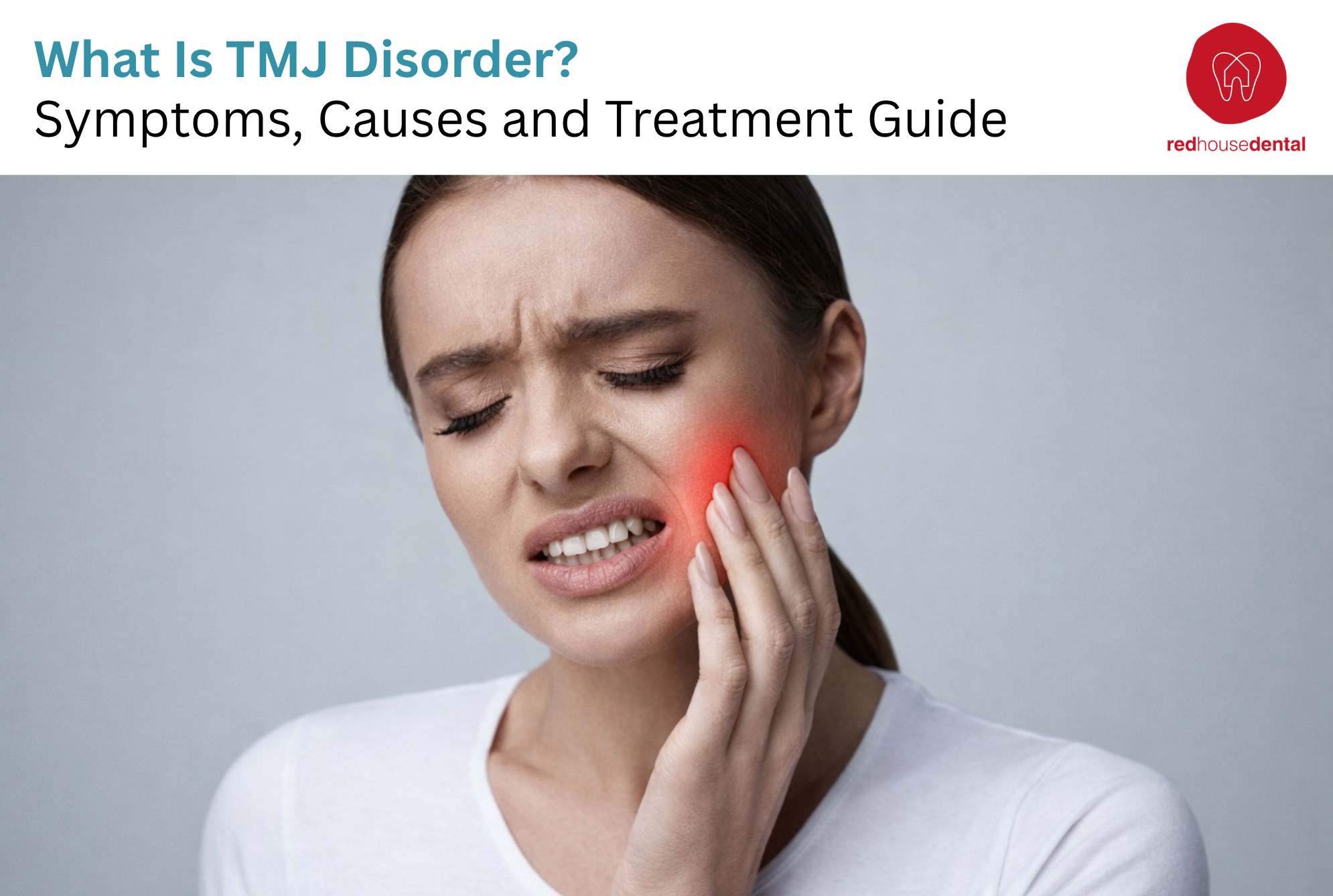
Many people wake up with jaw pain or a light headache. Some hear a small click when they open their mouth or light pain when they chew food. These signs can feel confusing and uncomfortable.
In many cases, these problems may be linked to TMJ disorder.
The TMJ is a small joint in the face. It connects the lower jaw to the skull. This joint works like a hinge. It helps the mouth open and close.
People use this joint every day. It helps them talk, eat, chew, laugh, and yawn. When the joint is functioning properly, they are not aware of it. However, when something goes wrong, the jaw can be painful or stiff.
The person who has this issue can experience jaw pain, ear pain or a TMJ headache. There are also those who experience the slight clicking or popping of the jaw. The jaw can be very difficult to open in others.
The positive thing is that there is help. The dentists are able to examine the jaw and identify the cause. They can suggest the right TMJ treatment. This guide explains the symptoms of TMJ, the causes, and ways to find TMJ relief pain.
What Is TMJ Disorder?
The TMJ stands for temporomandibular joint. This joint connects the lower jaw to the skull. Every person has two TMJ joints. One is on each side of the face.
This joint helps the jaw move in many ways. It lets the jaw move up and down. It also lets the jaw move side to side. Because of this joint, people can chew food, speak, and open their mouths.
When this joint becomes sore, tight, or damaged, a person may develop a TMJ disorder.
This disorder involves muscles that aid in the movement of the jaw joint. The muscles are discovered to be tight or fatigued. The joint might get irritated.
A person with a TMJ disorder may feel pain while chewing food. They may also feel pain when they speak or open their mouth wide.
Sometimes the jaw makes a clicking or popping sound. In other cases, the jaw may feel stuck for a moment.
Many people also experience TMJ headaches. This happens because the jaw muscles are close to the temples and ears.
Some people also feel pain in the face or neck.
The positive thing is that a large number of individuals heal by mere treatment. The jaw usually heals with gentle TMJ exercises, rest, and the appropriate TMJ treatment.

Symptoms and Signs of TMJ Problems
The symptoms of TMJ can be different for each person. Some people feel some discomfort. Others may feel severe pain.
The symptoms may come slowly. They may also appear suddenly.
Common signs of TMJ disorder include the following:
- Pain in the jaw joint
- Pain near the ear
- Trouble chewing food
- Pain while chewing
- Jaw stiffness
- Clicking or popping sounds when opening the mouth
- A TMJ headache
- Pain in the face
- Neck pain
- Jaw locking when opening or closing the mouth
Some people only hear a small click when the jaw moves. When the click does not result in pain, then it might not be serious.
However, when the clicking is accompanied by pain or difficulty in opening the mouth, one should visit a dentist.
The problem can be left unacknowledged, and it can become bigger. Early intervention may assist with work on the reduction of TMJ pain and improve the jaw.
A dentist can check the joint and suggest the right TMJ treatment.
Causes of TMJ Disorder
The exact cause of TMJ disorder is not always easy to find. In many cases, more than one factor may cause the problem.
Some habits and health conditions may place extra pressure on the jaw joint. Below are some common causes.
Teeth Clenching or Grinding
Many people grind their teeth while they sleep. This habit is called bruxism.
Grinding teeth places strong pressure on the jaw joint. Over time, this pressure may lead to pain, stiffness, and other symptoms of TMJ.
Stress
Stress can also affect the jaw.
When people feel stressed, they may tighten their jaw muscles without noticing it. Some people clench their teeth during the day or at night.
This constant pressure may irritate the jaw joint.
Jaw Injury
An injury to the jaw or face may damage the joint.
This may happen during sports, a fall, or an accident. Even a small injury may affect the joint and cause pain later.
Arthritis
Arthritis is a joint condition that may affect many parts of the body.
It can also affect the jaw joint. When this happens, the joint may feel stiff, sore, or swollen.
Daily Habits
Some daily habits may strain the jaw.
For example:
- Chewing gum very often
- Biting nails
- Chewing hard foods
- Opening the mouth too wide
These habits place extra pressure on the joint.
Over time, these actions may lead to TMJ disorder.
Understanding the cause helps dentists plan the best TMJ treatment and explain how to fix TMJ safely.
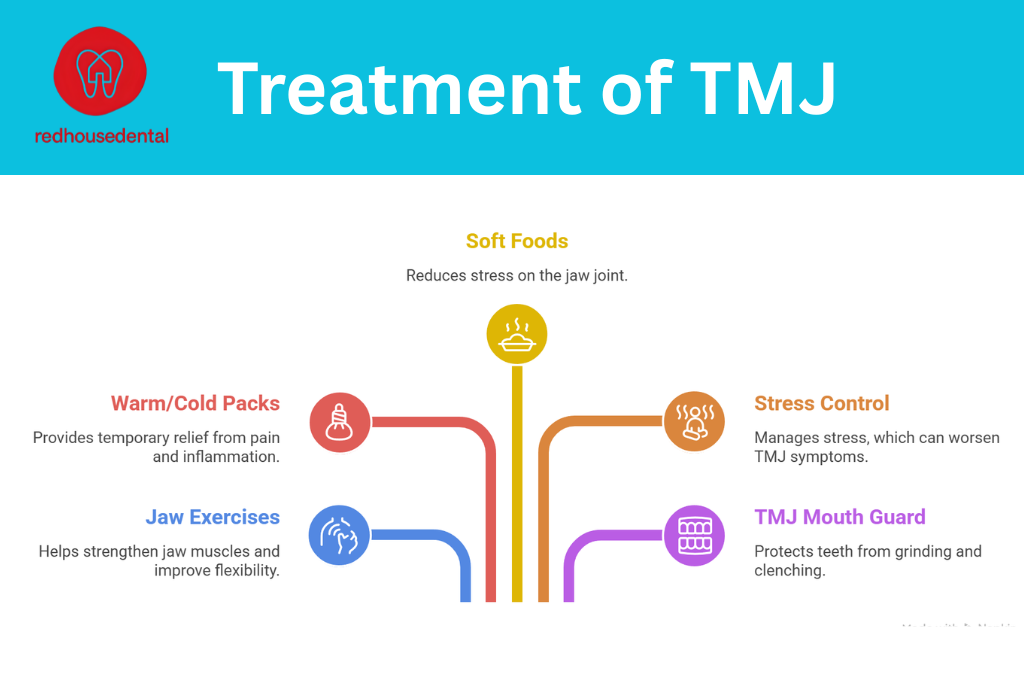
TMJ Treatment and Ways to Fix TMJ
Many people feel better with simple care. Surgery is rarely needed for TMJ disorder. Most people improve with small changes and gentle care.
Below are common TMJ treatment options.
Jaw Exercises
Dentists may suggest gentle TMJ exercises.
These exercises stretch and relax the jaw muscles. They also help the jaw move more smoothly.
Doing these exercises daily may improve jaw strength and flexibility.
Warm or Cold Packs
- Warm or cold packs may reduce jaw pain.
- A warm cloth placed on the jaw may relax tight muscles.
- A cold pack may reduce swelling and discomfort.
This simple step may help provide quick TMJ relief pain.
Eating Soft Foods
Hard foods may strain the jaw joint. When the jaw feels sore, soft foods are a better choice.
Examples include:
- Soup
- Yoghurt
- Eggs
- Mashed vegetables
- Soft rice
Soft foods allow the jaw to rest and heal.
Stress Control
- Stress often causes jaw clenching.
- Relaxation methods may help reduce this habit.
- Slow breathing, stretching, and quiet rest may relax the jaw muscles.
TMJ Mouth Guard
A dentist may suggest a TMJ mouthguard.
- This guard is worn during sleep.
- It protects the teeth from grinding and reduces pressure on the jaw joint.
- Many patients feel better after using a TMJ mouthguard regularly.
These treatments often improve jaw movement and help with TMJ relief pain.
If the symptoms last for a long time, a dentist may suggest other treatments to explain how to fix TMJ safely.
Get Gentle TMJ Care at Red House Dental.
Jaw pain should not be ignored. When TMJ disorder is treated early, recovery is often easier.
At Red House Dental in Richmond Hill, patients receive caring and personalised dental support.
The dental team understands that every person is different. Each smile and jaw are unique.
The clinic focuses on comfort and clear communication. Dentists take time to listen to patient concerns and carefully check the jaw.
After the examination, the dentist explains the best TMJ treatment options.
Patients may receive help through:
- Jaw examinations
- Guidance on gentle TMJ exercises
- Custom TMJ mouthguard solutions
- Advice on daily habits that support TMJ relief pain
The clinic also accepts the Canadian Dental Care Plan (CDCP). This plan helps many patients receive dental care at a more affordable cost.
Patients appreciate the honest advice and friendly environment.
Red House Dental also offers:
- Modern dental technology
- Personalised treatment plans
- Same-day care for urgent dental problems
- Free parking for easy visits
The team works hard to make dental care comfortable for every patient.
If jaw pain, clicking sounds, or a TMJ headache is affecting daily life, a dental visit may help find the right solution.
With the right care and guidance, healthy jaw movement can return.
Frequently Asked Questions (FAQs)
1. What is TMJ disorder?
TMJ disorder is a disorder that penetrates through the jaw joint. It may cause pains in the areas of the jaw, stiffness and clicking, headache and inability to open and close the mouth easily.
2. What are the symptoms of TMJ?
TMJ can lead to pain in the jaw, pain in the ear, headache, jaw clicking and chewing problems. It may also happen that there are individuals who go through the jaw getting stuck when opening up the jaw.
3. How to fix TMJ at home?
Some people treat TMJ at home using gentle exercises of the joint, warm compresses, stress management and soft food. The measures are applied to take up the tension in the joint of the jaw.
4. Do mouth guards help TMJ pain?
Yes. A TMJ mouthguard helps to guard the teeth in sleep and also to relieve the pressure on the jaw joint. Regular use causes many people to experience less pain and greater jaw comfort.
5. What is the reason one should visit a dentist in the case of TMJ?
When jaw pains have been on for many days, the chewing has become hard, or the jaw has been repeatedly locked, a dentist should be met. Early treatment of the TMJ can help in later bigger issues.