Most people are fine. Sore for a few days, a bit swollen, surviving on soup and mashed potatoes. Then it passes.
Except sometimes, around day three, something shifts. The pain that had been fading is starting to come back. Or it never really faded. Or there’s this new aching thing spreading toward the ear that wasn’t part of the original soreness and doesn’t feel like it belongs there.
That’s the version of recovery worth paying attention to. Because that pattern of pain worsening instead of improving, spreading instead of staying put, is how dry socket usually announces itself. Not with fanfare. Just with discomfort that quietly keeps getting worse.
This article covers what’s actually happening when dry socket develops, what the signs of dry socket feel like day to day, what brings relief, and what the recovery timeline realistically looks like.
What Is a Dry Socket?
What is a dry socket comes up a lot after extractions, and the explanation is simpler than the name suggests.
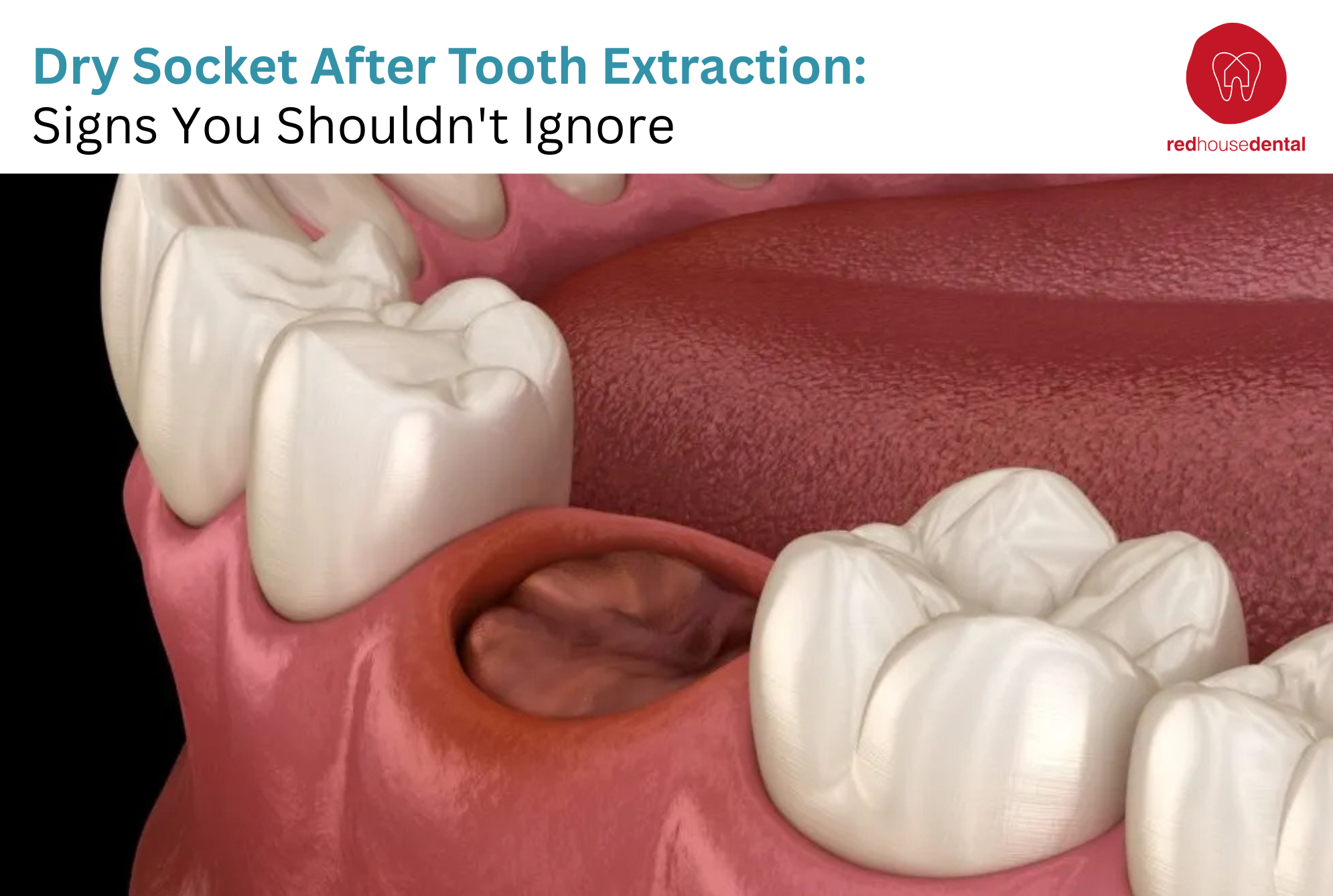
Pull a tooth, and the hole left behind in the socket bleeds. That bleeding is actually useful. It clots. The clot that forms sits over the exposed bone and raw nerve endings at the base of the socket, covering them while the surrounding tissue slowly grows back over the top. Without that cover, the bones and nerves are sitting exposed. Open to the air. Open to whatever gets into the mouth. Temperature, bacteria, food particles, saliva. All of it hits nerve endings directly.
That direct exposure to nerve endings is what produces the pain. Not necessarily an infection, though infection can follow. Just raw nerve tissue with no protective layer over it, reacting to everything.
Two things cause this. Either the clot never properly formed after extraction, or it did form and something dislodged or dissolved it before the tissue underneath had healed enough to take over. Both arrive at the same result.
The timing catches people off guard. Days one and two after an extraction are expected to hurt. By day three, most people anticipate improvement. Dry socket tends to show up right in that window, two to four days post-extraction, which is exactly why people second-guess themselves before calling the dentist.
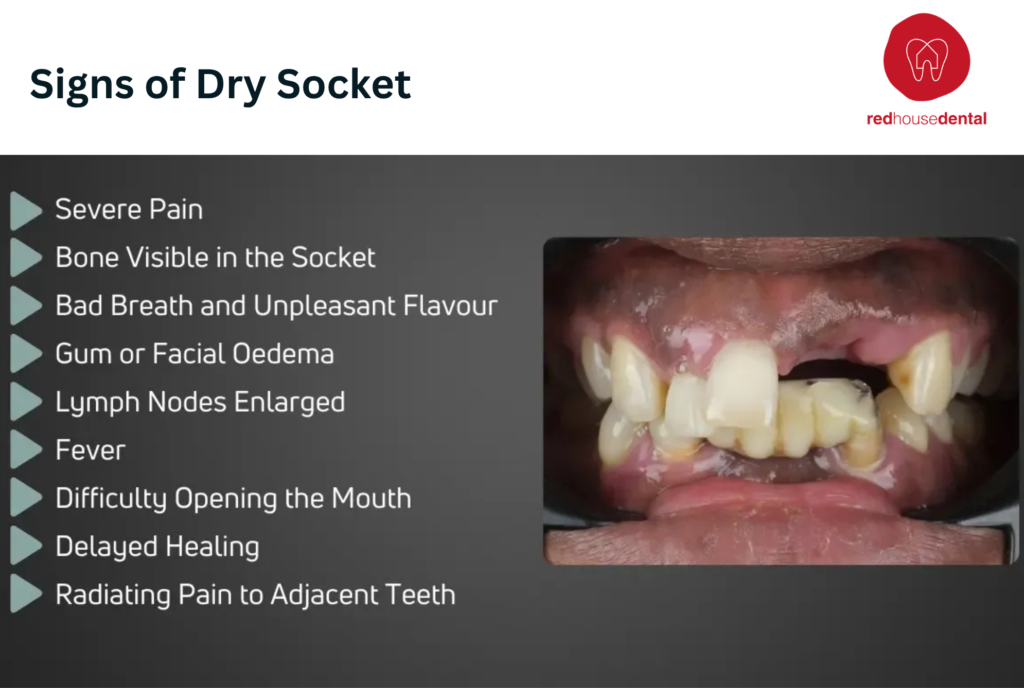
Signs of Dry Socket
The signs of dry socket are recognisable once someone knows what the pattern looks like, but early on, they’re easy to write off as normal healing.
- Pain trajectory: Normal extraction recovery hurts most on day one, remains uncomfortable on day two, and starts to clearly improve by day three or four. Dry socket reverses that pain, either plateaus and climbs, or dips slightly and returns worse. Either way, it’s moving in the wrong direction past day two.
- Where the pain goes: Normal soreness stays around the extraction site. Dry socket pain radiates along the jaw, up toward the ear, sometimes into the temple or down the neck. That spreading quality is distinctive and worth noting.
- How the socket looks: A healthy healing socket has a visible dark clot sitting in the hole, deep red, maroon, dark. A dry socket looks empty. Sometimes, it is whitish or grey where exposed bone sits at the base.
- Taste and smell: Persistent bad taste that rinsing doesn’t fix, sometimes accompanied by an odour. That comes from the unprotected socket picking up bacteria and debris with nothing covering the bone underneath.
Early Stage Dry Socket
Early-stage dry socket is the window most people miss. The pain is slightly worse than expected. Faint unpleasant taste. An ache that moves a bit but isn’t severe yet. The clot might still be partially present at this stage, which is why symptoms are mild enough to dismiss.
Early treatment is genuinely easier and faster. The medicated dressing goes in, relief comes within hours, and healing starts from a better baseline. Waiting until the pain becomes severe adds days of unnecessary discomfort before the same treatment happens anyway. Day three, and something feels off with the call. Don’t wait for day five.
Extraction After Care
Extraction aftercare in the first 48 hours is directly associated with the development of dry socket. Most cases aren’t bad luck. Something specific usually disturbed the clot while it was still fragile.
- Suction is the main problem. Straws create negative pressure inside the mouth strong enough to physically pull a fresh clot out of a socket.
- Smoking does the same through the inhaling motion, and the chemicals in cigarette smoke interfere with healing at a cellular level.
- Rinsing too hard on day one can wash the clot away before it has adhered.
- Repeatedly touching the socket with a tongue or finger can disturb healing.
- Eating hard or crunchy food can push particles into the socket.
- Very hot drinks can dissolve the clot before it stabilizes.
The post-extraction aftercare instructions map directly to these risks. Bite on the gauze for the instructed time. Nothing through a straw. No smoking for at least 72 hours. Soft food on the opposite side. No forceful rinsing on day one. Gentle warm salt water rinses from day two onward, slow and careful, not vigorous swishing.
How to Prevent Dry Socket
How to prevent dry socket starts before the extraction, not after it. If you’re nervous about having a tooth removed, sedation dentistry may also be an option to make the procedure more comfortable.
- Smoking history: Regular smokers face a higher risk. Cutting down and avoiding smoking after extraction reduces that risk.
- Oral contraceptives: These affect hormone levels and the risk of clot formation. Worth mentioning before the procedure.
- Blood-thinning medications: These affect clot formation and should be disclosed before extraction.
- Hydration: Staying well hydrated supports healing.
- Procedure type: Lower wisdom tooth extractions and complex procedures carry a higher risk.
How Long Will a Dry Socket Last?
How long will a dry socket last without treatment? Longer than most people want to deal with. The bone eventually starts healing on its own, but that process can take 7 to 10 days of significant pain.
With treatment, the experience is different. The dentist cleans the socket, removes debris, and places a medicated dressing inside. That dressing protects the exposed bone and reduces pain.
Relief usually comes within a few hours. The dressing is replaced every few days as healing progresses. Full healing typically takes one to two weeks, depending on the case.

Come and See the Team at Red House Dental
Pain worsening after an extraction, an aching that spreads toward the ear, a bad taste that stays regardless of rinsing, those aren’t things to wait out.
Red House Dental, a dentist in Richmond Hill, keeps same-day appointments available for post-extraction complications. The team, Dr. Ria Pudjo, Dr. Kavita Gupta, Dr. Sandeep Tayal, and Dr. Susie Ang, deals with dry socket cases regularly and gets patients comfortable quickly once treatment starts.
Red House Dental Accepts the Canadian Dental Care Plan
Patients covered by the Canadian Dental Care Plan (CDCP) are welcome. Pricing is transparent with no unexpected costs. Free parking directly outside the clinic. Urgent cases are seen the same day, wherever possible.
Monday to Friday: 8 AM to 6 PM Saturday: 9 AM to 3 PM | Sunday: Closed Call: +1 (905) 883-4643 38 Arnold Crescent, Richmond Hill, ON reception@redhousedental.com
Something feels wrong after an extraction call the same day. The sooner it’s looked at, the faster it gets fixed.
Frequently Asked Questions (FAQs)
What is dry socket? Why does it hurt that much?
Bone and nerve endings sit exposed. No clot, no tissue, just exposed. Air hits them. Food hits them. Temperature hits them. That direct nerve exposure, without any protective layer, is what produces the pain, and why it’s more intense than regular post-extraction soreness.
What are the signs of dry socket versus just normal soreness?
Normal soreness improves by day three. Dry socket doesn’t pain climb or come back after briefly settling. It spreads toward the ear or jaw rather than staying at the extraction site. The socket appears empty or greyish, rather than containing a dark clot. Persistent bad taste that rinsing doesn’t shift.
How long will a dry socket last without going to the dentist?
Seven to ten days of significant pain, sometimes more. Bone heals eventually without treatment, but it’s a slow and uncomfortable wait. A medicated dressing placed by the dentist brings relief within hours. No good reason to sit with it when that option exists.
How to prevent dry socket: What actually matters most?
No straws and no smoking for at least 72 hours after extraction. No forceful rinsing on day one. Soft food on the opposite side. Gentle salt water rinses from day two. Tell the dentist about smoking habits, oral contraceptives, and any blood-thinning medications before the extraction happens, not after.
What does early-stage dry socket feel like compared to normal healing?
Pain that’s slightly worse than expected and doesn’t follow the normal improving pattern. Faint bad taste. An ache that moves slightly rather than staying localized. Subtle enough to dismiss on day two but worth calling about on day three if improvement hasn’t clearly started.