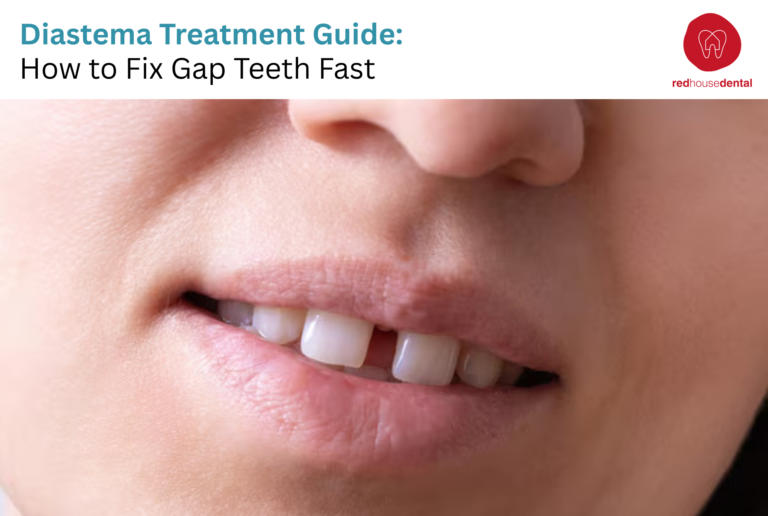
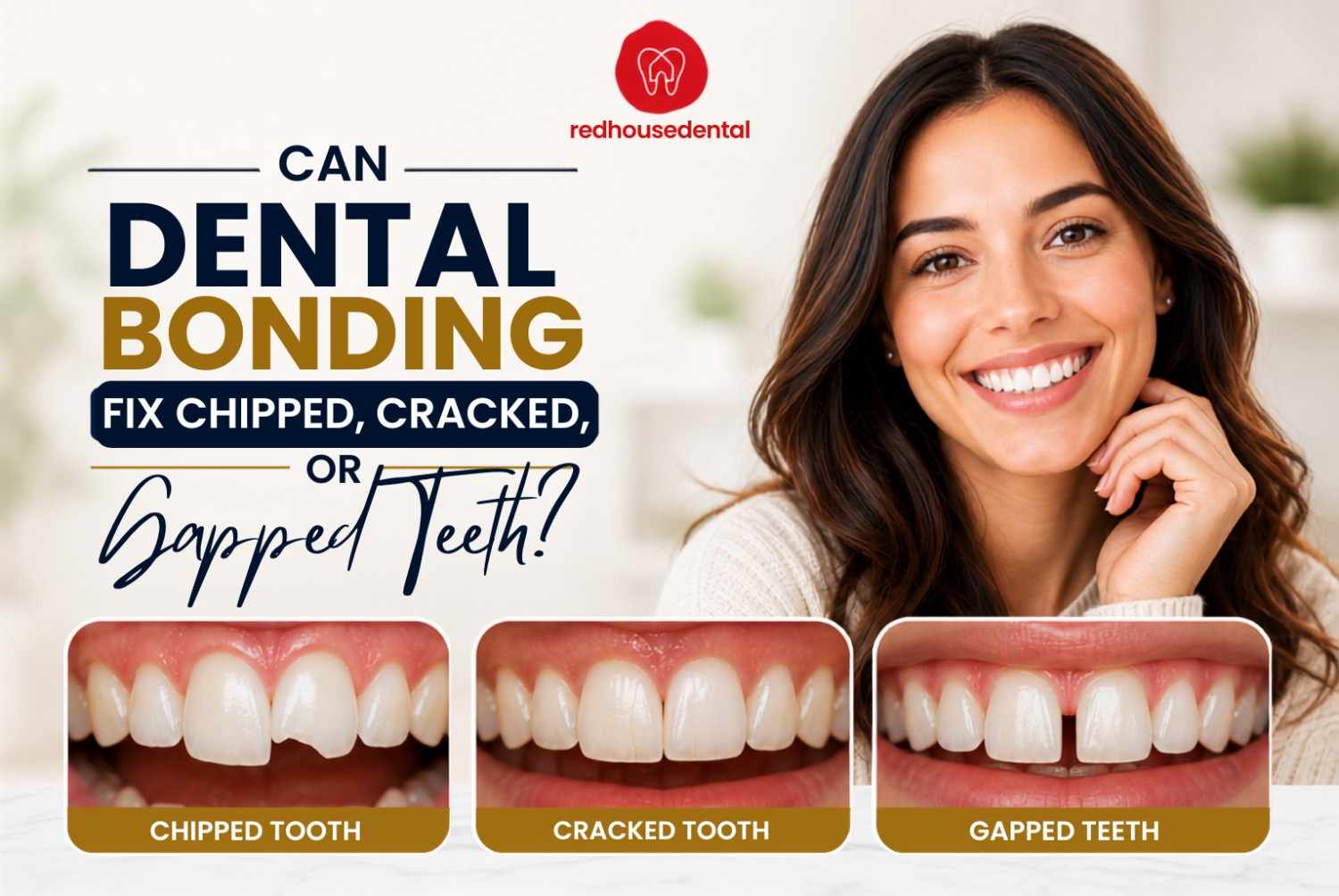
A chipped front tooth from years back was just left alone this whole time. A small gap that’s bugged you in photos forever, if we’re being honest. A crack that hasn’t gotten worse but somehow seems more noticeable every time you catch your smile in the mirror lately.
This is pretty much exactly what dental bonding gets used for. At Red House Dental in Richmond Hill, this question comes up a lot, often from patients who assume the only real fix is something bigger, such as veneers or crowns. So here we will learn what is teeth bonding, what dental bonding actually does, what it can realistically fix, and where it genuinely falls short.
What Is Teeth Bonding?
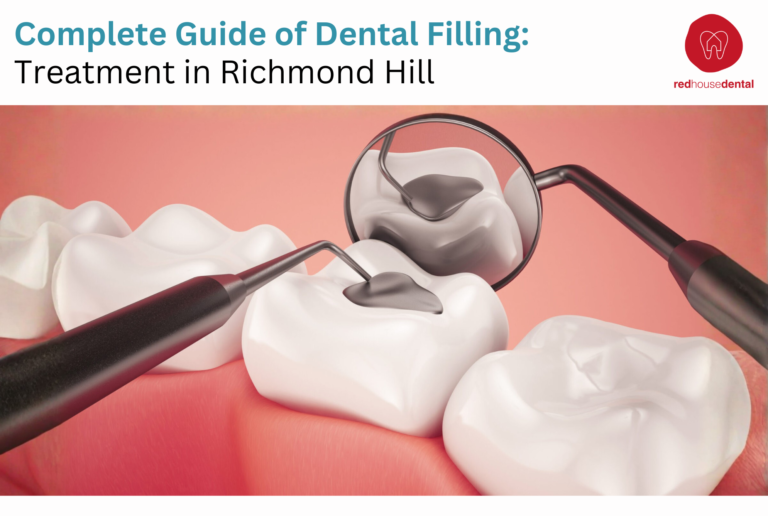
Dental bonding is a fairly common cosmetic dentistry treatment used to improve a smile overall. The dentist applies tooth-coloured resin composite material directly onto the teeth, and, depending on what’s needed, it can be shaped, sized, or coloured.
Dentists use dental bonding, also called composite bonding or just teeth bonding, for a handful of reasons.
- Changing the shape of a tooth
- Closing gaps between teeth
- Concealing chips or small cracks
- Hiding discoloration
- Making teeth look a touch longer
So if the actual question is, “What is tooth bonding good for?” the honest answer covers a pretty wide range of smaller fixes.
It tends to help most when someone’s genuinely self-conscious about how their teeth look day to day. It’s painless too, typically just the one office visit, which honestly surprises a lot of people expecting something far more drawn out.
What Happens During Composite Bonding Teeth Treatment?
A handful of clear steps make up the whole process.
Selecting the Shade
The dentist uses a shade guide first, selecting a resin that matches the natural tooth colour as closely as possible. Resin gets used all over dentistry, honestly, the same material that fills cavities and protects exposed roots when gums start receding.
Preparing the Tooth
The tooth’s surface is just a touch roughened. After that, a liquid goes on that helps the bonding material actually grip the way it needs to.
Applying the Composite Resin
The resin itself has a putty-like texture, and it’s applied and shaped right there on the tooth until everything looks right.
Curing the Material
A curing light hardens the whole thing quickly, locking the resin onto the surface for good.
Polishing the Tooth
A final pass and polish brings everything to a natural-looking shine that blends right in.
The whole appointment usually runs somewhere around 30 to 60 minutes per tooth. For a real, visible difference, that’s a remarkably short visit compared to most cosmetic options.
How Long Does Composite Resin Bonding Teeth Treatment Last?
One office visit tends to be all it takes from start to finish. The material itself generally holds up for 3 to 10 years before a touch-up or full replacement is needed.
Plenty of things factor into that lifespan, honestly.
- Oral habits play a fairly big role.
- How many teeth got treated matters too.
- Someone who regularly bites their nails or chews on pen caps will probably see composite resin bonding on their teeth wear down a bit more quickly.
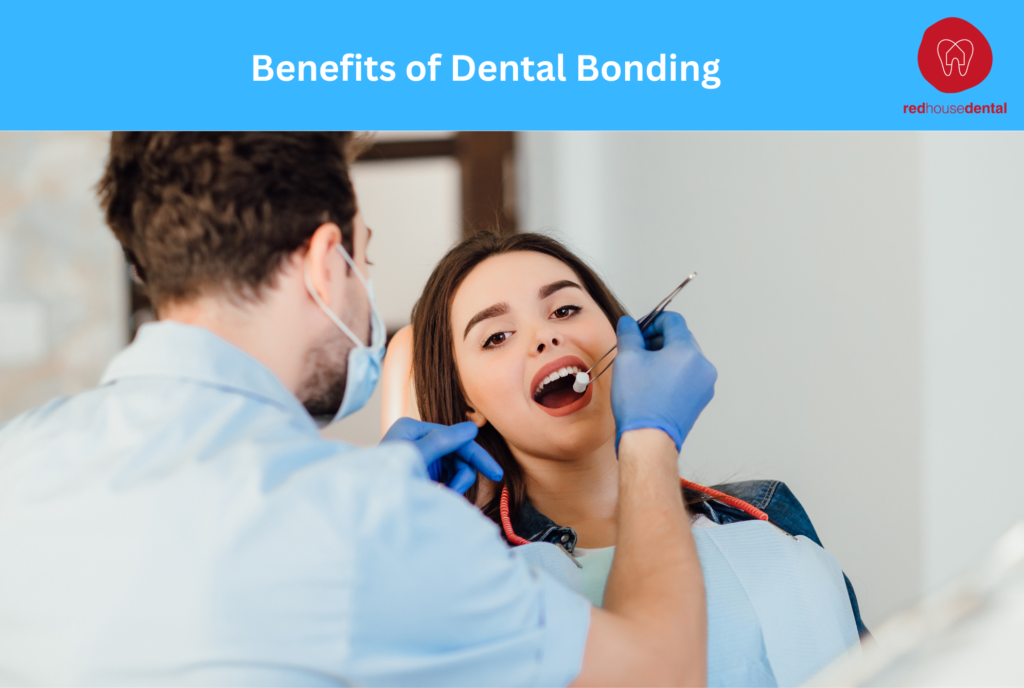
Benefits of Dental Bonding
A handful of real advantages set dental bonding apart from many other cosmetic treatments.
- Minimally invasive, since porcelain veneers and crowns need enamel removed before they’ll stick properly, while bonding usually skips that step entirely.
- Genuinely cost-effective, sitting among the cheapest cosmetic dental options available
- Pretty versatile, hiding chips, cracks, and gaps all at once, and since no enamel gets removed, it can be reversed any time down the line.
- Fast, since veneers and crowns often mean stacking up several appointments, whereas bonding wraps up in just one visit
Limits Worth Knowing About
Dental bonding material handles stains reasonably well, though nowhere near as effectively as porcelain does. It can also chip over time, unlike veneers or crowns.
Honestly, bonding really shines for the smaller cosmetic tweaks. Anyone hoping for a more dramatic, full smile transformation will probably find porcelain veneers a better fit instead. It’s worth knowing that going in rather than expecting one short appointment to change everything at once.
Recovery After Dental Bonding
Some short-term sensitivity might pop up right after the procedure, though over-the-counter pain relievers usually handle that just fine.
There’s basically zero downtime involved either way. Normal activities can pick right back up the moment someone walks out of the dentist’s office: no soft-food restrictions to plan around and no time off from work or anything else.
Taking Care of Bonded Teeth
Good oral hygiene still matters as much once bonding’s done.
- Brush twice daily with a soft brush and fluoride toothpaste.
- Floss once a day
- Use an alcohol-free mouthwash.
- Keep up with regular checkups and cleanings.
A few habits worth cutting out since the material can chip:
- Biting fingernails
- Chewing on pens
- Using teeth to rip open packaging
A few habits that genuinely help guard against staining:
- Cutting back on darker drinks like coffee, tea, and red wine
- Going a bit easier on acidic foods like citrus and vinegar
- Quitting smoking, where that applies
When Should You See a Dentist About Bonded Teeth?
Sharp edges on a bonded tooth or a tooth that feels off when you bite down are both worth a quick call to the dentist. Most of the time, these are easily sorted out during a follow-up visit.
Does Dental Bonding Carry Any Risk?
Generally speaking, not really. Dental bonding doesn’t pose any risk to oral health on its own. As long as the teeth and gums going in are reasonably healthy, the procedure is considered safe overall.
Dental Bonding vs. Veneers
Porcelain veneers are custom-made ceramic shells bonded right onto the front of teeth. Getting them placed means the dentist has to remove some enamel beforehand, and once they’re in, there’s genuinely no going back. Veneers usually need replacing somewhere between 10 and 20 years down the road.
Dental bonding skips most of that enamel removal altogether, which is exactly why it stays reversible. Touch-ups tend to come around every three to 10 years instead. For anyone weighing the two side by side, the reversibility and the lower upfront cost often tip the decision toward bonding for smaller fixes.
Why Red House Dental for Dental Bonding in Richmond Hill
Red House Dental sits at 38 Arnold Crescent, Richmond Hill, ON. Composite bonding is one of the cosmetic options the team here offers patients dealing with chips, gaps, cracks, or discoloration that’s been bothering them for a while. Dentist bonding teeth is a popular choice for patients looking for a minimally invasive way to improve the appearance of their smile.
A proper look at the teeth always comes first. If dental bonding genuinely fits the situation, that gets explained clearly, along with a realistic sense of what it can and can’t actually achieve. If something bigger, like veneers, makes more sense instead, that gets said honestly too, rather than steering toward one option regardless. When appropriate, dentist bonding teeth can provide a fast and cost-effective solution for minor cosmetic concerns.
Red House Dental accepts the Canadian Dental Care Plan for eligible patients. The team includes Dr. Ria Pudjo, Dr. Kavita Gupta, Dr. Sandeep Tayal, and Dr. Susie Ang.
Call +1 (905) 883-4643. We are open Monday to Friday, 8 am to 6 pm, and on Saturdays, 9 am to 3 pm. Free parking outside.
Frequently Asked Questions (FAQs)
What’s teeth bonding actually used for, exactly?
Mostly closing up gaps, fixing small chips, covering minor cracks, hiding discoloration, and tweaking tooth shape just slightly here and there.
How long does composite bonding teeth treatment usually take?
Somewhere around 30 to 60 minutes per tooth, often wrapped up entirely in a single appointment.
How long does composite resin bonding teeth typically hold up?
Roughly three to 10 years before a touch-up’s likely needed, though that really comes down to habits and how many teeth got treated in the first place.
Can dental bonding actually be reversed later if needed?
Yes, since it usually skips removing enamel the way veneers require, the option stays open to undo it down the line if that’s ever wanted.
Does getting dental bonding done actually hurt?
Not really, no. It’s a painless procedure with essentially zero downtime, though mild short-term sensitivity for a day or two isn’t uncommon afterward.