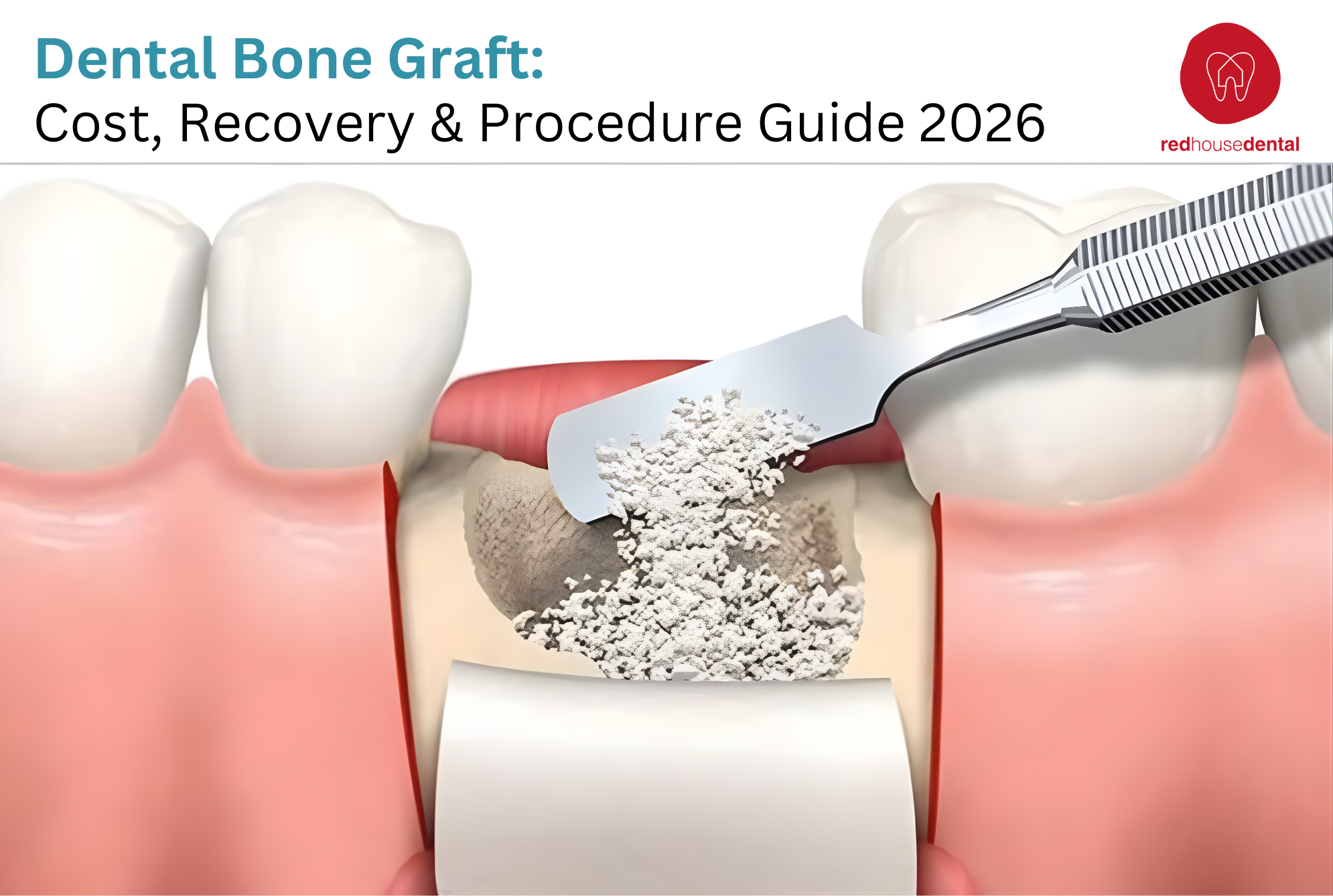
Dental bone graft is a procedure used to restore the jawbone. In case a person loses a tooth, the bone below that tooth may shrink.This may occur due to trauma, deep cavities, or periodontal (gum) disease. In the long run, the jaw can be too weak to support a dental implant. This is where a dental bone graft is required.
The term “bone graft” in dental treatment simply refers to the provision of bone into a weak or thin part of the jaw. The graft helps the jawbone regenerate and become stronger. It forms a strong foundation to allow a dental implant to last several years.
During the dental bone graft procedure, a dentist or dental bone graft specialist places bone material in the empty or damaged area. This bone can come from the patient’s body, a donor, an animal source, or a safe lab-made material.
Bone graft dental surgery may sound scary, but it is common and safe. With proper care, dental bone graft recovery is smooth. In this 2026 guide, readers will learn about the types of dental bone grafts, the cost in Canada, the healing time, and what to expect step by step.
Why Bone Grafting in Dental Care Is Needed
When a tooth is lost, the jawbone will no longer receive any pressure through chewing. The body believes that it does not require the bone. Gradually, the bone is shrinking smaller and weaker. That is why dental treatment using bone grafting is so significant.
When an individual desires a dental implant, he or she needs a strong jaw. An implant is similar to a new tooth root. It requires a heavy and strong bone to fasten it. The implant can fail without sufficient bone.
The gum disease may also destroy bone. When the infection remains long, it digs around the bone of the teeth. There is also the possibility of injury to the jaw, which is caused by accidents. A dental bone graft in such instances aids in the restoration of the lost structure.
How Bone Loss Affects the Mouth
Bone loss can change the face shape. The lips may look sunken. Chewing can feel hard. Speech may change. Other teeth can move out of place.
Who May Need a Dental Bone Graft Procedure?
- People planning for dental implants
- Patients with severe gum disease
- Those who had tooth removal
- Patients with jaw injury
A dental bone graft specialist checks X-rays and decides the best care plan.
Types of Dental Bone Grafts
There are different types of dental bone grafts. The dentist chooses the right one based on how much bone is lost and where it is missing.
- The first type is an autograft. In this method, bone is taken from the patient’s own body, often from the chin or another safe area. This type heals well because it is the patient’s natural bone.
- The second type is an allograft. This bone comes from a human donor. It is cleaned and treated carefully to make it safe.
- The third type is a xenograft. This bone usually comes from a cow. It is processed to be safe and strong for use in bone graft dental surgery.
- The fourth type is an alloplast. This is a lab-made material. It acts like natural bone and helps the body grow new bone cells.
Each option has benefits. A dental bone graft specialist explains which type fits the patient’s needs. The goal of all types of dental bone grafts is the same—to rebuild the jaw so it can support teeth or implants safely.
Step-by-Step Dental Bone Graft Procedure
The dental bone graft procedure is done in a dental clinic. It is usually completed in one visit.
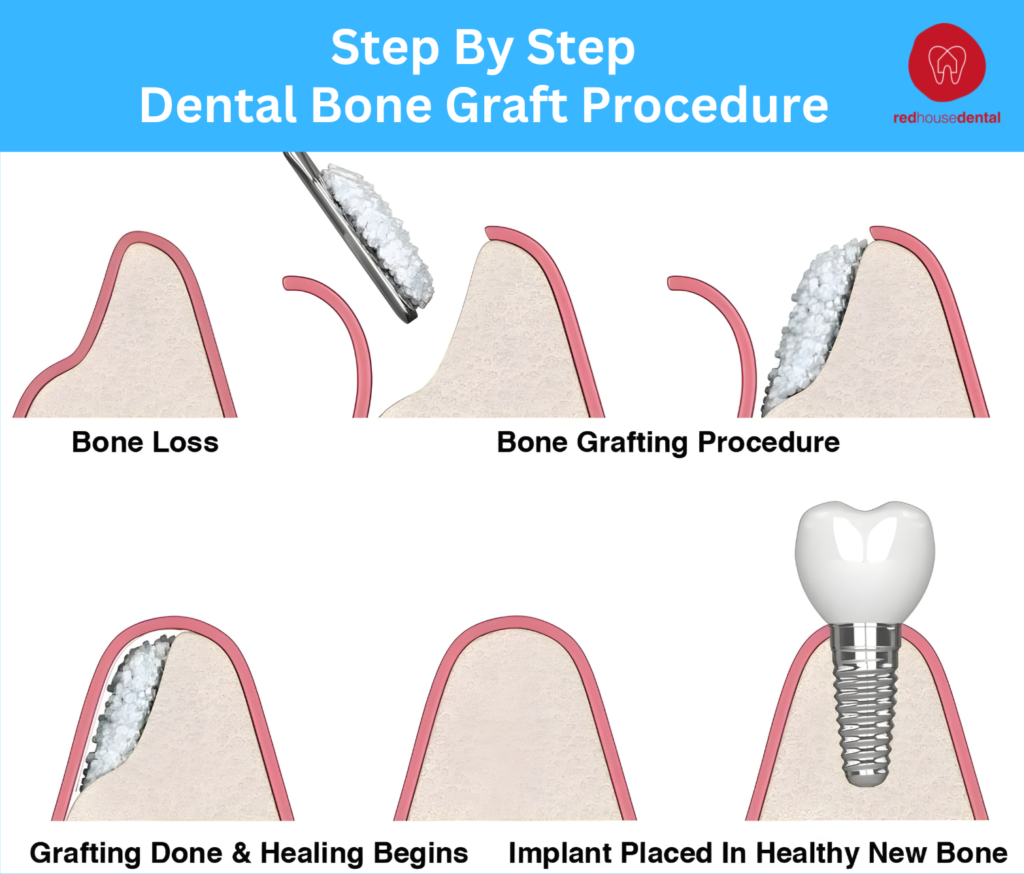
First, the dentist takes X-rays or a 3D scan. This shows where the bone is thin. After that, the area is cleaned. Local freezing (anesthesia) is given so the patient feels no pain.
Step 1: Opening the Gum
The dentist gently opens the gum to reach the bone area.
Step 2: Placing the Bone Material
The chosen graft material is placed into the weak spot. It fills the space where bone is missing.
Step 3: Covering and Closing
Sometimes a special membrane is placed on top to protect the graft. Then the gum is stitched closed.
Bone graft dental surgery usually takes one to two hours. After the procedure, the body slowly joins the new bone with the natural bone. This process can take a few months.
The dental bone graft specialist gives clear home care instructions to help with dental bone graft recovery. Most patients go home the same day.
Dental Bone Graft Recovery and Healing Time
Recovery from a dental bone graft is time-consuming and painstaking. This is normal after bone graft dental surgery, whereby mild swelling and soreness are expected. This usually lasts a few days.
The dentist can prescribe pain medication and even antibiotics. Swelling could be reduced by using ice packs. The patients are expected to take a first-day rest and also not to engage in heavy activity.
Soft food should be used when healing is in the initial stages. Good options are soup, yogurt, mashed potatoes, and smoothies. The graft area should not be close to foods that are hard or crunchy.
The mouth should be kept clean. Light brushing is permitted, but the graft site must not be touched within a period of time. Warm salt water rinses help keep the area clean and support healing.
The curing within the bone takes time. It takes three to six months or even more to ensure that the graft completely fuses with the natural bone. Then the dentist may install a dental implant where necessary.
Frequent follow-up visits are significant. The bone graft specialist in the field of dentistry will ensure the recovery process is proceeding well and there is no infection.
Dental Bone Graft Cost in Canada
The dental bone graft cost in Canada can vary. The price depends on the type of graft, the size of the area, and the clinic location.
In simple cases, the cost may start around $400 to $800. More complex bone graft dental surgery can range from $1,500 to $3,000 or more. If sedation or extra procedures are needed, the cost may increase.
Autografts may cost more because they need bone from the patient’s body. Lab-made materials or donor bone may cost less in some cases.
If a dental implant is planned, the graft cost is separate from the implant fee. It is important to ask for a full treatment plan in writing.
Some patients may have partial coverage through private insurance. In Canada, eligible patients may also receive support through the Canadian Dental Care Plan (CDCP), depending on coverage rules.
A dental bone graft specialist explains all costs clearly before treatment. Transparent pricing helps patients feel safe and prepared.
Choosing the Right Dental Bone Graft Specialist
Choosing the right dental bone graft specialist is very important. Bone grafting in dental care needs skill and careful planning.
A good specialist checks the patient’s full health history. Conditions like uncontrolled diabetes or smoking can slow healing. The dentist may suggest lifestyle changes before bone graft dental surgery.
Modern clinics use digital X-rays and 3D scans. These tools help plan the dental bone graft procedure safely and accurately.
Patients should feel comfortable asking questions. A good dentist explains the types of dental bone grafts in simple words. They also explain dental bone graft recovery clearly.
Experience matters. A skilled professional has handled many graft cases and knows how to manage problems if they happen.
Clean and safe clinic space is also important. Sterilized tools and clear safety steps protect patients from infection.
When patients trust their dental bone graft specialist, they feel calm. This makes the whole journey smoother and more positive.
Restore Your Smile with Red House Dental
At Red House Dental, every smile matters. The team realizes that dental bone grafts may be seen as a giant stride. That is why they can listen to them and tell everything in simple words.
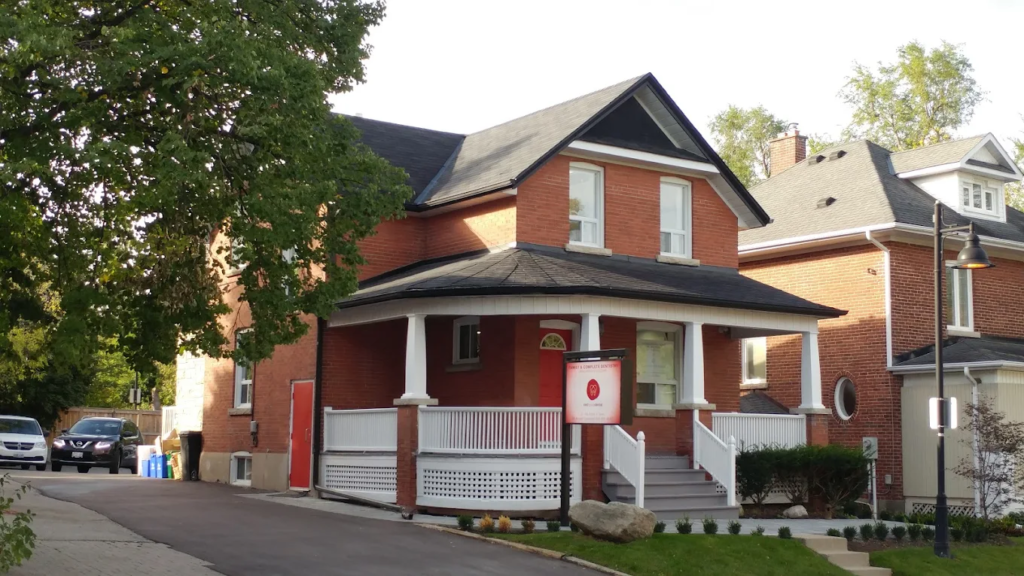
Red House Dental is a modern dental practice in Richmond Hill, where the service providers are caring. The patients are welcomed by them with the Canadian Dental Care Plan (CDCP), which assists the families in obtaining affordable care.
They have an experienced staff of physicians (Dr. Ria Pudjo, Dr. Kavita Gupta, Dr. Sandeep Tayal, and Dr. Susie Ang) who offer individual intervention plans. Their services include reliable guidance, emergency health services on the same day, free parking, and use of modern equipment in safe bone graft dental procedures.
The team takes patients through the process step by step from the initial visit to subsequent treatment. Clear price implies no underhand fees.
Answering the question about a dental bone graft procedure or intending to plan dental implants, then you should not wait. Phone +1 (905) 883-4643 or 38 Arnold Crescent, Richmond Hill, ON.
Book your appointment today. Allow Red House Dental to restore your bone and make you have a confident smile again.
Frequently Asked Questions (FAQs)
What is the period of dental bone graft recovery?
Recovery from a dental bone graft is normally three to six months. The gums recover first, although the bone takes a longer time before it is strong enough to hold a dental implant.
Do you find the dental bone graft process painful?
They are treated when frozen, thus no pain. This is mild soreness that can occur after bone graft dental surgery, and it can be treated with medicine and rest.
How much on average is a dental bone graft in Canada?
The bone graft of the dentist can be as little as hundreds of dollars but also as high as thousands of dollars. The cost is based on the nature of the dental bone graft and the complexity of the treatment.
Can a bone graft fail?
Failure is rare. It can occur as a result of infection, smoking, or health problems. The healing of a dental bone graft is monitored by a dental bone graft specialist to minimize the risks and provide success.
When is an implant possible after bone grafting in the dental practice?
The average wait period in dental treatment after bone grafting is 3-6 months. The dentist ensures that the bone is hard and only then installs the dental implant safely