You are already living with a sleep apnea problem and understand how exhausting it can be. You try to go to bed early, you make yourself develop good habits, but you still wake up tired. Sleep apnea affects not only the sleep of many peoples; but also their energy, attentiveness, and their general health.
Most people start with the usual treatments like CPAP machines or oral appliances. They help many, but not everyone. However, in cases where they are not working or they do not fit, surgery can become the alternative.
At Red House Dental in Richmond Hill, we make sure people understand their choices clearly. Sleep apnea can sound complicated, but it shouldn’t leave you confused. In this blog, we’ll break down the basics; what sleep apnea surgery actually is, how it works, what recovery usually looks like, and what the “success rate” really means for you in real life.
What is Sleep Apnea Surgery?
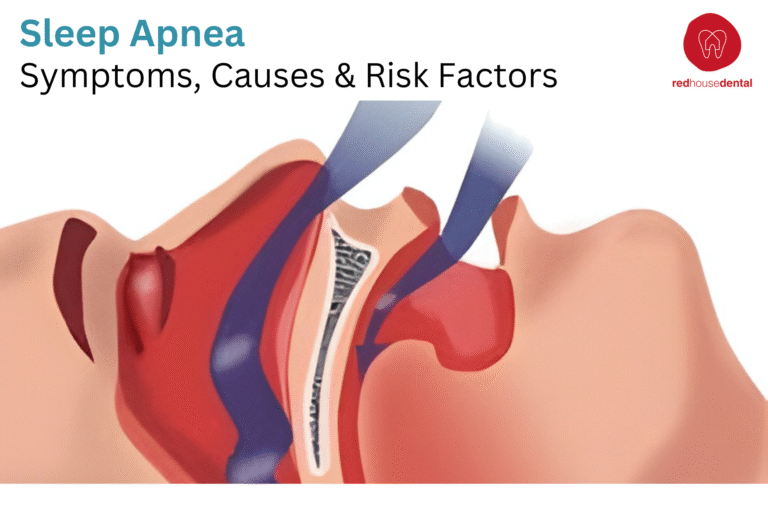
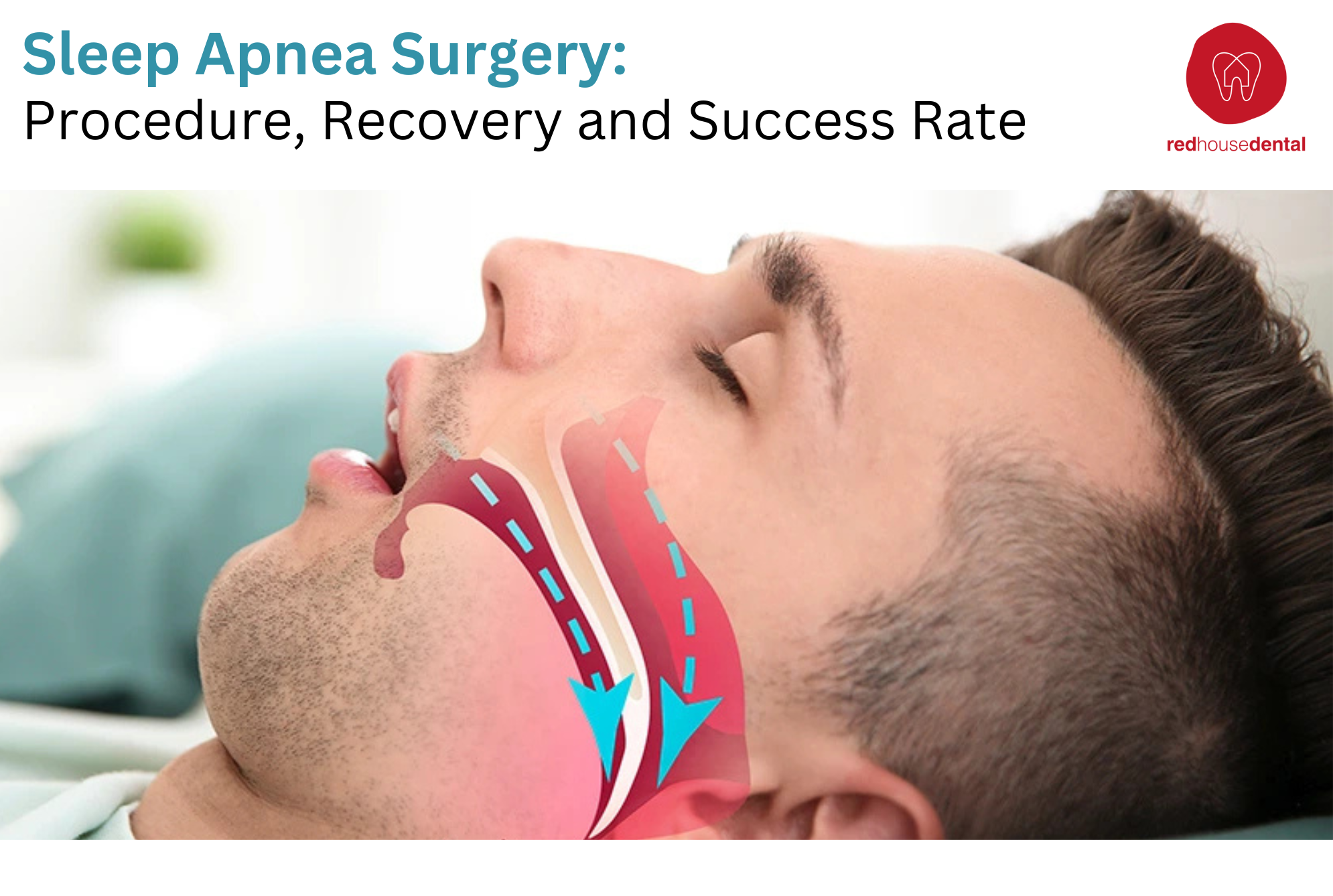
Sleep apnea surgery is not a single procedure. However, it is a series of surgeries that help in widening, supporting or stabilising your airway in order to remain open during sleep. When the airway collapses, it results in shallow breathing or even ceases to breathe. It is the time when humans snore, gasp, or wake up several times without even being aware of it.
There are various kinds of surgery for sleep apnea, which address multiple parts of the airway. Surgery may be recommended to you by your dentist, surgeon, or sleep expert when:
- Your airway has a structural issue.
- Your tonsils or tissues block airflow.
- You cannot tolerate CPAP.
- Oral appliances aren’t enough.
- Sleep apnea is significantly affecting your health.
Many people ask us, ‘What exactly is sleep apnea surgery?’ The answer is that it isn’t just one procedure. Instead, there are many steps, each used based on the patient’s anatomy and the severity of sleep apnea.
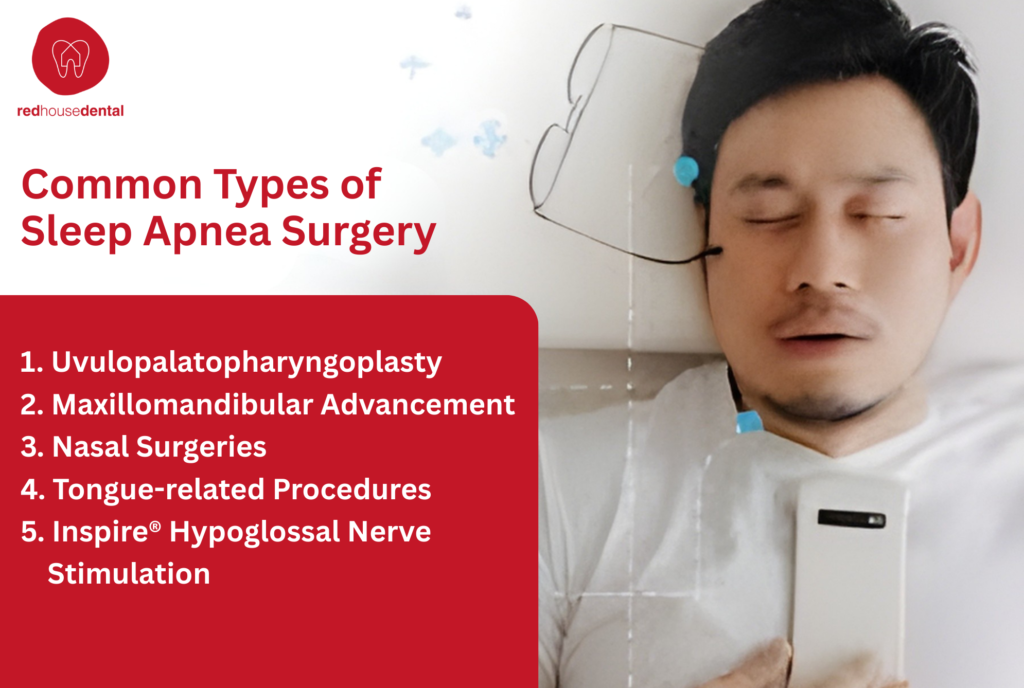
Common Types of Sleep Apnea Surgery
The following are the best- recommended procedures:
1. Uvulopalatopharyngoplasty (UPPP)
A fancy term to describe a very simple procedure-removal of excess tissue at the back of the throat. This can be of great help to patients that have a big tonsil or a small airway.
2. Maxillomandibular Advancement (MMA).
This operation corrects the lower and upper jaw, to drag the airway forward. It is one of the best alternatives to moderate to severe obstructive sleep apnea.
3. Nasal Surgeries
When the issue starts in the nose, like deviated septum, the symptoms can be decreased by enhancing nasal airflow.
4. Tongue-related Procedures
Some procedures reposition or reduce the size of the tongue to prevent it from falling back during sleep.
5. Inspire® Hypoglossal Nerve Stimulation
This isn’t traditional surgery but rather an implantable device that helps keep your airway open. Many patients choose it when CPAP has failed.
At Red House Dental, the patient is informed about these choices in an open and transparent manner. We have the philosophy of comfort, honesty and long-term health.
Is Sleep Apnea Surgery Safe?
Yes, when done by the professionals. Every medical procedure is risky but sleep apnea surgeries can be regarded as safe and well-researched. The complications are not typical, and they are avoidable provided that the pre- and post-surgical guidelines are observed.
We ensure that you know what will occur in the process of surgery and how to take care of yourself after the surgery. We focus on communication. We make you aware of each procedure step.
What Is the Success Rate of Sleep Apnea Surgery?
Success rates depend on the type of procedure. But here are general trends:
- UPPP: around 40–60% improvement
- MMA: one of the highest success rates, often above 80%
- Nasal surgeries: best for symptom relief rather than complete treatment
- Hypoglossal nerve stimulation: 60–70% improvement for the right candidate
The good news is that snoring, breathing difficulties, and overall sleep quality often improve significantly when the right surgery is performed.
Who Is a Good Candidate for Sleep Apnea Surgery?
You may be a candidate if:
- You have moderate to severe obstructive sleep apnea.
- CPAP or oral appliances haven’t helped
- You have clear anatomical blockages.
- You’re struggling with daytime fatigue.
- Your dentist or sleep specialist identifies airway issues.
The Sleep Apnea Surgery Procedure: What to Expect
1. Consultation and Examination
Your dentist or surgeon will examine your airway, review your sleep study, and discuss the procedure (or none) that best suits your case.
2. Preparing for Surgery
You will get a good explanation regarding nutrition, medications, and post-discharge arrangements. We have a staff that takes you through each step to ensure you have the support and the information you need in Red House Dental.
3. The Surgery
It can take up to a few hours or 30 minutes depending on the nature of the surgery. Others are outpatient procedures whereas it might need short hospitalization.
4. Immediate Post-Surgery Care
Some procedures are done on an outpatient basis, while others may require a short hospital stay.
We strongly believe in comfort and clear communication. Understanding what to expect can significantly reduce anxiety.
What Is the Recovery Time for Sleep Apnea Surgery?
Recovery depends on the type of surgery. Here’s a general timeline:
- UPPP: 2–3 weeks
- Nasal surgery: 1–2 weeks
- Jaw surgery (MMA): 4–6 weeks
- Tongue-based surgeries: 2–3 weeks
- Hypoglossal stimulator: Incision heals in about one week; device activation typically occurs a few weeks later.
So when patients ask, “What is the recovery time for sleep apnea surgery?” We explain that most people return to their regular routine within 2–3 weeks, but complete healing may take a bit longer depending on the procedure.
At Red House Dental, we provide simple and clear post-operative instructions so you don’t have to guess your way through recovery. Our team checks in regularly and makes sure your healing is on track.
Life After Sleep Apnea Surgery
Most patients notice fundamental changes:
- Less snoring
- Deeper sleep
- More daytime energy
- Fewer morning headaches
- Better mood and focus
Is surgery a universal treatment? Not always. For many patients, symptoms improve enough to significantly enhance daily life.
At Red House Dental the vision is not to cure a disease but to make you feel healthy, confident and rested. Sleep is beneficial in every way, such as the health of your mouth and, also, your state of mind, so we are confident that we can assist you in finding the answer that will best suit you.
Why Canadians Trust Clinics Like Red House Dental
People choose us not just for our treatments but for our approach:
- Honesty: You get honest and open information, no pressure, no unnecessary treatment.
- Comfort: We realize that dental care is not a comfortable experience and thus, we ensure that all our visits are comfortable and encouraging.
- Quality: We never cut corners on equipment, materials, or follow-up care.
- Experience: We have 15 years of experience in patients with different airway and dental problems of all ages.
- Education: We do not treat your health, but help you know it.
The sleepless life you have to lead deserves to be supported by a team of people listening, explaining, and standing by your side.
Red House Dental Also Offers Qualified, AADSM-Guided Sleep Apnea Care
Red House Dental provides professional sleep apnea care delivered by a dentist who is a qualified practitioner and active member of the American Academy of Dental Sleep Medicine (AADSM). This will make sure that your treatment is of the highest standards of safe, proven, and evidence-based sleep apnea management.
Our FDA-approved oral appliances are FDA-approved devices that are made to fit right into the mouth and continuously adjust the jaw forward throughout the nighttime to ensure that the airway stays open. Sleep physicians have accepted these appliances and most of them fall under the medical insurance cover, depending on your particular policy. They suit mild to moderate cases of obstructive sleep apnea in patients or patients who cannot undergo the CPAP treatment.
Benefits include:
- Quiet, comfortable use
- Better breathing and reduced the symptoms.
- Improved sleep-wake duration and activity.
We assist you with all steps; screening, diagnosis, customizing, adjustments, and follow-ups.
Since untreated OSA impacts the state of the heart, blood pressure, metabolism, immunity and cognition, early treatment is a real safeguard to your future health.
FAQs
1. Why are dentists involved in sleep apnea?
Dentists with dental sleep medicine training diagnose airway problems and prescribe custom oral appliances, which is an established treatment of mild-to-moderate sleep apnea and of patients who cannot use CPAP. They look at the mouth- and jaw-related symptoms which in many cases are OSA indicators.
2. What causes sleep apnea?
Sleep apnea is primarily caused by the airway collapsing when one sleeps. The most frequent causes are overweight, slack throat muscles, position of the jaw or tongue, and large tonsils, blocked nose, and genetic airways.
3. What is the recovery time of a sleep apnea surgery?
Most people recover within 2-3 weeks, but it varies according to the type of procedure.
4. How successful is sleep apnea surgery?
The success rates are between 40 percent and 80 percent in relation to the surgery and your own airway.
5. Do I need surgery if I snore?
Not always. Snoring aids are not necessarily an indication of a need to undergo an operation, but may be linked to sleep apnea. The first step is a sleep test.