That toothache you have been ignoring for two weeks just got worse. It woke you up at 2am. The painkiller wore off by morning. There is swelling in your jaw now and a weird taste that will not go away no matter how many times you brush.
That is not a toothache anymore. That is an infection. And it is not going anywhere on its own.
At Red House Dental in Richmond Hill, root canal treatment is something we do regularly. People come in scared, leave relieved. Here is the honest breakdown of what is actually going on inside your tooth and why sorting it out properly matters more than most people realise.
What Is Root Canal Treatment?
Inside every tooth there is a soft layer called the pulp. It has nerves, blood vessels, and connective tissue. When the tooth is still developing, the pulp does a lot of work. Once the tooth is fully grown though, it does not need the pulp to survive.
When bacteria get deep enough inside the tooth to reach that pulp, infection takes hold. The pulp gets inflamed, then dies. Left alone, that infection starts creeping down the root and into the bone below.
Root canal treatment cleans out everything that is infected. The pulp comes out, the inside of the tooth gets properly disinfected, and the space gets sealed. The tooth stays put. You keep it. It keeps working.
That is it. That is the whole point of it.
How Does a Tooth End Up Infected?
Teeth do not just randomly develop infections. Bacteria had to get inside somehow.
Ways that tends to happen:
- A cavity that was left alone too long and eventually ate through to the pulp
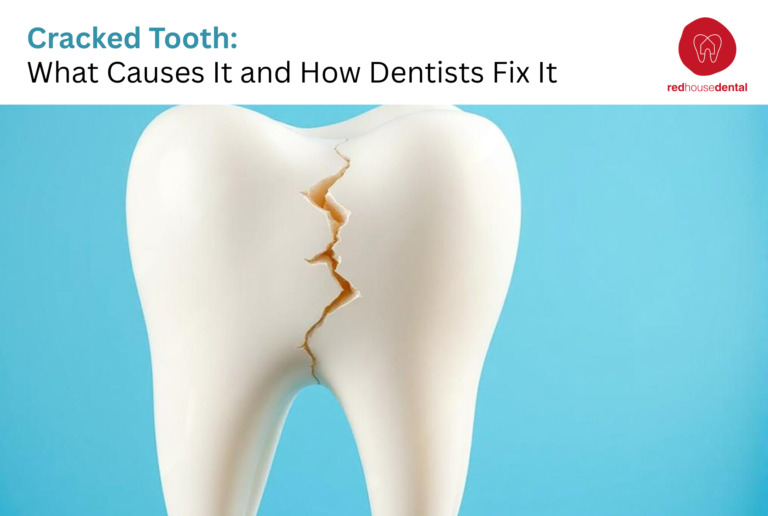
- A crack or chip in the tooth, even a tiny one, that gave bacteria a way in
- An old filling or crown that wore down or broke and left the tooth exposed underneath
- Repeated dental work on the same tooth over many years weakening its structure
- A knock or knock to the tooth that damaged the inner tissue without cracking the surface visibly
The thing with dental infections is they do not heal. A cut on your hand heals because your body can get to it. Bacteria sitting inside a sealed tooth? Your immune system cannot reach them properly. The infection just keeps building.
How Do You Know You Might Need Root Canal Treatment?
Sometimes people find out during a regular checkup with zero symptoms. Other times they come in barely able to chew. It genuinely varies.
Signs pointing toward something serious:
- Toothache that will not settle, comes in waves, or wakes you at night
- Pain when biting down even lightly on the tooth
- Sensitivity to hot or cold that hangs around well after the food or drink is gone
- Gum swelling near the sore tooth
- A small raised bump on the gum that keeps coming back
- The tooth looks darker than the ones beside it
- A persistent bad taste or smell that brushing does not fix
A single one of those might mean different things. Several together, particularly the pain and swelling combination, is a strong signal that bacteria are already deep inside that tooth.
What Happens If You Just Leave It?
People put this off more than almost anything else in dentistry. And the infection does not sit still while they wait.
Leaving a tooth infection untreated can lead to:
- The infection spreading to the bone around the tooth root
- An abscess developing at the tip of the root, a pocket of pus that causes significant pain and swelling
- Neighbouring teeth getting pulled into the problem
- In more serious cases, infection spreading beyond the jaw into the surrounding tissue
The tooth itself becomes harder and harder to save the longer things drag on. And replacing a tooth you lost to infection is a much bigger, much more expensive process than treating it while it can still be rescued.
Dental root canal treatment exists for exactly this reason. To save the tooth at the point it would otherwise be lost.
What Does the Procedure Actually Involve?
The reputation root canal treatment has for being terrible is not really accurate. The infection is what causes the pain. The procedure is done under local anesthetic, so the area is properly numb throughout.
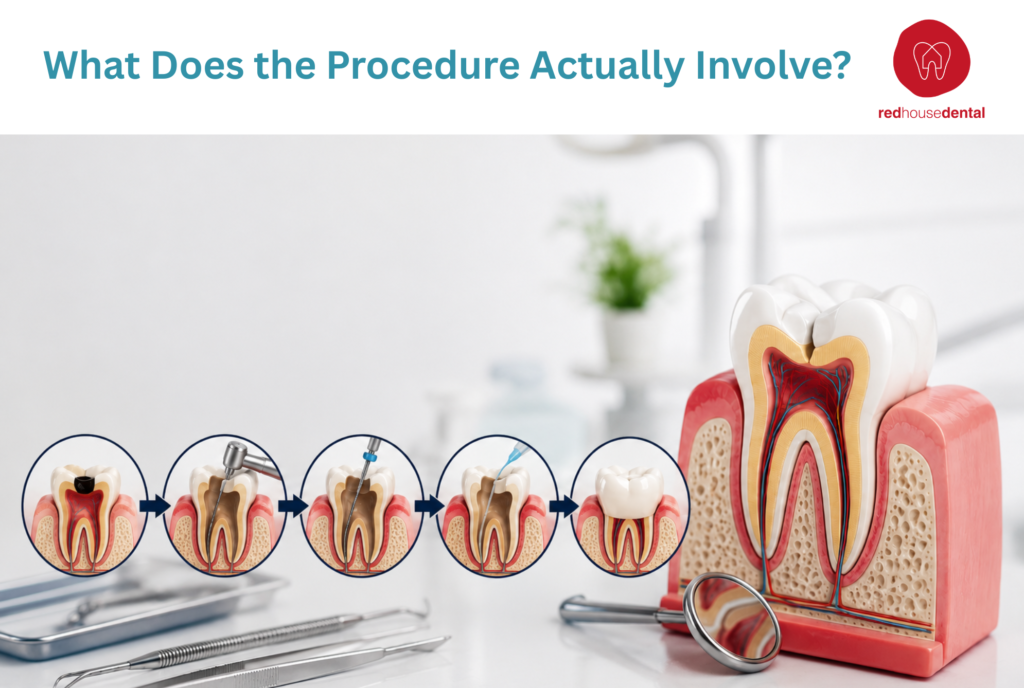
Step by step, here is what happens:
- The tooth and surrounding gum get fully numbed
- A small opening is made through the top of the tooth
- Infected pulp tissue gets removed using fine dental instruments
- The canals inside the root get cleaned, shaped, and thoroughly disinfected
- The canals get filled and sealed with a material called gutta-percha
- The opening gets closed with a filling
- A crown usually goes over the tooth afterward to protect it long term
Straightforward cases get done in one appointment. More involved ones, particularly where infection is significant, might take two visits to allow things to settle before the tooth is permanently sealed. Your dentist will tell you which applies to your situation before anything starts.
Root Canal Treatment Cost in Canada
Root canal treatment cost is almost always one of the first questions people ask. Makes sense.
In Canada, root canal treatment cost is not a flat number. A front tooth with one or two canals costs less than a back molar with three or four. The more canals involved, the more work required and the higher the root canal treatment cost tends to run.
The crown that usually follows is a separate cost to factor in as well. Most dental insurance plans cover at least part of root canal treatment cost, so it is worth checking your benefits before your appointment rather than after.
At Red House Dental we accept the Canadian Dental Care Plan (CDCP), which can bring costs down for qualifying patients. Every patient gets a clear breakdown of costs before treatment starts. Nothing vague, nothing waiting to surprise you on the way out.
What to Expect After Dental Root Canal Treatment
A day or two of tenderness after dental root canal treatment is completely normal. The area around the tooth has been worked on and needs a little time.
Things that help during that period:
- Avoid chewing on that side until the crown is placed
- Softer food for the first couple of days
- Follow whatever your dentist recommends for any post-procedure discomfort
- Keep brushing and flossing normally around the area
- Show up to your follow-up appointment so the tooth gets properly crowned and checked
A tooth that has had root canal treatment and been properly crowned afterward can last for many years. It functions like any other tooth in your mouth.
Why Red House Dental
Red House Dental, a dental clinic in Richmond Hill, Ontario. Root canal treatment is something the team here handles on a regular basis, not just occasionally.
Emergency spots get kept open when possible. If a tooth has been building toward this for weeks and you are now in serious pain, waiting it out is not going to help. Come in.
Before anything starts, the dentist will explain exactly what is going on inside the tooth, what the procedure involves, what recovery looks like for your specific case, and what root canal treatment cost applies to you. You agree to nothing until you understand all of it.
The dental clinic takes the Canadian Dental Care Plan (CDCP) and is transparent about all pricing. The team includes Dr. Ria Pudjo, Dr. Kavita Gupta, Dr. Sandeep Tayal, and Dr. Susie Ang.
38 Arnold Crescent, Richmond Hill, ON. Phone +1 (905) 883-4643. Monday to Friday 8am to 6pm, Saturdays 9am to 3pm. Free parking outside.
Frequently Asked Questions (FAQs)
Is root canal treatment actually painful?
Honestly, most people walk out wondering what they were so worried about. The tooth gets fully numbed before anything happens. You might feel pressure during the procedure but pain is not really part of it. Day after can be a bit sore. That usually fades on its own pretty quickly.
How many appointments does dental root canal treatment need?
One appointment covers most situations. Where the infection has spread further or the tooth has tricky anatomy inside, a second visit sometimes makes more sense. Your dentist looks at your specific tooth first and tells you upfront which way it is likely to go before treatment starts.
Can antibiotics just fix a tooth infection instead?
Antibiotics calm the surrounding area down for a bit. The bacteria sitting inside the tooth itself though, they stay put. The infection builds back up again once the antibiotics finish. Dental root canal treatment is the only thing that actually gets in there and clears the source out properly.
How long does a tooth last after root canal treatment?
Depends on the person and how the tooth gets looked after. A crown going over it afterward protects the structure significantly. Plenty of treated teeth hold up for many years. Some go decades without issue. Regular checkups pick up any changes before they turn into something bigger.
What affects root canal treatment cost the most?
The tooth being treated makes the biggest difference to root canal treatment cost. Front teeth have fewer canals and are more straightforward. Back molars have more canals and more complexity involved. The crown that typically follows is its own separate cost on top. Dental insurance and CDCP coverage can both reduce what comes out of pocket. Red House Dental runs through the full breakdown before any treatment begins so nothing surprises you afterward.