Dental care is not all about brushing. Dental floss is a tiny device, but it plays a massive role in keeping the mouth clean. Most of us brush daily, yet we still do not remove food particles stuck between our teeth. That is where floss comes in. It penetrates where a brush cannot penetrate. At Red House Dental, the dentists also provide their patients with easy-to-remember tips for maintaining their teeth at home. They are sure that oral care remains simple when individuals are very knowledgeable about it and have access to the proper equipment.
This blog explains the following in the most straightforward manner possible: the types of dental floss, the benefits of dental floss, and the general advantages of dental floss. It also provides clear usage tips; anyone can use it without confusion.
What Dental Floss Does
Dental floss is a fine thread used to clean teeth. When one eats, small food particles can become lodged in small crevices. A toothbrush does not always fit between such tight spaces. Floss enters those tight areas and scrubs them.
Dentists at the Red House Dental frequently inform children and adults that they brush only half their mouths. Floss helps clean the rest. Keeping the interstitial space between teeth clean means the gums remain firm, and the breath stays fresh.
Why It Means Everything to Everyday Health
Food retained between the teeth is converted into plaque. Plaque is a sticky substance that causes decay and gum problems. When it remains too long, it turns into tartar. Tartar is firm and requires dental treatment to be extracted. That is why it is essential to floss every day. Small steps prevent big problems.
The care team at Red House Dental believes that it is best to keep it simple. Dental problems in the future can be avoided by maintaining good daily habits. One such habit is flossing.
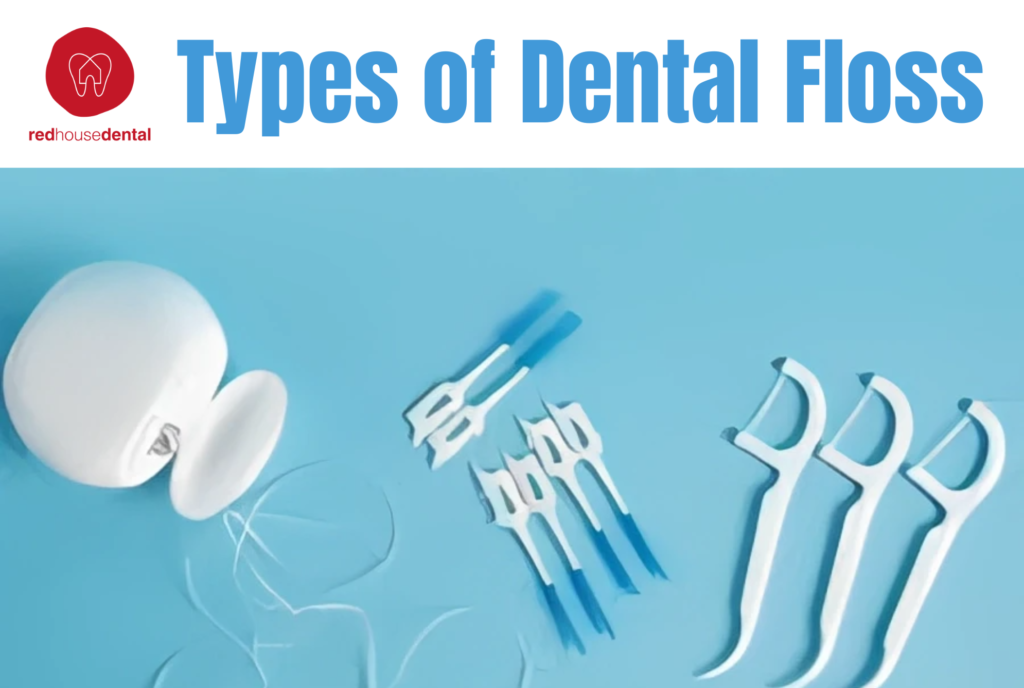
Types of Dental Floss
Shoppers are often perplexed in shops by the variety of dental floss types. Being aware of the difference would enable them to select the one that best fits their teeth.
1. Waxed Floss
Waxed flosses are very thin and coated with wax. It slips between close teeth readily. It breaks not fast and is smooth. People with crowded teeth usually use this one.
2. Unwaxed Floss
Unwaxed floss has no coating. It is a little narrower, and it provides a better grip. Others like it because it leaves a squeaky-clean sound when plaque is removed.
3. Dental Tape
Dental tape is broader and flatter. Individuals with greater interstitial distances between teeth find it softer and easier to use. It is gentle to the gums and easier to use.
4. Floss Picks
Floss picks are miniature, with a handle and a length of floss attached. These are easier for kids and older adults to use because they do not have to wrap the floss around their fingers.
5. Water Flossers
Water flossers use a jet of water to clean between teeth. They are assistive to individuals wearing braces, people with implants, and people with sensitive gums. Most parents at Red House Dental choose this option for teens in braces.
All these types of dental floss help clean the area between teeth; however, the most viable option is the one that an individual finds easy and comfortable to use daily.
Benefits of Dental Floss
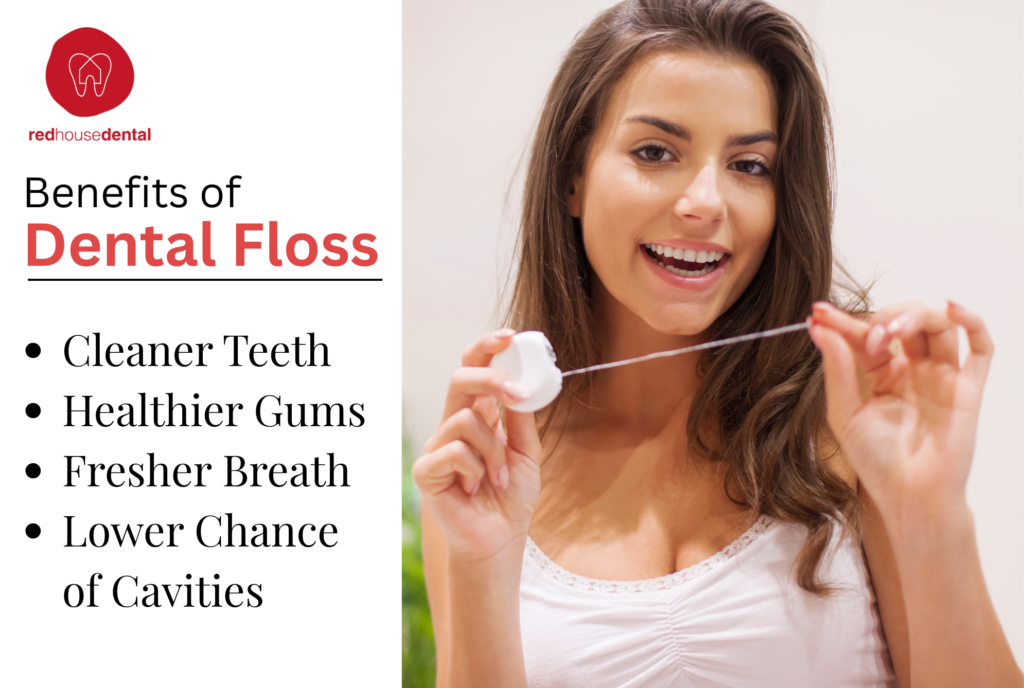
The benefits of dental floss are many, and most people experience them after starting to floss every day. Some significant benefits include:
Cleaner Teeth
Floss gets into those places that a brush cannot. This implies that teeth are clean on all sides.
Healthier Gums
Periodontal pathology: Praiseworthy and bleeding erosive pits around the gumline. Flossing not only removes plaque but also helps keep the gums healthy.
Fresher Breath
Bad breath in the mouth is caused by food stuck between the teeth. Breath remains fresher when removed using floss.
Lower Chance of Cavities
Stuck food, less so, translates to less decay. Tooth cavities frequently begin interdentally. Flossing prevents that.
Dental Floss Advantages
Most patients are always enquiring why they need to floss daily, even though they brush their teeth twice a day. The solution is in the special dental floss advantages. Brushing removes the external tooth surfaces. Floss cleanses the hidden areas. With the combination of the two tools, the mouth remains significantly healthier.
The significant dental floss benefits are:
- It helps prevent gum infections.
- It eliminates plaque between small spaces.
- It aids in sustaining mouth freshness.
- It aids in preserving sturdy gums under crowns, bridges, and implants.
Red House Dental is not about getting a quick fix but relatively long-term health. Flossing helps achieve that objective by preventing minor issues from becoming major problems.
Dental Floss: How to Use It the Simple Way
Flossing does not require any toughness. This is one of the basic techniques that are usually taught to patients in the clinic.
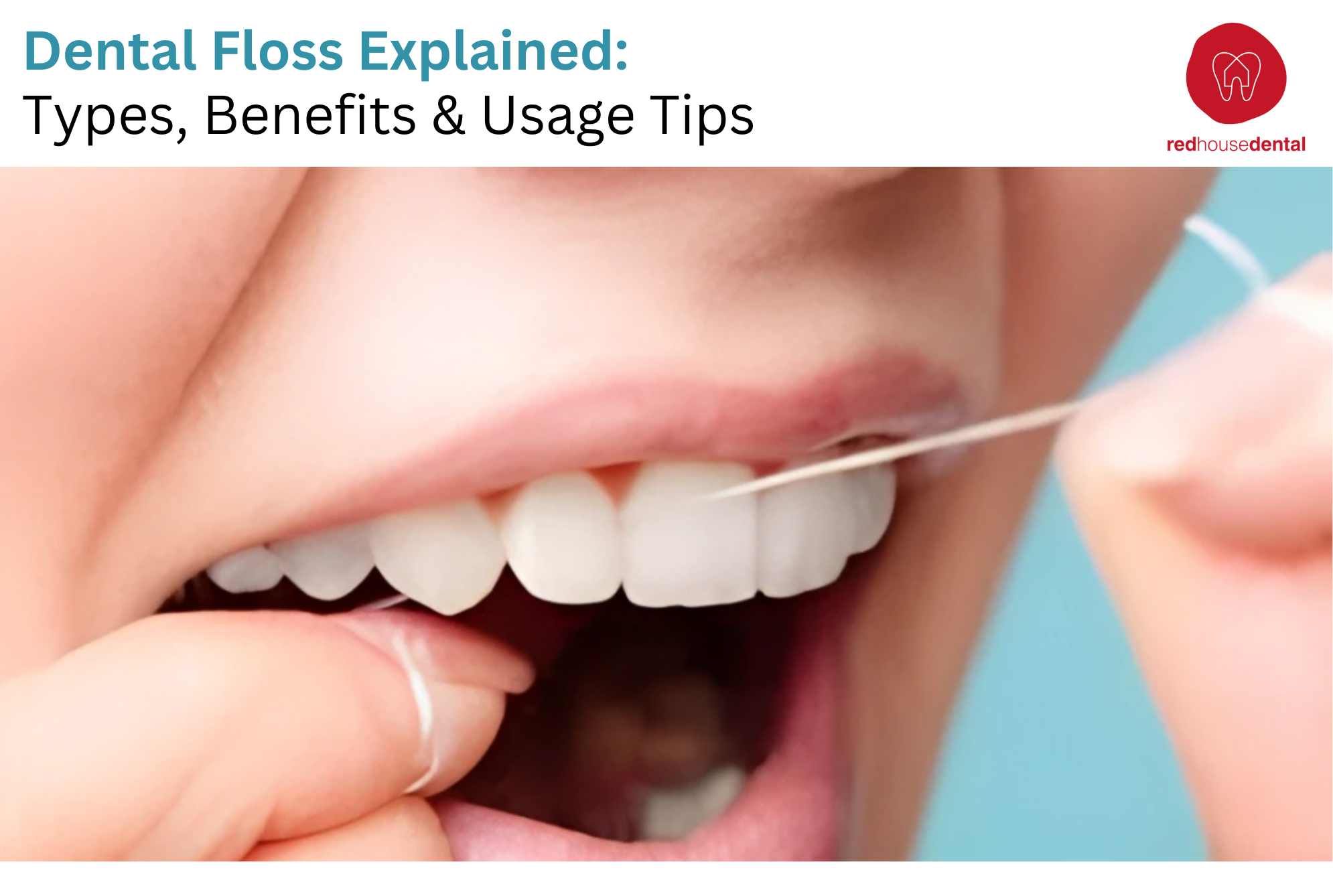
- Step 1: Take enough floss: Use about 18 inches. Keep a good deal of it round one finger, and a small part round the other.
- Step 2: Slide it gently: Slide the floss around two teeth. Do not snap it. Gently move it in order not to damage the gums.
- Step 3: Curve it: Wind the floss around one side of a tooth to create a C shape. Swipe it up and down two or three times.
- Step 4: Clean the other side: Repeat on the other side of the tooth.
- Step 5: Move to the next gap: Move the mouth with fresh pieces of floss.
At Red House Dental, the staff discuss them in a relaxed manner before a cleaning session. The patients are also given simple aftercare instructions to help them feel less shy when flossing at home.
When to Floss
Most dentists recommend flossing daily. It can be morning or night. Most of them do it before brushing their teeth, so the loosened food particles are washed away.
The care team at Red House Dental will often remind patients to choose a time they can commit to. A vice becomes strong when it becomes part of everyday life.
Who Needs Flossing the Most?
Flossing is beneficial to everybody, but some are better off without it:
- Teens with braces
- Adults: those with crowns, bridges or implants.
- Individuals who consume sticky or fibrous foods.
- Individuals who have narrow tooth spaces.
- Patients with frequent gum bleeding.
Flossing makes the gums healthier and reduces dental care visits due to preventable issues, regardless of age.
Why Red House Dental?
Red House Dental, a Richmond Hill-based clinic, offers patient-centred, straightforward, and no-frills dental treatment. Their group describes the tools, such as floss, in a relaxed, reassuring manner. They consider good oral health to be developed through sincere recommendations, patient comfort, and quality care. They are presented with solutions tailored to the actual needs of whether someone is visiting for cleaning, fillings, whitening, or braces.
The clinic is more than 15 years old and has treated patients of all ages. They ensure that all visits are relaxed. Patients who fear the dental chair feel secure and comfortable. The dentists take time to explain the process and answer questions patiently.
One of the little steps that they promote is flossing every day. It promotes all their activities during the visit and helps patients maintain their teeth’s health back home.
FAQs
Q1. Is flossing needed every day?
Yes. Flossing every morning helps keep plaque out of narrow areas and covers the gums.
Q2. What happens in case the floss gets lodged between the teeth?
Use dental tape or waxed floss. These slide more easily when fitted in narrow crevices.
Q3. Can kids floss too?
Yes. Children can begin flossing when their teeth meet. Floss picks are simpler for them.
Q4. Does flossing hurt?
It should not hurt. In cases of initial gum bleeding, it usually ceases after a few days of routine flossing.
Q5. Are water flossers good?
Yes. They are also effective cleaners and handy for individuals with braces or sensitive gums.