Most people couldn’t name a single tooth in their mouth if someone asked. You just get teeth, lose them, get more teeth, and carry on. Nobody hands you a guide at any point.
But knowing what’s actually in there matters more than people realize. What everything is called, what each shape does, and why your back teeth look nothing like your front ones. It all makes sense once someone explains it properly.
This article walks through all the types of teeth, their names, what they’re built from, and how many adults actually end up with. No complicated language. No dental school required. Just straight answers.
How Many Teeth Do Adults Have?
The number of teeth adults have is 32. That includes four wisdom teeth sitting right at the back corners of the mouth.A lot of people get those removed, so walking around with 28 is completely normal too. Both are fine. Neither means anything is wrong.
How many teeth do adults get over a lifetime?
Two full sets. The first set are baby teeth, 20 of them, which start coming through around six months old and start falling out around age six. The second set is permanent, and there are 32 of those. Wisdom teeth arrive last, anywhere from age 17 to the mid-twenties. Sometimes later. Sometimes never.
Baby Teeth Matter More Than People Think
Baby teeth aren’t just placeholders. They hold space in the jaw for permanent teeth developing underneath. Losing them too early from decay or injury means the adult teeth coming through later can shift into the wrong positions. Worth looking after properly even though they’re temporary.
Teeth Names and What Each One Does
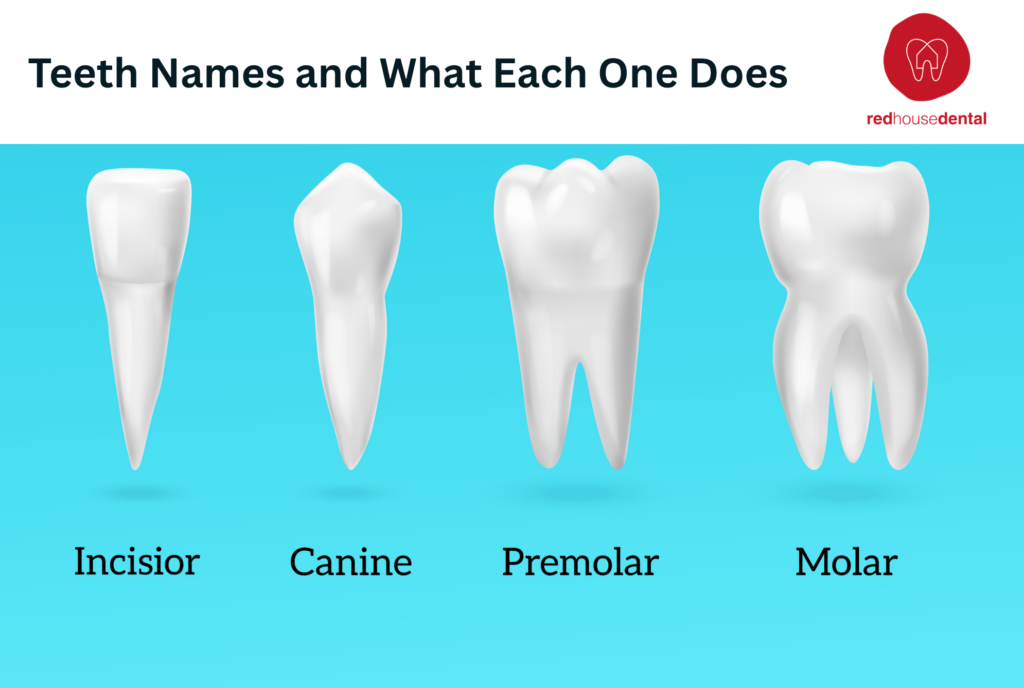
A tooth chart divides the mouth into four sections: upper right, upper left, lower right, and lower left. Each section has the same lineup of teeth. Here’s the full picture.
Incisor Teeth
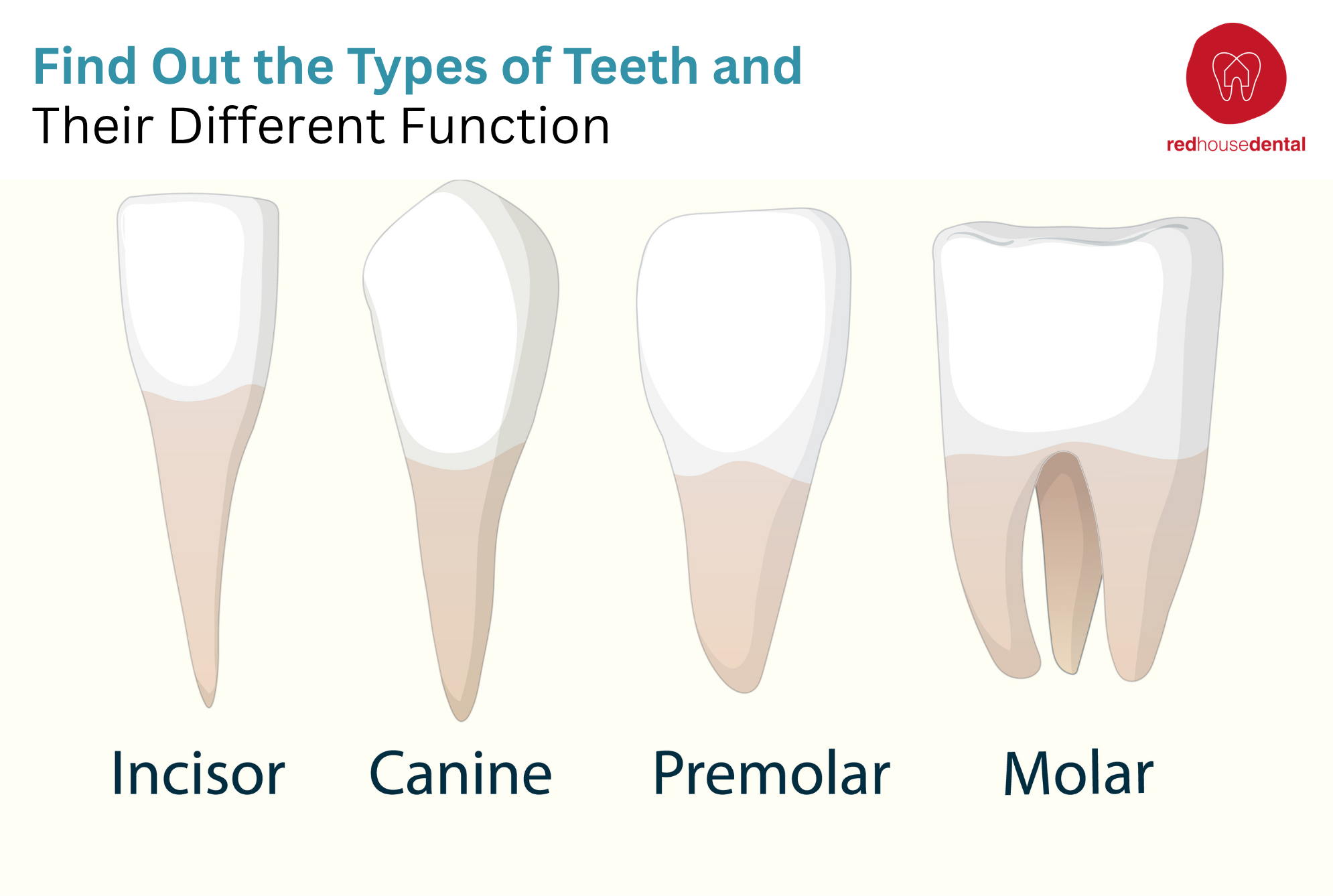
Incisor teeth are the front eight. Four across the top, four across the bottom. Flat edges, fairly thin. The shape is deliberate; they’re built for cutting. Biting into something and slicing through it cleanly. That’s the job.
Within that group are central incisors, the two most visible ones right in the middle, and lateral incisors sitting just beside them, slightly narrower. They also play a bigger role in speech than most people realize. The way the tongue interacts with the back of the front teeth affects how certain sounds form. Lose a front tooth and the S sounds change almost immediately.
Canine Teeth and Why They Sit So Deep
Canine teeth are the four pointed ones, one on each side, top and bottom. Also called cuspids. They look dramatic but have a very specific purpose. Gripping. Tearing. Getting through tougher textures that incisors cannot cleanly cut through.
Canines have the longest roots of any tooth in the mouth. They sit deep. That’s what makes them so stable and why dentists often use them as anchor points for certain types of dental work. They’re dependable in a way other teeth sometimes aren’t.
They’re also the last front teeth to fall out in childhood, which says a lot about how firmly they’re built in.
Premolars
Premolars sit between the canines and molars, two per section, eight total in most adults. Two small points on top instead of one. They do a bit of everything. Some tearing, some crushing, mainly helping move food around and break it down before it reaches the back teeth.
They carry more daily chewing load than most people give them credit for. Patients don’t think about them much until one needs a filling or gets cracked. Then suddenly that part of the mouth gets a lot of attention.
Molar Tooth and the Heavy Lifting at the Back
Molar teeth, or molars properly, are the wide flat ones at the back. Six on top, six on the bottom, not counting wisdom teeth. Add wisdom teeth, and that goes up to eight per jaw.
The surface is broad and bumpy on purpose. By the time food reaches the molars, the incisors have cut it and the canines and premolars have torn it down. Molars finish the job, grinding everything into something small enough to swallow safely.
The pressure back there is significant. Biting force at the molars can get surprisingly high, especially in people who clench or grind at night. Molars are built for it. Wide base, multiple roots, thick enamel. The back molars are doing serious work every single day.
Wisdom teeth are the third set of molars, and they come in last. When there’s enough room, they’re just extra molars, and everything is fine. When there isn’t room, which is most of the time in modern jaws, they come in sideways, push against neighbouring teeth, get stuck, and cause pain and infection. That’s why they come out so often. Not because they’re inherently bad. Just because there’s usually nowhere to put them.
What Are Teeth Made Of?
The teeth are made of four layers. Each one is doing something different.
Enamel is the outer surface. The hard white part that’s visible. It’s the hardest material the human body produces, harder than bone actually. It takes the daily hit of everything eaten and drunk. The problem is it doesn’t regenerate. Wear it down or dissolve it with acid, and it’s gone permanently. That’s why acidic drinks and grinding are worth taking seriously.
Dentine sits underneath enamel. Softer, slightly yellowish, it makes up the bulk of the tooth. When enamel thins through wear, erosion, or aggressive brushing, dentine gets closer to the surface and sensitivity starts. Cold water, sweet things, sometimes just air.
Pulp is the soft centre. Nerves, blood vessels, living tissue. It’s what keeps the tooth alive. It’s also what makes a toothache feel the way it does; that deep, throbbing, impossible-to-ignore pain is the pulp being irritated or infected. Root canal treatment removes infected pulp and seals the space.
Cementum covers the roots. Connects the tooth to the surrounding jawbone through tiny fibres that act as natural shock absorbers. Not visible since it sits below the gumline, but it’s doing important structural work down there constantly.

Book an Appointment at Red House Dental.
Knowing what’s in the mouth is one thing. Actually getting it checked is another.
At Red House Dental, a dental clinic in Richmond Hill, the team looks after the whole picture. Check-ups, cleanings, fillings, crowns, root canals, all of it. Dr. Ria Pudjo, Dr. Kavita Gupta, Dr. Sandeep Tayal, and Dr. Susie Ang take the time to explain what’s actually happening rather than just getting on with treatment while patients stare at the ceiling wondering what’s going on.
Red House Dental Accepts the Canadian Dental Care Plan
The clinic welcomes patients on the Canadian Dental Care Plan (CDCP), which makes quality dental care significantly more accessible. No hidden costs, no pressure, no suggesting treatment that isn’t actually needed. Free parking outside. Same-day spots kept open for urgent cases.
Monday to Friday: 8 AM to 6 PM Saturday: 9 AM to 3 PM | Sunday: Closed Call: +1 (905) 883-4643 38 Arnold Crescent, Richmond Hill, ON reception@redhousedental.com
Book a check-up. Those teeth have been working hard every single day. Time to give them some proper attention.
Frequently Asked Questions (FAQs)
How many teeth do adults have, counting the ones at the back?
32 is the full number if all four wisdom teeth are present. Most people have had those removed though, so 28 is just as common. Both are completely normal and neither means anything unusual is going on.
What are the names of the teeth to know if something hurts?
Front eight are incisors, pointed ones are canines, then premolars, then molars at the back. Pain at the very back corner is almost always a molar. The middle of the mouth is probably a premolar. Sharp front pain is likely an incisor or canine.
What are teeth made of exactly?
The outer layer is enamel, the hardest thing the body makes and it doesn’t grow back. Under that is dentine, softer, where sensitivity usually comes from. Centre is pulp, nerves and blood vessels. Roots are covered in cementum which anchors everything into the jaw.
Canine teeth look really long. Is that normal?
Completely normal. Canines naturally sit deeper with longer roots. Sometimes gum recession makes them look longer than usual. If they’ve visibly changed recently or feel sensitive near the base, worth getting checked. Long-looking canines on their own are not a concern.
Do wisdom teeth always come through in adults?
Not always. Some people get all four, some get none, both are normal. Of those that do come through, plenty get removed because there simply isn’t enough room. The real working number for most adults ends up being 28.