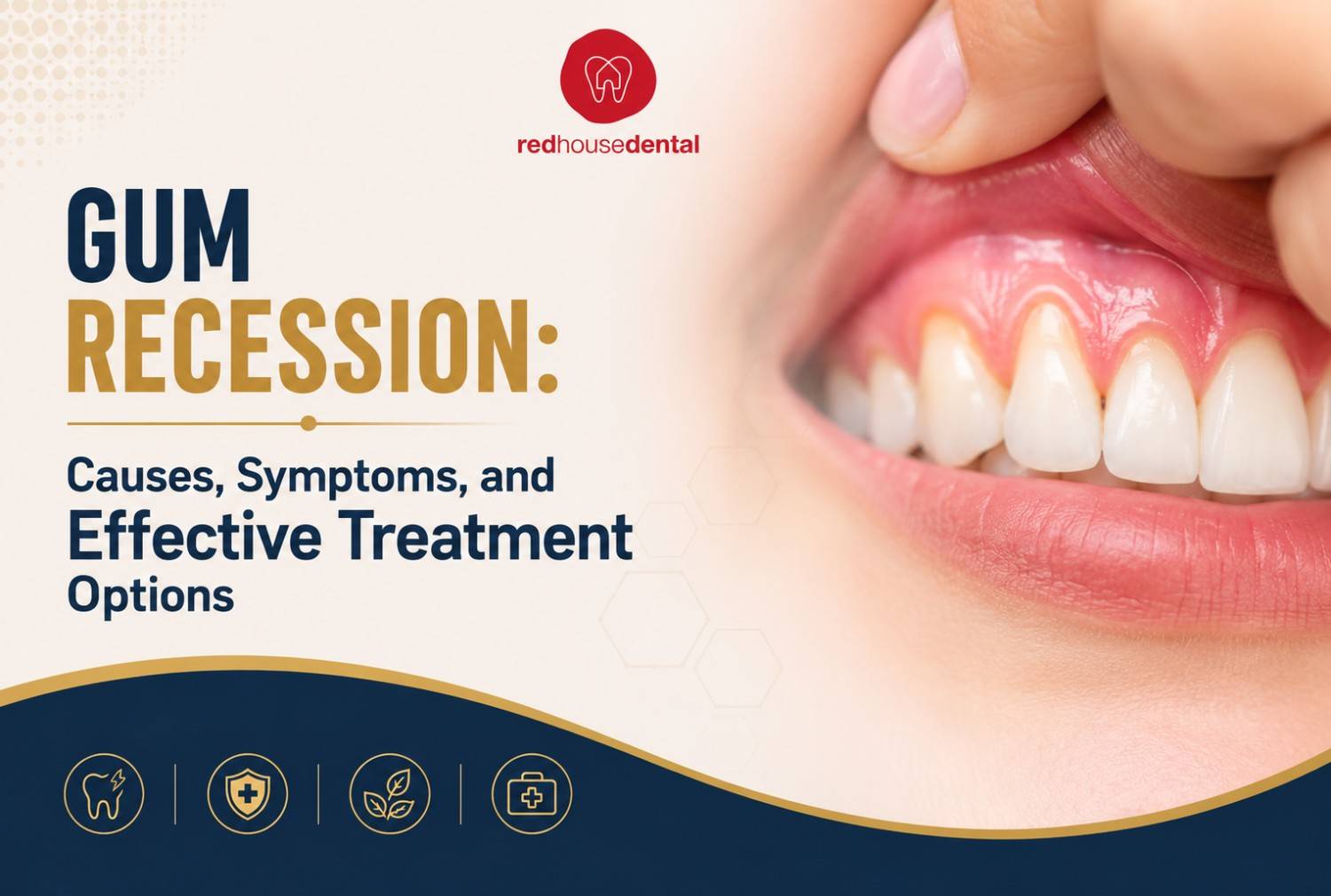
Teeth that look longer than they used to. A roughness along the gum line that wasn’t there six months ago. Cold water hitting a nerve that never reacted that way before.
Gum recession sneaks up on people. Nobody really notices it until a dentist flags it, or until the sensitivity gets bad enough that eating and drinking certain things becomes genuinely unpleasant. By then it has usually been quietly developing for quite a while. Red House Dental in Richmond Hill consistently detects gum recession during routine checkups, often well before patients notice it themselves.
What Is Gum Recession?
Gum tissue pulls away from the teeth. Roots get exposed underneath. Those roots lack protective enamel, which is exactly why they become so sensitive and prone to cavities.
Can be mild. Can be moderate. Can be severe. Sometimes just one tooth is affected. Sometimes several. Close to 88 percent of people over 65 have it on at least one tooth, but it shows up in people of every age.
Leave gum line recession alone long enough, and bone loss follows. Then teeth start feeling loose or wobbly. Then, in more advanced situations, tooth loss.
What Actually Causes It?
Brushing Too Hard
Aggressive brushing or a hard-bristled brush can slowly wear away gum tissue. Most people assume harder means cleaner. It does not. It means gums receding over time.
Periodontal Disease
Bacteria enter the gum tissue and begin attacking the bone and tissue that hold teeth in place. Gums pull back as everything underneath deteriorates. Periodontal disease is a major cause of gum line recession.
Plaque and Tartar Buildup
A plaque sitting at the gum line irritates the tissue consistently. Once it hardens into tartar, that irritation becomes ongoing and contributes to the buildup of recession.
Genetics
Thinner gum tissue is something some people are born with. That predisposition makes recession more likely regardless of how well someone looks after their teeth.
Tobacco Use
Both smoking and chewing tobacco cut blood flow to gum tissue and slow the healing process right down. Both increase the likelihood of gum recession and make it considerably harder to manage once it appears.
Teeth Grinding
Grinding teeth or clenching repeatedly applies force to the gum tissue. That consistent pressure contributes to a recession, particularly among people who grind at night without realizing it.
Misaligned Teeth
A tooth in the wrong position is exerting constant pressure on the surrounding gum tissue. Recession tends to develop right there in that specific spot over time.
Lip or Tongue Piercings
Piercings that repeatedly rub against gum tissue cause trauma in that localized area. That trauma leads to recession over time in the same spot.
Symptoms Worth Knowing About
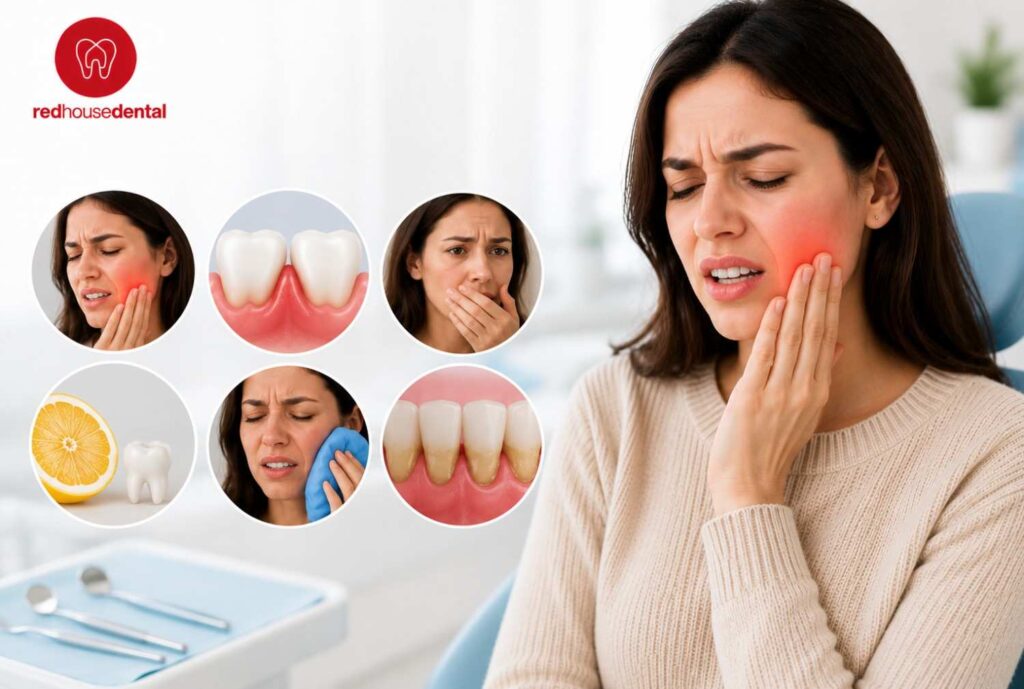
Gum recession is not always painful. Plenty of people have it progressing for months without a single obvious symptom.
Worth paying attention to:
- Teeth looking noticeably longer than they used to
- A notch or roughness that can be felt along the gum line
- Discomfort or pain near the gum line
- Sensitivity to heat, cold, or sweet
- Sensitivity when brushing or flossing
- Sensitivity during professional dental cleanings
- Visible root surfaces on one or more teeth
How a Dentist Diagnoses It
A periodontal probe measures the exact amount of recession on each tooth. This happens at a routine examination, not just a special visit.
Because bone loss often accompanies gum recession, periodontal pockets are measured at the same time. Healthy pockets sit between 1 and 3 millimetres. Gingivitis pushes that to 4. Active periodontal disease is present at 5 millimetres or more.
Getting to gum line recession early at a regular checkup is what prevents mild cases from quietly becoming moderate or severe.
Can Gums Grow Back?
No. Receded gum tissue does not regenerate. Once it is gone, it is gone. What can happen is to stop further recession and replace lost tissue surgically, where the situation calls for it.
Getting on top of it early, rather than waiting to see if it worsens, makes a real difference to which treatment is needed.
Gum Recession Remedies That Do Not Involve Surgery
Mild cases of gum recession can often be managed with nonsurgical treatments.
Scaling and Root Planing
When periodontal disease is driving the recession, bacteria and tartar deep beneath the gum line need to be removed. That is what scaling and root planing does, under local anesthetic. One of the most important gum recession remedies where infection is involved.
Topical Antibiotics
After scaling and root planing, a periodontist may place antibiotics directly under the gums to treat any remaining bacteria.
Dental Bonding
Tooth-coloured composite resin goes over the exposed root surface. Covers it. Makes it less sensitive. Reduces the risk of decay in that area. One of the more practical gum recession remedies for mild to moderate cases.
Desensitizing Treatments
Fluoride varnish or other desensitizing agents applied by a dentist can reduce discomfort from exposed roots. At home, desensitizing toothpaste with potassium nitrate, stannous fluoride, or arginine can manage sensitivity over time. Needs consistent use and takes several weeks to kick in fully.
Orthodontics
A misaligned tooth causing recession in a specific area can sometimes be moved into proper position. Once the tooth is correctly positioned, the gum margin may recover on its own over time.
Gum Recession Treatment: When Surgery Is the Answer
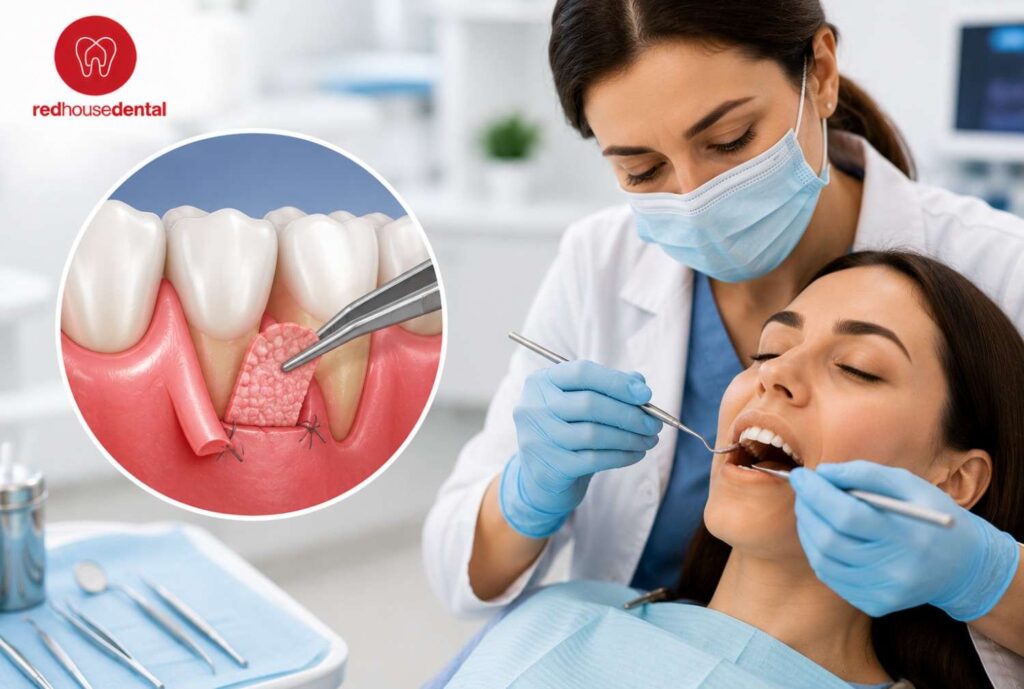
Moderate to severe gum recession almost always requires surgical treatment. Gum graft surgery is the most reliable and longest-lasting treatment for gum recession. Usually done by a periodontist.
A gum graft replaces the missing tissue. Typically taken from the roof of the mouth, though sterilized donor tissue is sometimes used. The graft gets positioned and sutured into place once correctly located.
Different grafting techniques exist. Which one gets used depends on severity, how many teeth are involved, and how much surrounding tissue there is to work with. Modern grafting is minimally invasive. Most people feel back to normal within about two weeks.
Gum Recession How to Fix It at Home
Gum recession: Fixing it entirely at home is not possible once tissue has already been lost. Home care cannot replace what needs to happen clinically. What it does is prevent further recession from developing and back up whatever professional gum recession treatment has been done.
Habits that genuinely matter:
- Soft-bristled brush, gentle pressure, and circular motions rather than scrubbing back and forth
- Floss daily to get bacteria out from the gum line and between teeth.
- Antimicrobial mouthwash twice a day
- Stop smoking and chewing tobacco
- Night guard where grinding is contributing
- Desensitizing toothpaste used consistently where sensitivity is a problem
Gum recession: How to fix it long-term is really about professional treatment and home care working together. Neither one alone gets the full result.
Prevention
Gum recession cannot always be prevented, particularly for people who are genetically predisposed to thin gum tissue. The infection-related kind is a different situation. The right habits significantly reduce that risk.
- Brush twice daily with a soft-bristled brush
- Floss every single day
- Antimicrobial mouthwash twice daily
- Professional cleanings every six months or more often where recommended
- No tobacco, in any form
- See a dentist at the first sign of anything rather than keeping an eye on it at home.
Red House Dental in Richmond Hill
Red House Dental, a dental clinic in Richmond Hill, is at 38 Arnold Crescent, Richmond Hill, ON.
Gum recession gets assessed at every routine appointment here. Not just when a patient comes in specifically worried about it. When mild gum recession is present, recommended gum recession remedies depend on what is actually driving it. Where more significant gum recession treatment is needed, including referral to a periodontist for grafting, that gets organized and explained clearly.
Gum recession, how to fix it at home between visits, also gets covered practically at every appointment so patients know exactly what to do.
Frequently Asked Questions (FAQs)
Can receded gums actually grow back?
Short answer, no. Gum tissue that has pulled away does not come back on its own. Gum recession treatment can stop it getting worse and surgery can replace lost tissue, but nothing regenerates it without that kind of intervention.
What are the early signs of gum line recession?
Teeth starting to look longer than they used to. A roughness or notch along the gum line when you run your tongue across it. Sensitivity to cold or sweet that was not there before. Root surfaces that are becoming visible. Any of those is worth mentioning to a dentist sooner rather than later.
What is the most effective gum recession treatment?
For moderate to severe cases, gum graft surgery done by a periodontist tends to be the most reliable and longest-lasting gum recession treatment going. Milder cases, though, sometimes respond well enough to nonsurgical gum recession remedies like scaling and root planing or dental bonding without needing to go further.
How do I know if my gum recession is getting worse?
Sensitivity that keeps building rather than settling. Root surfaces that look more exposed than they did a few months ago. Teeth that have started feeling a bit loose. Pocket depths that are deeper than they were at the last dental visit. Any of those is a sign things are moving in the wrong direction.
Can gum recession come back after treatment?
It can, particularly if whatever caused it in the first place does not get properly addressed. Keeping up with home care, going to professional cleanings regularly, and dealing with contributing factors like grinding or tobacco use are what actually stop it from returning after gum recession treatment.